Explosives in backpacks 300 meters from the gas pipeline: who might have attacked Balkan Stream and why
Two packages of explosives with detonators were found in Kanjiža — a few hundred meters from the pipeline that supplies Russian gas to Serbia and Hungary. Vučić speaks of "certain traces," but does not publicly name any suspects.

By Tetiana Suchkova-Ladik
April 5, 2026 · 2 min read
On April 5 the Serbian army and police discovered two backpacks containing explosives and detonators in the municipality of Kanjiža in northern Serbia — a few hundred meters from the Balkan Stream pipeline. President Aleksandar Vučić said the charge's power was such that it could "threaten many human lives and cause significant damage to the pipeline."
What the pipeline is and why it matters
Balkan Stream is the onshore continuation of TurkStream, which transports Russian gas through Turkey, Bulgaria and Serbia to Hungary. According to Reuters, Hungary imports 7.4–7.6 billion cubic meters of gas annually via Serbia. Both countries remain critically dependent on Russian energy supplies, which sets them apart from most EU states that are reducing such dependence.
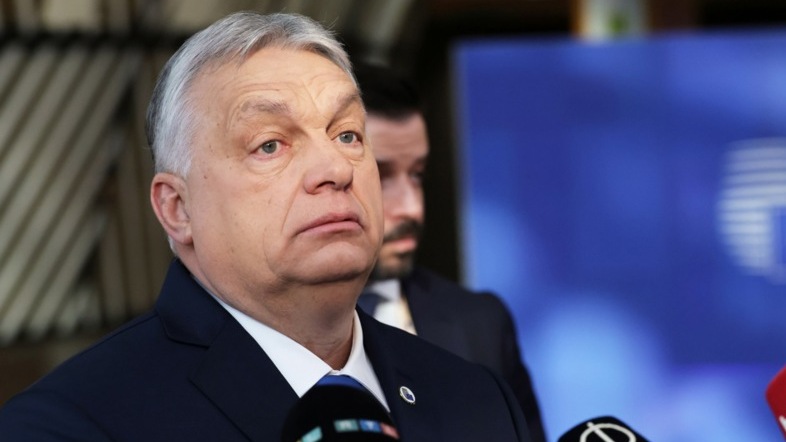
A successful detonation, Vučić said, would leave Hungary and northern Serbia without gas in the midst of the spring heating season. That is why Vučić personally called Orbán even before the public statement — the Hungarian prime minister immediately convened an emergency meeting of the defense council.
What is known about the suspects — and what is not
This is the most important gap in the public picture of the event. According to Euronews, Vučić acknowledged the presence of "certain traces" but refused to disclose details. No detainee has been officially named, and the president has publicly endorsed no theory regarding the perpetrators.
"Our special services, fortunately, worked well"
Aleksandar Vučić, president of Serbia, April 5
Against this backdrop of silence, pro‑Russian and anti‑Western media have already fitted the incident into their own framework: RT and a number of Telegram channels, without any evidence, linked the event to Zelensky's visit to Istanbul the day before. Serbian and Hungarian officials have not made such claims.
The incident in context: a wave of attacks on energy infrastructure
Kanjiža is not an isolated episode. According to CNN, since autumn 2025 Europe has recorded a series of attacks and attempted sabotage on energy infrastructure. Vučić himself in March 2025 tightened security at the compressor station in Yabor after suspicious incidents in the region.
The pipeline also has a Turkish dimension: Ankara views the Balkan Stream as a strategic asset because TurkStream is its source. Any damage strikes at Turkey's transit interests — a factor potential perpetrators would have to take into account.
- What was found: two backpacks with large packages of explosives and detonators
- Where: Kanjiža municipality, ~10 km from the Hungarian border
- Pipeline: Balkan Stream, Russian gas → Turkey → Bulgaria → Serbia → Hungary
- Suspects: officially not identified and not publicly named
- Orbán's reaction: emergency meeting of Hungary's defense council the same day
The investigation has only just begun, and the public vacuum around the suspects is already being filled with competing narratives — from pro‑Russian to anti‑Western. If Belgrade names the perpetrators and proves their links to a specific organization, it will fundamentally change the geopolitical weight of the event. If not — the incident will remain useful to any side seeking to exploit it.



