Expelled from Faction for Moscow Ties, He Now Invites Colleagues to Putin's Forum in St. Petersburg
Luxembourg MEP Fernand Cartaizer sent invitations to colleagues for a meeting with State Duma deputies on June 3 on the sidelines of the SPIEF — despite having already been stripped of his ECR group membership due to such contacts.

By Tetiana Suchkova-Ladik
May 7, 2026 · 2 min read
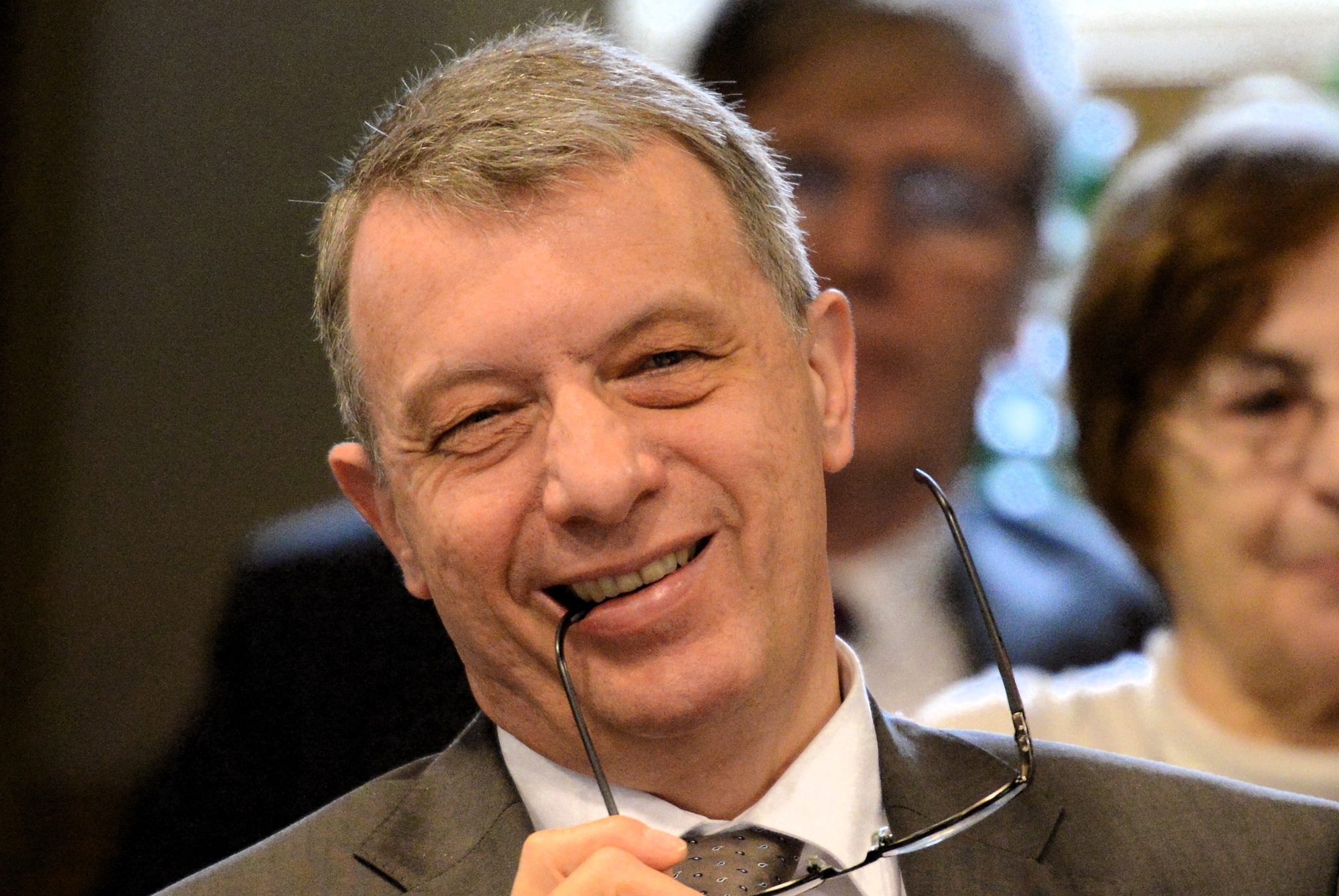
On April 30, Luxembourg MEP Fernand Cartayser sent a letter to colleagues proposing a trip to Saint Petersburg. The goal was a personal meeting with members of Russia's State Duma on June 3 during the St. Petersburg International Economic Forum (SPIEF). Politico and Kyiv Independent, which saw the letter's text, reported on it.
This is not the first such step. In February, Cartayser met with Duma members, in March — with official representatives of Russia's embassy to the EU, and in May visited Moscow. That very visit cost him his place in the European Conservatives and Reformists (ECR) faction — in June 2025 he was expelled, according to Kyiv Independent. Latvian ECR deputy Ričards Kols called it "crossing the red line."
In his letter, Cartayser refers to a "successful and constructive meeting in Istanbul" on April 17 as a precondition for a new round. He refused to disclose who else from the EP participated in the Istanbul meeting, explaining to Euronews that "it could harm their careers."
"It is a shameful act of mediation — inviting people to an event organized by an aggressor state"
Petras Auštrevičius, MEP from Lithuanian Renew Europe, Kyiv Independent
Auštrevičius went further and characterized Cartayser's campaign as an open attempt to recruit EP deputies "as informants and people of influence" for Russia.
SPIEF: a forum on economics — or geopolitics?
SPIEF is positioned by the Kremlin as an economic platform, but its function has long been broader. According to Wikipedia and SpecialEurasia, in 2024 the forum gathered over 21,000 participants from 136 countries — and despite sanctions, deals worth over $83 billion were signed there, mostly in energy and mining. Putin speaks at the plenary session annually.
MEPs' participation in SPIEF does not violate any formal EU rules — sanctions apply to individuals and economic sectors, but not to attendance at public events. This is the gray area where Cartayser operates. In its analysis of EU sanctions policy, CEPR notes that loopholes in restrictions — including lobbying for Russian interests within EU institutions — remain a systemic problem.
Cartayser himself dismisses the accusations. In his response to Politico, he wrote: "An increasing number of European politicians openly call for renewed dialogue with Russia — in Belgium, Germany, France, Italy, Luxembourg, and Croatia." It separately became known that in the 1980s he was involved in espionage simultaneously on behalf of Soviet intelligence and the CIA — he himself confirmed this fact, according to Kyiv Independent.
- Letter sent: April 30, 2025
- Meeting date in St. Petersburg: June 3, 2025, during SPIEF
- From the Duma side the Istanbul meeting was led by Leonid Slutsky, head of the International Affairs Committee
- Registration: Cartayser asked to confirm participation by May 6
If even a few MEPs actually appear at the meeting in St. Petersburg — and their names become public — the European Commission will come under pressure to explain whether informal parliamentary dialogue with the Duma in the midst of a sanctions regime is simply a "personal position" of deputies, or grounds for a systemic response.



