"Visegrad Without Orbán: Hungarian Wants to Transform the Quartet into a Flexible Bloc from Warsaw to Zagreb"
Hungary's new Prime Minister Peter Magyar chooses Poland for his first state visit — and proposes expanding the Visegrad Group into a format where partners engage depending on the topic. This is more than just rebranding: over Viktor Orbán's 16 years, the V4 has effectively dissolved.

By Tetiana Suchkova-Ladik
May 20, 2026 · 3 min read
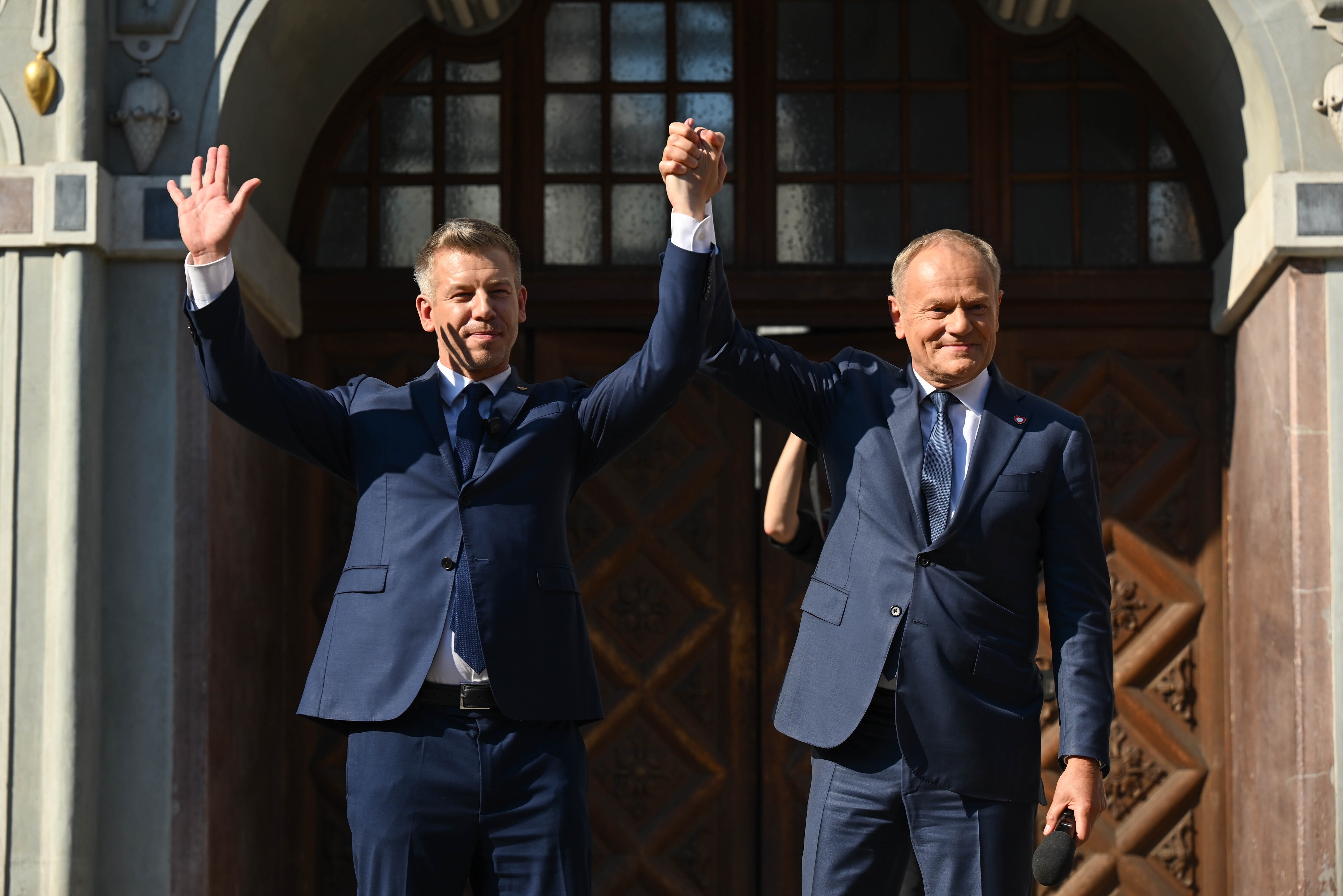
When a Hungarian prime minister flies to Warsaw on a regular commercial flight — instead of the government aircraft that Orbán used — that's already a signal. Peter Magyar, who won elections a month ago and ended Victor Orbán's 16-year rule, chose Poland as his first official foreign trip and announced his intention to revive the Visegrad Group in a fundamentally new format.
What's Left of V4
The Visegrad Group — Poland, Hungary, Czechia, and Slovakia — became a real lever in Brussels after joining the EU in 2004. Its influence peaked during the 2015 migration crisis, when V4 united to block refugee quota distribution. But after Russia's full-scale invasion of Ukraine in 2022, the group effectively fell apart: Orbán remained Moscow's closest ally within the EU, putting Budapest against its partners — especially Warsaw.
New Architecture: Not a Quartet, but a Network
Magyar proposes not simply restoring the old format — he wants to make it flexible. The permanent core remains unchanged, but different countries will be involved in specific topics: "Scandinavian friends, possibly Austria, Croatia, Slovenia, Romania, or Western Balkans countries." France, Germany, and Italy are even being considered as ad hoc partners — depending on the agenda.
A concrete step toward merging formats is the proposal to unite V4 with the Austerlitz Group — a format of Czechia, Slovakia, and Austria that has existed since 2015. Austria thus becomes an "obvious candidate" for permanent membership in the expanded format, according to Euronews.
"We are ready to revive Visegrad 4. We will work on organizing the V4 summit in Budapest at the end of June."
Peter Magyar, Warsaw, May 20
Slovakia, which takes over the V4 presidency in July, is also interested in reviving the group, according to Euronews diplomatic sources.
Where the Cracks Are
Enthusiasm is tempered by several real contradictions. First, Russia and Ukraine: Hungary's new government has announced some continuity regarding Russian gas imports — with a promise to abandon it only by 2035. Second, Hungarian-Slovak relations are still inflamed by disputes over the Beneš Decrees regarding the expulsion of Hungarians after World War II — and Slovakia is heading to elections next year. Third, Czech Prime Minister Babiš was a close ally of Orbán and sits in the same European Parliament faction.
Meanwhile, Magyar is preparing for Brussels: this week a European Commission delegation already arrived in Budapest — to discuss unblocking billions of euros frozen due to rule-of-law violations under Orbán. According to AFP, Polish-Hungarian trade already amounts to €15 billion per year, and businesses in both countries have long awaited this moment.
Broader Context
Warsaw has reoriented itself in recent years toward Northern-Baltic cooperation and moved away from the Central European vector — which is precisely why Magyar's visit is an attempt to turn Poland's face back toward the region. Tusk became a model for the Hungarian prime minister: it was he who, after returning to power, managed to "restart" relations with the EU and gradually unfreeze funds for Poland.
If the V4 summit in Budapest takes place at the end of June and at least one new country joins it as a guest — this will be the first structural expansion of the format in its 30 years of existence. But if Slovak Prime Minister Fico, known for his pro-Russian sympathies, blocks any joint position on Ukraine, the June summit will become a demonstration of division rather than unity.



