Yanukovych definitively sentenced to 15 years: how the 2014 escape was coordinated with the Kremlin
The Kyiv Court of Appeal upheld the verdict — this is not just a legal decision but confirmation of the Russian Federation’s role in organizing the escape of the former head of state. We lay out the route, the evidence, and why it matters for Ukraine and international sanctions.

By Oleg Bazylewicz
December 16, 2025 · 3 min read
What the court decided
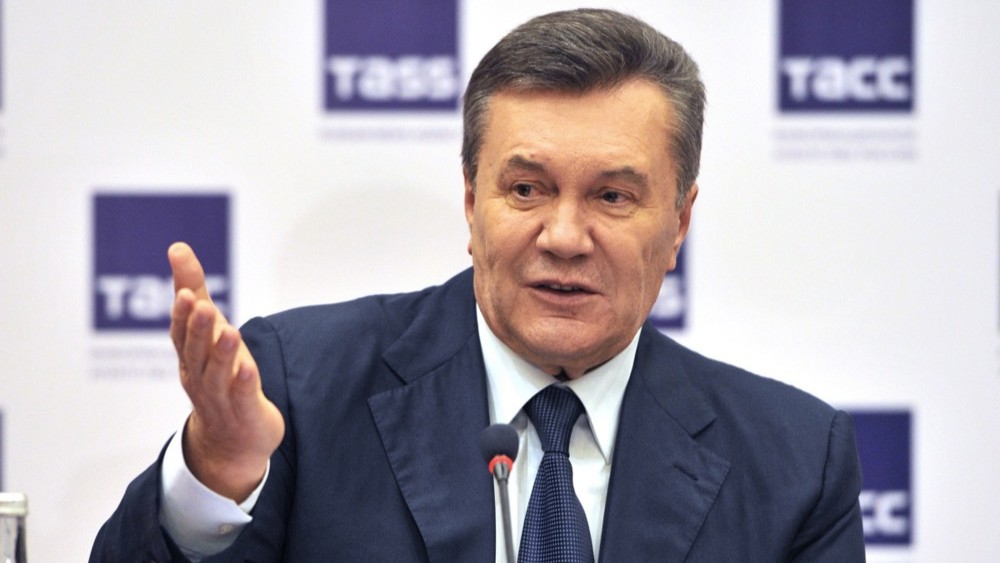
The Kyiv Court of Appeal dismissed the defense's appeals and upheld the in absentia sentence against Viktor Yanukovych — 15 years' imprisonment for organizing the illegal transfer of persons across the state border of Ukraine and for incitement to desertion.
This sentence is added to the previous one — 13 years for high treason and aiding Russia in waging an aggressive war (the 2019 verdict). Together, these decisions form the legal picture of responsibility for the former head of the 2010–2014 regime.
Escape route and evidence
The Office of the Prosecutor General outlined a detailed route and the participation of Russian military personnel and intelligence services in the removal of Yanukovych and his entourage. According to the OPG, the flight was conducted outside official border crossing points and with the involvement of Russian aviation.
"The flight was carried out outside the border crossing points for air travel. The convicted flew out in three Russian military helicopters piloted by a pilot of the Armed Forces of the Russian Federation from the outskirts of the village of Urzuf, Mangush Raion, Donetsk Oblast, to a military airfield in the city of Yeysk (Russia). The route then passed through the city of Anapa, and later — on a military transport aircraft provided by the Russian Armed Forces — to the military airfield 'Hvardiiske' on the territory of the Autonomous Republic of Crimea"
— Office of the Prosecutor General
Separately, the prosecution established that part of the security personnel left Sevastopol by sea for Russia and did not return to service, and that Yanukovych's movements were accompanied by officers of the Federal Protective Service and soldiers of the Southern Military District of the Russian Federation.
Who else was sentenced
For organizing the illegal transfer and incitement to desertion, the court also imposed a sentence on the former deputy head of the State Guard Department — Kostiantyn Kobzar. This underlines that responsibility extends not only to the politician but also to parts of the apparatus that carried out the escape.
Why this matters
Firstly, the court's decision strengthens Ukraine's legal position in international bodies and bolsters arguments when assembling evidence regarding the role of the Russian Federation in the key events of 2014.
Secondly, it signals that collaboration with the aggressor carries legal consequences even years later — an important precedent for investigations and partners' sanctions policies.
Analysts and the legal community note that such decisions increase confidence in the Ukrainian justice system and reinforce Ukraine's position on matters of restoring justice.
Consequences and next steps
After the sentence was confirmed, the issue moves into the realm of practical implementation: extradition is impossible, so the sentence has a more symbolic and evidentiary character in international proceedings and for sanctioning mechanisms.
For context: in September 2025 an EU court rejected Yanukovych's attempt to overturn European sanctions, which again cements long-term legal restrictions for the former leader.
Conclusion
This decision is not the last drop in the sea of legal accountability, but an important step forward: it records the Kremlin's role in the 2014 escape and strengthens the material for further international actions. Legal arguments are now expected to produce practical consequences in the areas of sanctions, reputational risks for accomplices, and historical clarity.
"As a result, some State Guard employees together with him left Sevastopol by sea for the Russian Federation and did not return to military service"
— Office of the Prosecutor General



