Yermak heads lawyers' committee — what it means for reconstruction and compensation
The former head of the Office of the President returns to legal practice and will chair a committee that will oversee the legal framework for reconstruction, compensation, and European integration — and will do so on a voluntary, unpaid basis. We examine why this matters now.

By Tetiana Suchkova-Ladik
March 3, 2026 · 2 min read
What happened
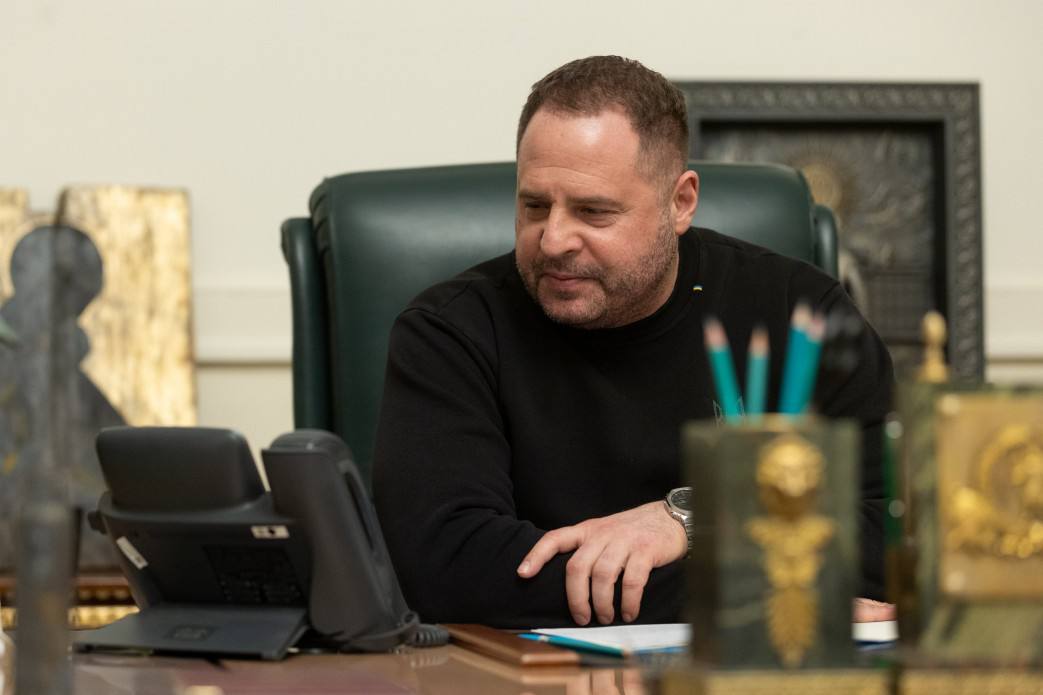
Former Head of the Office of the President Andriy Yermak has been appointed head of the newly created Committee on the Protection of Those Affected by Armed Aggression, Compensation Mechanisms, and Eurointegration Legal Support for Recovery at the National Association of Advocates. The announcement was posted on the association's website.
Why it matters
The committee is to focus on practical recovery mechanisms — from defining the rights of victims to providing legal support when applying for compensation and adapting Ukrainian law to EU standards. For victims, this issue is directly linked to compensation for damages and the possibility of regaining lost property.
Context and profile
Before entering public service, Yermak had about 25 years of legal practice. At the end of January 2026 it became known that he had reinstated his right to practice law after an almost six-year break. According to Ukrainska Pravda, on February 6 Yermak remains in Ukraine, is under enhanced security, and is holding private meetings with officials.
"The activities of members of committee councils, including the chairpersons, are carried out on a voluntary (unpaid) basis."
— National Association of Advocates of Ukraine
In addition to the committee chaired by Yermak, the association created three more sectoral committees: on legal support and the protection of rights in the field of mental health (chair — Hanna Ishchenko), on oil, gas and subsoil use (chair — Serhii Antonenko), and on mediation (chair — Luiza Romanadze). The goal is to strengthen the role of the Bar in the recovery process and to provide professional legal assistance to victims.
President Volodymyr Zelensky, commenting on Yermak's resignation as head of the Office of the President, said it was not connected to NABU searches, saying he had "his own reasons."
What next
The legal community notes that the involvement of a public figure with experience and contacts could speed up the coordination of compensation schemes and their harmonization with EU standards. At the same time, the key test is whether the stated goals will turn into practical tools for victims rather than formal declarations.
Interim conclusion: the creation of such committees is a logical step to consolidate expertise around recovery. But the effect will depend on the level of cooperation with state bodies, access to resources, and the transparency of procedures. Whether there will be enough political will and managerial capacity for this is a question for the coming months.



