Yermak under house arrest with possibility of release: 140 million hrn and "enough friends"
# HACC Selects 60-Day Arrest for Former Presidential Office Head, Offers 140 Million Hryvnia Bail Alternative The High Anti-Corruption Court (HACC) has chosen a 60-day detention measure with an alternative bail of 140 million hryvnia for the former head of the Presidential Office, who is suspected of laundering 460 million hryvnia through the elite residential community "Dynastiya." Yermak claims he does not possess such funds personally but is counting on financial assistance from acquaintances.

By Tetiana Suchkova-Ladik
May 14, 2026 · 4 min read
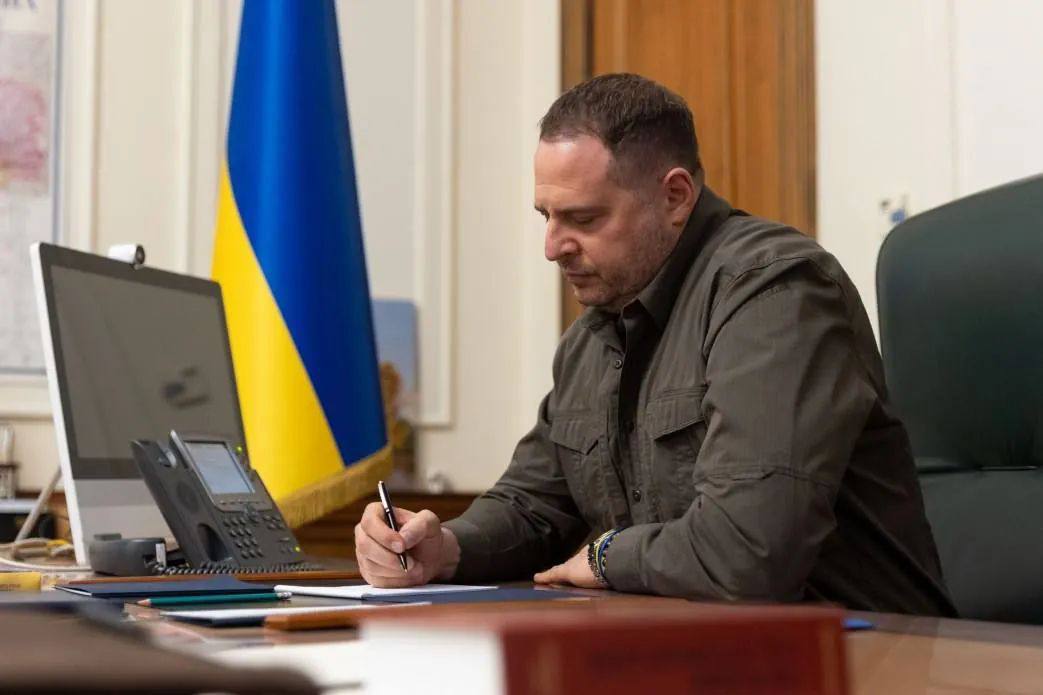
On May 14, the High Anti-Corruption Court chose a preventive measure for former head of the Presidential Office Andriy Yermak in the form of detention for 60 days with the right to post bail of 140 million hryvnias. Judge Viktor Nogachevsky announced the decision after three days of hearings.
What the court decided and what it did not
The court only partially satisfied the prosecution's motion: the Specialized Anti-Corruption Prosecutor's Office (SAP) requested bail of 180 million hryvnias, while the defense sought either no preventive measure or bail with the right to move freely throughout Ukraine. The compromise turned out to be closer to the prosecution's position.
If the bail is posted, Yermak is obligated to: not leave Kyiv without permission, surrender all foreign passports and diplomatic documents, not communicate with other suspects — including Chernyshov, Mindich, Lysenko, Opalchuk, Siranchuk, Medvedyeva — and with a list of witnesses in the case.
«I was not prepared for this. But I have enough friends and acquaintances, I hope they will help»
— Andriy Yermak, after the court's decision was announced
Immediately after the hearing, he also stated that he «remains in Ukraine» and that his lawyers would likely appeal. Yermak called the proceedings against him as occurring «under pressure».
Scheme: cottage as a money laundering tool
The case concerns the construction of a cottage community called «Dynastiya» in the village of Kozyn in Kyiv region — four private residences with auxiliary buildings, a spa zone, total plot area of approximately 8 hectares. According to the National Anti-Corruption Bureau (NABU) and SAP, between 2021–2025, members of an organized group laundered over 460 million hryvnias through this facility.
The money came primarily from corruption schemes at the state company «Energoatom»: according to the investigation, these were systematic kickbacks of 10% to 15% of contract values. The investigation considers businessman Timur Mindich to be the key link in the «laundry»: according to NABU's assessment, approximately 100 million dollars passed through his structures. Cash was converted into various currencies and cryptocurrency, with some operations, according to the investigation, conducted in Moscow.
The chronology of the scheme, based on NABU and SAP materials, looks like this:
- June 2020 — former vice prime minister Oleksiy Chernyshov drew Mindich (pseudonym «Karlson») into the project; around the same time, a participant with the pseudonym R2 appeared — whom the investigation identifies as Yermak.
- June 2021 — construction began, with money laundering proceeding in parallel.
- 2024 — participants began seeking ways to officially legitimize expenses for «Dynastiya».
- July 2025 — after suspicions were served to Chernyshov, Mindich froze construction.
- November 2025 — NABU conducted high-profile searches, Operation «Midas» became public; Yermak submitted a resignation letter from his position as head of the Presidential Office.
- May 11, 2026 — NABU served suspicions on Yermak and six other individuals, including Chernyshov.
In the «Mindich tapes» that NABU released after the scandal, Yermak also appears under the pseudonym «Ali-Baba». SAP Chief Oleksandr Klymenko noted that on the recordings this person «gives orders to prosecute NABU detectives» and may be involved in an attempt to undermine the independence of the NBU and SAP in July 2025. Yermak himself, when asked about the pseudonym, replied: «My name is Andriy Yermak, there are no others».
Pressure on the investigation — a separate episode
NABU Director Semyon Kryvolos reported at a briefing that during an inspection of the cottage community, pressure was placed on one of the experts to prevent him from conducting research. Kryvolos also named the SBU among possible sources of pressure. To protect the investigation from leaks, only NABU and SAP leaders knew the details: the investigation was decentralized among different groups of detectives.
Yermak's defense received 16 volumes of case materials only a few hours before the first hearing and immediately filed a motion for postponement — the court agreed to one day. Attorney Igor Fomin rejected all charges and called the situation «provoked by public pressure».
The EU Ambassador to Ukraine called Yermak's case «evidence of the resilience of anti-corruption institutions».
Yermak faces suspicion under Part 3 of Article 209 of the Criminal Code of Ukraine (legalization of property obtained through criminal means, committed by an organized group or on a particularly large scale). The sanction provides for 8 to 12 years of imprisonment with confiscation of property. A suspicion is not a verdict: guilt must be proven in court.
If the 140 million hryvnia bail is posted in the coming days — the issue is not only about who and how will collect it, but also whether the investigation will maintain control over all suspects: key suspect Timur Mindich left for Israel on November 10, 2025, and remains abroad.



