EU for the first time named China as weapons supplier to Russia — and received an ultimatum
# EU's 20th Sanctions Package Targets Chinese Companies Supplying Russian Military-Industrial Complex The 20th package of sanctions has included Chinese companies on the list of suppliers providing dual-use goods to Russia's defense sector. Beijing has threatened "consequences" and reminded the EU that bilateral trade between China and the bloc exceeds 700 billion euros annually.

By Tetiana Suchkova-Ladik
April 26, 2026 · 3 min read
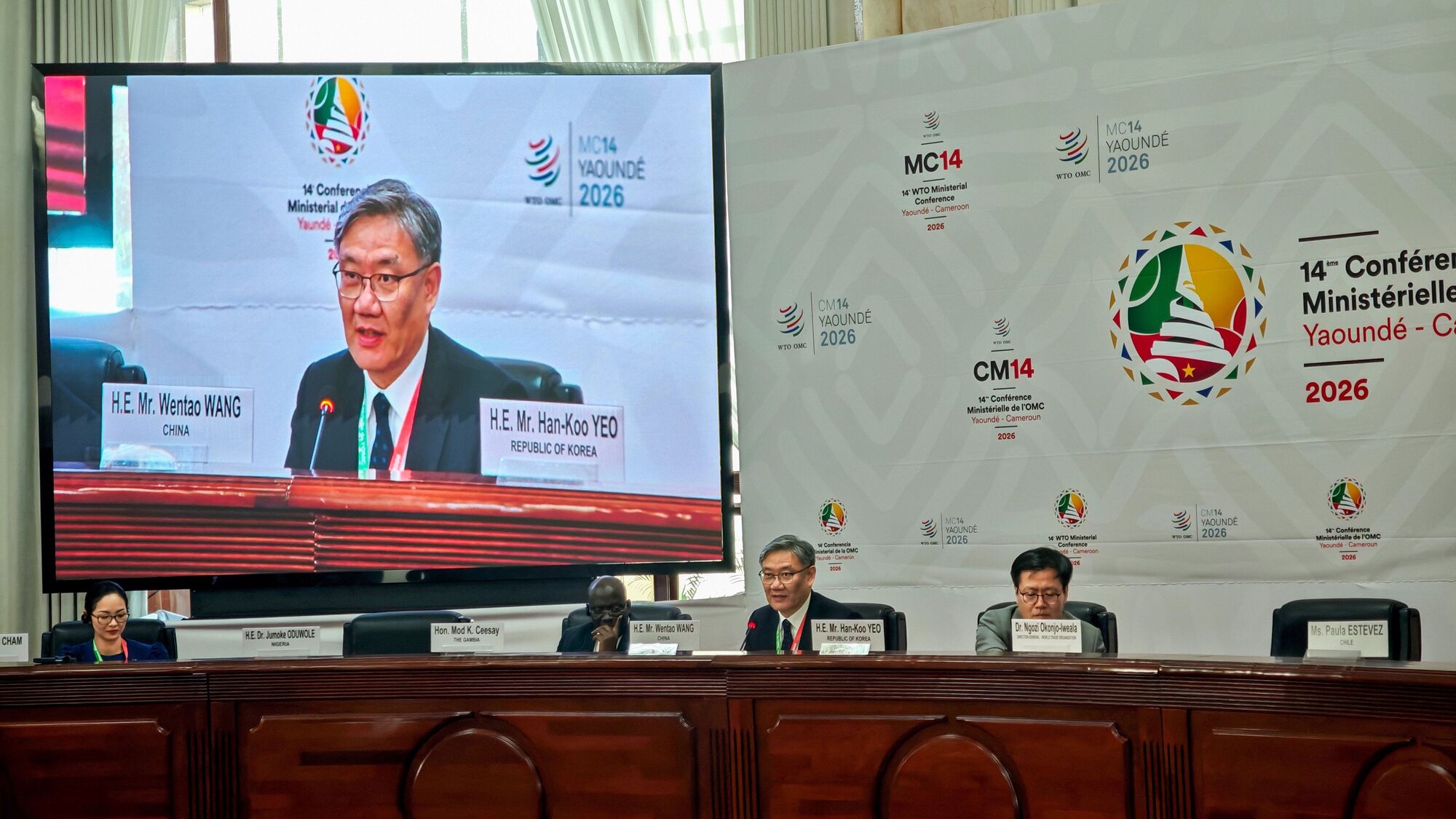
On April 23, 2026, the EU unanimously adopted the 20th package of sanctions against Russia. Among the 120 new individuals and legal entities on the list are Chinese companies, which Brussels accuses of supplying high-tech dual-use goods and weapons to Russia's military-industrial complex. For Beijing, this proved to be a red line.
What exactly did the EU do — and why is this fundamentally new
Chinese companies have sometimes been subject to restrictions in previous packages, but the 20th package for the first time officially establishes this practice through a secondary sanctions tool — a mechanism that allows for penalizing third countries for systematically ignoring sanctions. This time it was applied against Kyrgyzstan, while China found itself on the list directly as a supplier of critical components. As the European Commission notes, this concerns companies that "supplied dual-use goods or weapons systems to Russia's military-industrial complex."
Overall, the package includes: 56 designations related to Russia's military-industrial complex, of which 17 are in third countries: China, the UAE, Belarus, Central Asia. Plus — 46 shadow fleet vessels, 20 banks, bans on RUBx cryptocurrency and digital ruble transactions. New import bans on metals, chemicals and minerals are valued at over 530 million euros.
Beijing's reaction: not diplomacy, but an ultimatum
"This contradicts the spirit of consensus reached between the leaders of China and the EU, and seriously undermines mutual trust and the overall stability of bilateral relations."
Spokesperson of China's Ministry of Commerce, April 25, 2026
Beijing demanded the immediate removal of companies from the list. China's Ministry of Commerce warned that "all consequences will fall on the EU's side" and promised "necessary measures" to protect Chinese business. According to Bloomberg, the ministry called this a "firm protest." This is not the first such episode: in the summer of 2025, China, in response to EU sanctions against two Chinese banks, imposed its own restrictions on Lithuanian banks and continued an anti-subsidy investigation into European dairy imports.
Stakes: 700 billion euros of mutual trade
Beijing's threats are not empty — the price of relations is too high for both sides. According to the European Commission, bilateral trade in goods between the EU and China in 2024 amounted to 732 billion euros, and in 2025 grew by another 5.4% despite all friction. China remains the EU's second-largest trading partner after the United States.
Researchers from the Swedish National Center for China note: Beijing continues to publish detailed customs statistics on trade with Russia — effectively demonstrating to the West that it does not hide these flows. But the real volume may be larger: some supplies go through third countries and are not reflected in open data.
Authors of research in Intereconomics emphasize a systemic problem: gradual, "layered" introduction of sanctions gives target countries time to adapt, and the participation of large economies like China in circumvention schemes significantly reduces the effectiveness of restrictions. According to their analysis, Russia is too large and too integrated into global commodity markets for sanctions to work without the full participation of key partners.
What's next
The EU for the first time applied a secondary sanctions mechanism — so far against Kyrgyzstan. If the tool proves effective, the logical next step would be its expansion to larger players. But Brussels finds itself between two risks: not pressuring China means leaving holes in the sanctions regime; pressuring it means escalating a trade conflict with a partner worth 700 billion euros, already strained by tariff disputes and subsidy investigations.
If the EU dares to apply the secondary sanctions tool directly against Chinese companies — rather than simply listing them — Beijing's reaction will go beyond diplomatic statements. Is Brussels ready for such a scenario before the completion of negotiations on trade balance with China?



