UNESCO heads to Lviv — to assess damage from drone attack and ways to hold Russia accountable
A mission of experts will arrive at the historic center of Lviv to document damage within the boundaries of an object under enhanced protection. It is an opportunity to shift the attack from the realm of destruction into an international legal and cultural context.

By Tetiana Suchkova-Ladik
March 25, 2026 · 2 min read
Briefly
A UNESCO mission will arrive in Lviv to assess the damage after the drone attack on 24–25 March. This was stated on a telethon broadcast by Minister of Foreign Affairs Andriy Sybiha — the visit has already been diplomatically agreed. The assessment is to take place now, as the scale of the strikes and international attention are increasing.
What happened
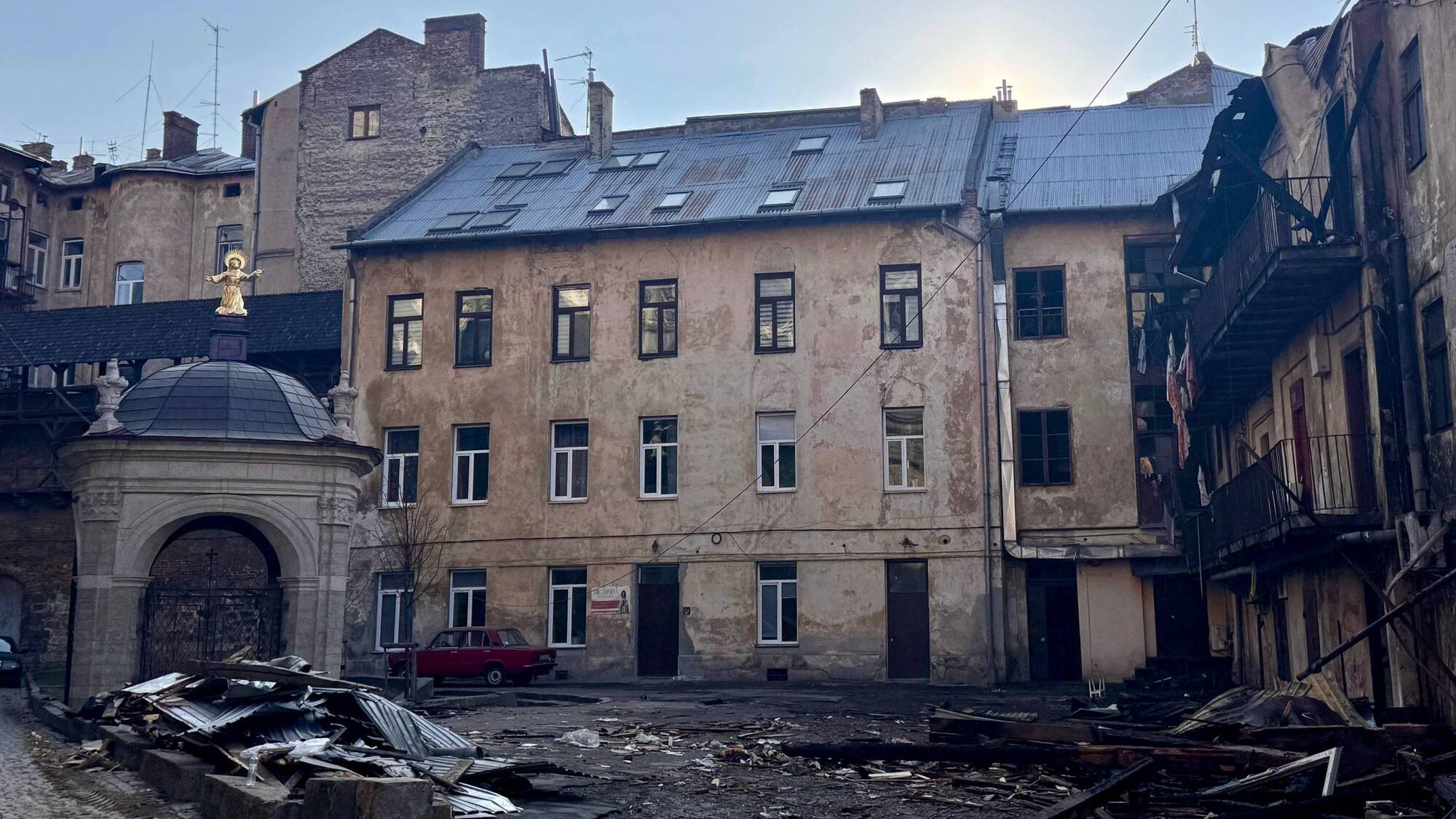
On the night of 24 March and the following day, Russia carried out a massive combined attack in which Ukraine recorded around 1,000 drones of various types in a single day (statement by the Air Force). Fires broke out in Lviv after strike UAVs; as of the morning of 25 March — 27 injured, seven hospitalized (operational data of the regional military administration, OVA).
Among the damaged sites is an architectural monument of national significance: the Ensemble of the Bernardine Monastery, located in the historic area of Lviv — an object listed on the International List of Cultural Properties under Enhanced Protection. According to the regional administration, buildings within the complex's enclosing walls were engulfed in flames.
What the government said
"I confirm that experts will arrive in Ukraine in the near future to assess the damage caused by Russian terrorists. Today Russia did not just strike buildings in the center of Lviv, this is a strike on UNESCO heritage"
— Andriy Sybiha, Minister of Foreign Affairs of Ukraine
Sybiha also said that the government has asked UNESCO to initiate mechanisms to hold Russia accountable in the cultural sphere — in particular, options under consideration include "cultural" sanctions or international procedures for documenting crimes against heritage.
Why it matters
First, a visit by UNESCO experts formalizes the recording of damage — this is a key step for subsequent international claims and for restoration. Second, damage to sites within a protected heritage area has a symbolic dimension: the attack affects not only material values but also international norms for the protection of cultural heritage.
Third, large-scale drone attacks raise questions not only about the protection of cultural heritage but also about the readiness of infrastructure and the civilian sector to withstand mass missile and drone strikes. Analysts note that such incidents require a combination of operational air defence, preventive protection measures for monuments, and diplomatic pressure.
International dimension
The arrival of UNESCO experts is a signal to partners: cultural and heritage issues could become another arena for applying pressure on the Russian Federation. Publications and analysts monitoring the escalation of drone attacks (including LIGA.net) warn of the risk of scaling up the strikes. For Ukraine, this is a chance to obtain documentary backing for international accountability mechanisms.
Conclusion
UNESCO's documentation of the damage is not the end but the beginning of procedures that can turn destruction into evidence for international courts and sanctions initiatives. The question is whether diplomatic attention can be turned into concrete decisions — funding for restoration, cultural sanctions against Russia, and strengthened protection of monuments during the war?



