Zaluzhnyi explained how the war in Ukraine could end
Former commander-in-chief of the Armed Forces of Ukraine Valerii Zaluzhnyi said the war could end without a victory or defeat for either side. He stressed that a long-term cessation of the war could give Ukraine a chance for reforms, recovery and economic growth.
By Oleg Bazylewicz
November 30, 2025 · 2 min read
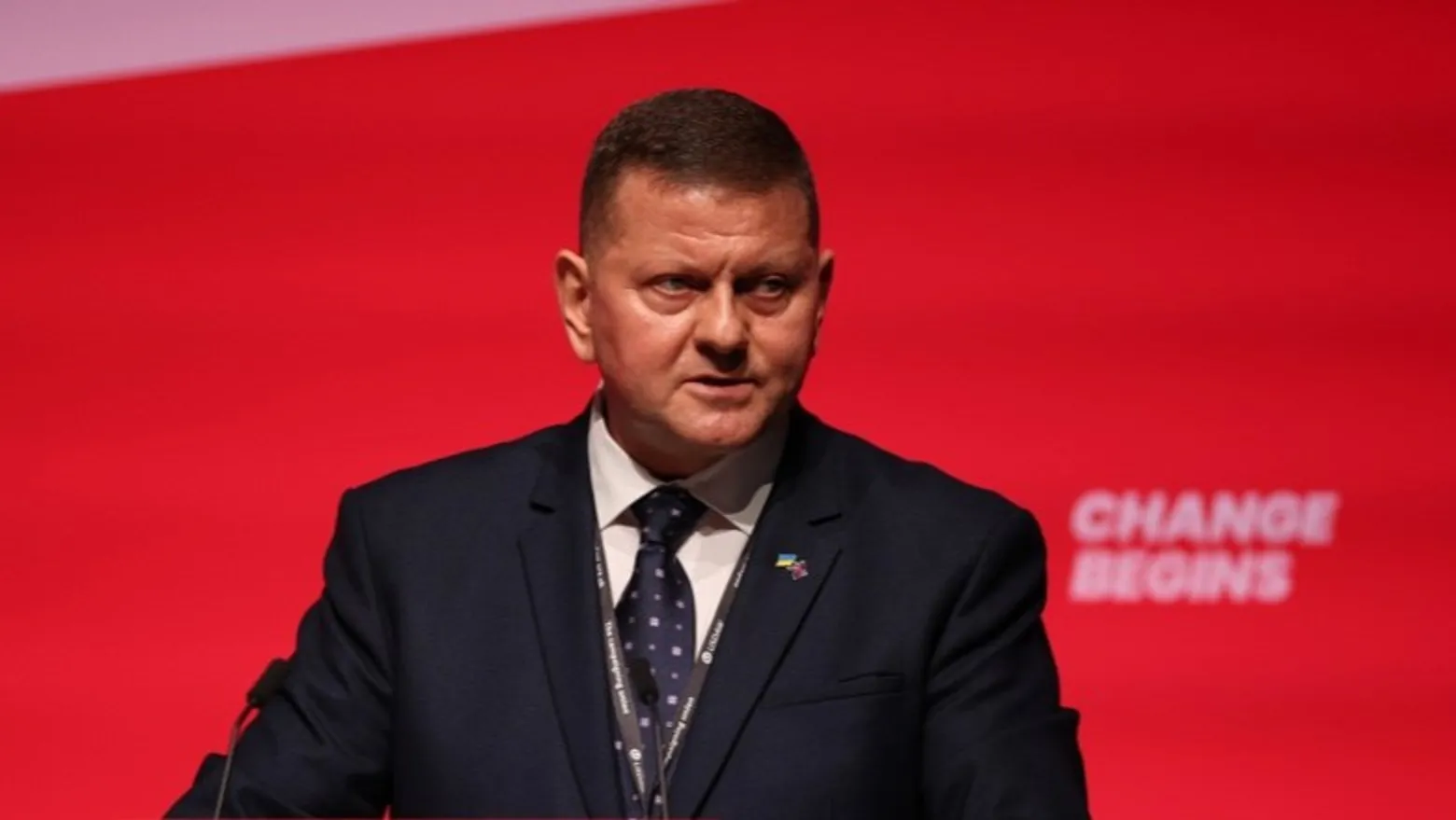
Russia's war against Ukraine may end without a victory or defeat for either country. This was stated in an exclusive column for LIGA.net by the former Commander-in-Chief of the Armed Forces of Ukraine, Ukraine's ambassador to the United Kingdom, Valerii Zaluzhnyi.
"It is very strange when the question of ending the war, under the pressure of yet another media hook, becomes the subject for yet another set of soothsayers in Ukraine."
– he notes.
Factors in ending the war
The former commander-in-chief believes that informational prompts alone are clearly insufficient to determine the timing of the war's end.
The end or halt of the war, especially one of attrition, will depend on a combination of gains or losses on the military, economic and political fronts, Zaluzhnyi noted, adding that a collapse on one of those fronts "may only create the preconditions for its end."
"However, the durability of the entire structure absolutely depends on the resilience and potential of the others. For example, a peace in Ukraine that is so quickly predicted would raise rather harsh questions in Russia about the number of human losses – this will be as difficult to explain as explaining corruption in Ukraine today. And it is natural that the situation on the political front in Russia will not allow this without significant concessions or our complete defeat."
– the former military officer explains.
He adds that it is currently difficult to say whether the mediators trying to "sketch scenarios" for Ukraine understand this.
"But the fact that each time the conditions do not become better for Ukraine is obvious."
– Zaluzhnyi emphasized.
Different options for ending the war
According to Zaluzhnyi, when forming the political objective of the war it is important to remember that it does not always end with one side's victory and the other's defeat: the vast majority of wars end either in mutual defeat, or with each side convinced of its victory, or in other variants.
"So, when we speak about victory, we must say frankly: victory is the collapse of the Russian empire, and defeat is the complete occupation of Ukraine through its disintegration. Everything else is simply a continuation of the war."
– the ex-commander-in-chief states.
Possibilities for a long-term cessation of the war
Although Ukrainians, of course, strive for a full victory — the collapse of the Russian empire — they cannot rule out the option of a long-term, years-long, cessation of the war, since "this is a very common way wars have ended in history," the former military man emphasizes.
He believes: peace, even one that exists in anticipation of the next war, gives a chance for political change, deep reforms, full-scale recovery, economic growth and the return of citizens.
"One can even speak of the beginning of building a safe, maximally protected state thanks to innovations and technologies. The formation and strengthening of the foundations of a just state through the fight against corruption and the creation of a fair judiciary. The country's economic development, in particular based on international economic recovery programs."
– Zaluzhnyi explains.



