Zaluzhnyi Shelves Political Ambitions — Signal That Ukraine’s Security Is the Priority
During a speech at Chatham House on 23 February, Valerii Zaluzhnyi dismissed questions about running in the elections and urged that domestic debate not be taken onto the international stage. We examine why this stance matters for security and partners' trust.

By Tetiana Suchkova-Ladik
February 23, 2026 · 2 min read
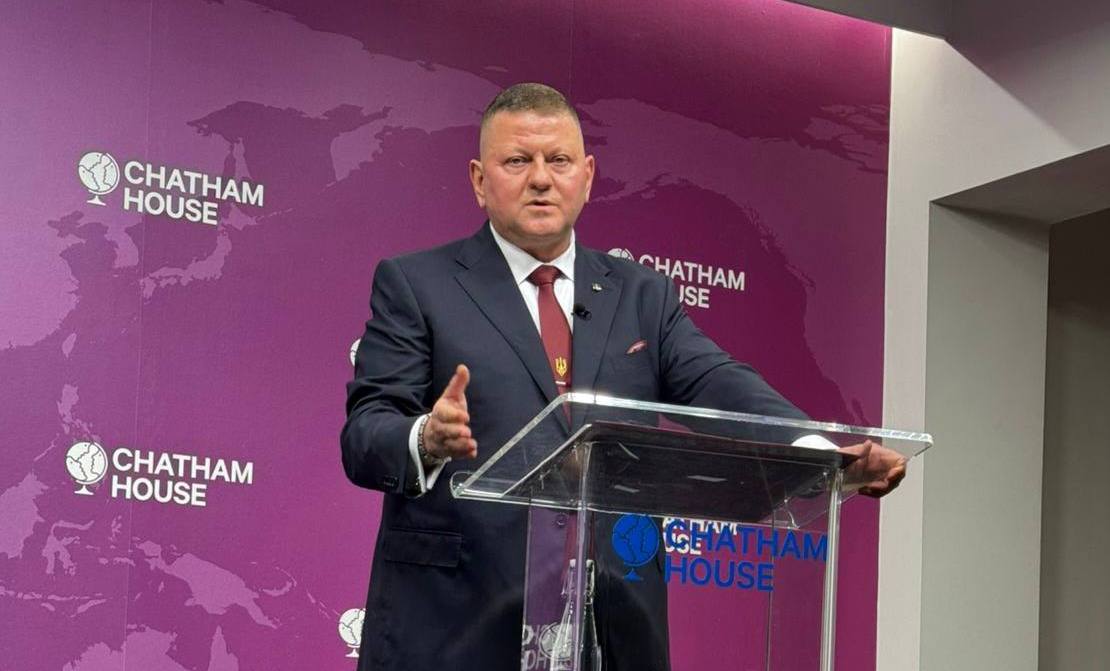
What Zaluzhnyi said at Chatham House
The Ambassador of Ukraine to the United Kingdom and former Commander-in-Chief of the Armed Forces, Valerii Zaluzhnyi, on 23 February at Chatham House called talks about his political ambitions untimely and urged making the issue of domestic politics "taboo" in international discussions. In his view, such topics should be raised only after the end of the war and the country's reconstruction.
"When the war ends, when martial law in Ukraine ends, then we will talk about it. And it, by the way, will end only when the reconstruction of the country is finished."
— Valerii Zaluzhnyi, Ambassador of Ukraine to the United Kingdom, former Commander-in-Chief of the Armed Forces of Ukraine
The general also expressed surprise that his name often appears in the media space, joking about a "department" that every morning invents his thoughts.
"Sometimes, with such creativity, I begin to think that there is a department that wakes up every morning thinking: what is Zaluzhnyi thinking today"
— Valerii Zaluzhnyi, Chatham House, 23 February
Context and confirmed facts
This is not Zaluzhnyi's first response to assumptions about his political role. In October 2025 he publicly denied rumors about preparing for a presidential campaign, assuring that he was not creating campaign headquarters or parties. Earlier, on 18 February, in an interview with the Associated Press the general spoke about SBU searches in 2022 and criticized certain officials over the conduct of the 2023 counteroffensive — statements that attracted attention from both the media and political circles.
Why this matters for Ukraine
Focus on security. Public discussions about the personal ambitions of military figures during the active phase of the war can distract from strategic objectives and give the enemy informational openings.
Signal to partners. For Western allies, clarity about the role of the military in politics is a marker of stability and civilian control over the armed forces, which affects decisions on support and investment.
Internal agenda. By postponing questions of elections and ambitions, Zaluzhnyi effectively underscores the priority of national unity and the working agenda — defense, reconstruction, and the restoration of institutions.
Analysts and experts note that this stance reduces the risk of politicizing the armed forces and helps keep public discourse focused on national security rather than personal conflicts.
Conclusion
Zaluzhnyi's statements are not merely denials of rumors. They are a pragmatic message: during the war, maintaining focus on security and international confidence is paramount. Questions of political ambition, he says, should be resolved in peacetime, when the priority will be the country's reconstruction and the normalization of the political process. Whether the political discourse will withstand this test will depend on the responsibility of domestic actors and the response of partners.



