Paid the Fine – Straight to China: How Shadow Fleet Tanker Returned to Work
A French court has fined the owner of the Deyna for using a false flag, but did not seize the cargo or disclose the penalty amount. The tanker, which managed to change its flag eight times in 13 months, is now heading to China.

By Tetiana Suchkova-Ladik
April 16, 2026 · 2 min read
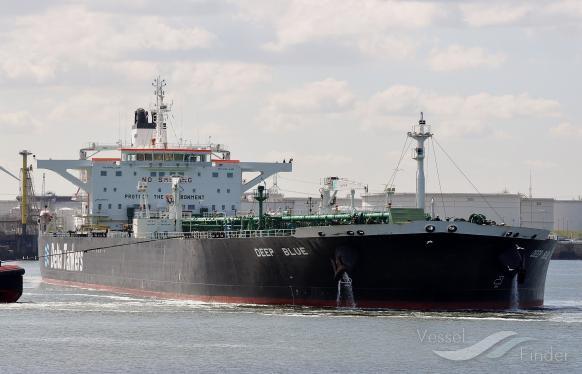
On March 20, 2026, the French Navy stopped the tanker Deyna in the Mediterranean Sea, sailing from Murmansk under the flag of Mozambique. President Macron called it a "war profiteer." A few weeks later, the court imposed a fine — and released the vessel. Now Deyna is heading to China.
A Record Holder in Identity Changes
Deyna is not just one of hundreds of "shadow fleet" vessels. According to the Windward Maritime AI analytical platform, since 2020, the tanker has changed flags 13 times, eight of them in the last 13 months: Greece, Vanuatu, Indonesia, Panama, Curaçao, Saint Kitts and Nevis, Maldives — and finally Mozambique, under which the vessel left Murmansk on February 25, 2026, with oil cargo on board.
The United States added Deyna to its sanctions list in January 2025. Then came the EU, Great Britain, Switzerland, Canada, and Ukraine. The vessel's commercial manager, Hong Kong-based company Sino Ship Management Co. Limited, was also sanctioned by OFAC for activities in the Russian energy sector.
A Scheme That Already Works
The interception of Deyna became the sixth confirmed boarding of "shadow fleet" vessels by European navies between January and March 2026, according to Windward. But the logic of all these operations is similar: the vessel is detained, the owner pays, and the tanker moves on.
"These vessels, circumventing international sanctions and violating maritime law, are war profiteers. They line their pockets while helping finance Russia's military efforts."
Emmanuel Macron — in a post on X following the interception of Deyna
In February 2026, France had already released another tanker — Grinch, also detained in the Mediterranean under a false Comoros flag. Its owner paid "several million euros," according to Euronews, — and the vessel moved on. The amount of the fine for Deyna is also not being disclosed.
What Remains Behind the Scenes
Marseille Correctional Court found the owner of Deyna guilty of using a false flag and ordered him to obtain a new one. The owning company promised to do so "as soon as possible." However, the vessel's sanctions status, its cargo, and the final buyer of the oil were not publicly discussed.
Meanwhile, against the backdrop of the Deyna interception, as USNI News reports, the British Royal Navy was tracking two objects in the English Channel — the Russian frigate "Soobrazitelny" and the sanctioned tanker "Anatoly Kolodkin."
- Deyna is sanctioned by the USA, EU, Great Britain, Switzerland, Canada, and Ukraine
- 13 identity changes since 2020, 8 flags in 13 months
- This is at least the sixth boarding of "shadow fleet" vessels by Europe since the beginning of 2026
- The fine amount is classified — as in the previous case with Grinch
The scheme looks like this: the fine covers the risk of detention and is built into the cost of the voyage. As long as France does not disclose the amounts — it is impossible to verify whether they are even a deterrent.
If the EU does not establish a minimum public threshold for fines and does not introduce a mechanism for cargo confiscation — rather than just the vessel — the next "shadow fleet" tanker will count on the same outcome: pay and move on to China.



