Zelensky: No Shared Vision on Donbas in Talks
Zelensky said that participants in the negotiations do not have a shared vision for Donbas. The United States, Russia and Ukraine see the future of the Donetsk and Luhansk regions differently. Kyiv is insisting on a separate agreement on security guarantees.

By Tetiana Suchkova-Ladik
December 8, 2025 · 1 min read
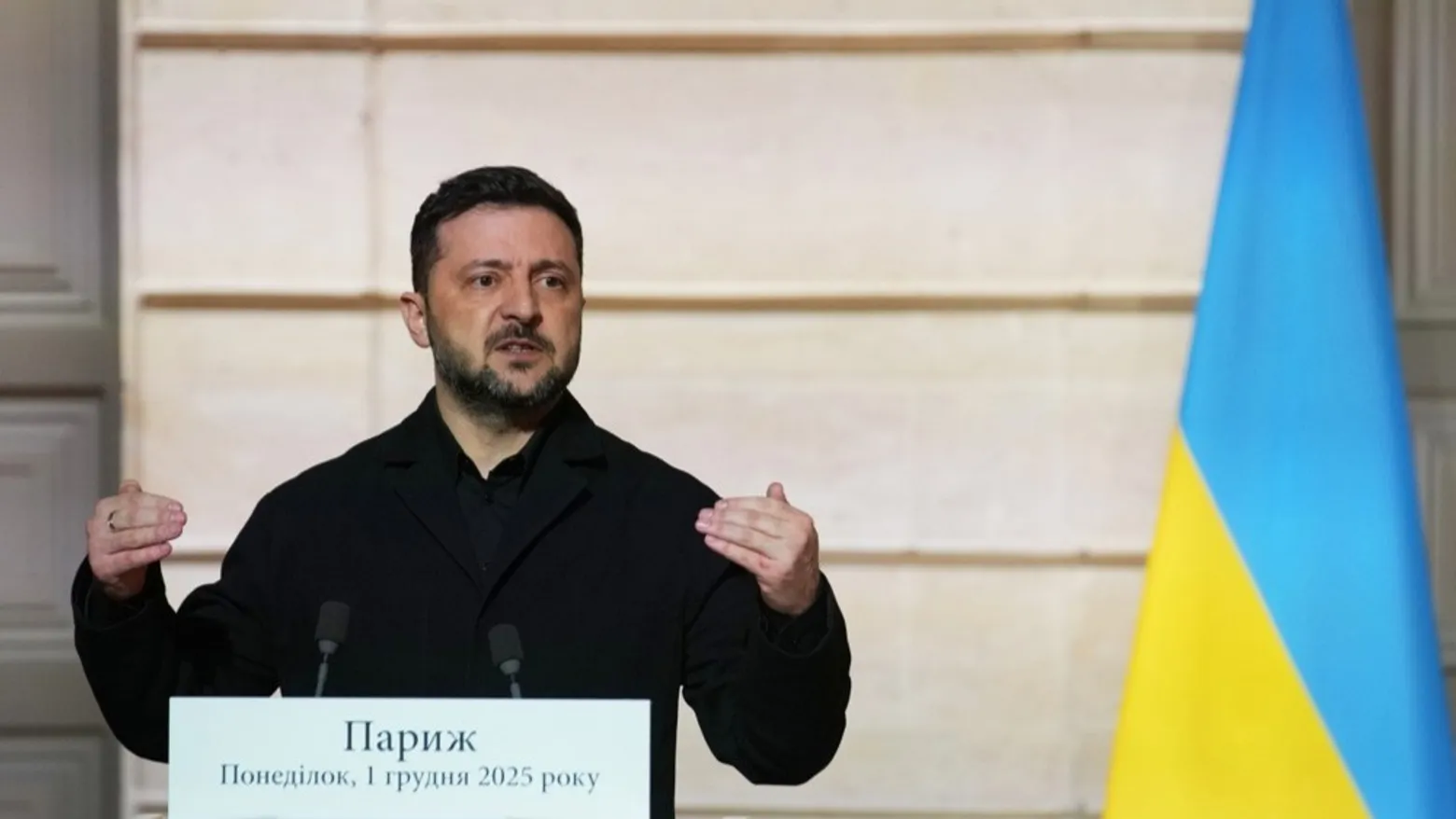
Participants in talks to resolve the war do not have a unified position regarding control over territories. President Volodymyr Zelensky said this in an interview with Bloomberg.
Differences in outlook
The head of state said that elements of the American plan require further discussion on a number of "sensitive issues". This concerns security guarantees and control over the eastern regions.
The negotiations have still not reached an agreement regarding the Ukrainian Donbas, including the Donetsk and Luhansk regions.
There is the vision of the US, Russia and Ukraine, and we do not have a unified position on the Donbas
– Volodymyr Zelensky, President of Ukraine
Key issue: guarantees
Zelensky emphasized that Kyiv insists on a separate agreement on security guarantees from Western allies, primarily from the United States.
There is one question that I – and all Ukrainians – want an answer to: if Russia starts the war again, what will our partners do
– Volodymyr Zelensky
Negotiations in London
On Monday, December 8, Zelensky, during a visit to London, will hold talks with key partners. He will meet with the Prime Minister of the United Kingdom Keir Starmer, the Chancellor of Germany Friedrich Merz and the President of France Emmanuel Macron. Among the topics of discussion – the US proposal for a settlement.
Context
Zelensky's statement came against the backdrop of active diplomatic efforts to end the war. Despite numerous rounds of talks involving various mediators, the parties to the conflict have still not found common ground on key issues, in particular the status of occupied territories and mechanisms for ensuring Ukraine's security in the future.



