Zelensky: talks with the US continue despite the Kremlin's information attack
We explain why the hoax about an attack on Putin’s residence is not a random sensation but a pressure tactic that could complicate turning agreements into concrete steps.

By Tetiana Suchkova-Ladik
December 30, 2025 · 2 min read
Kiev’s position: communication daily and substantive
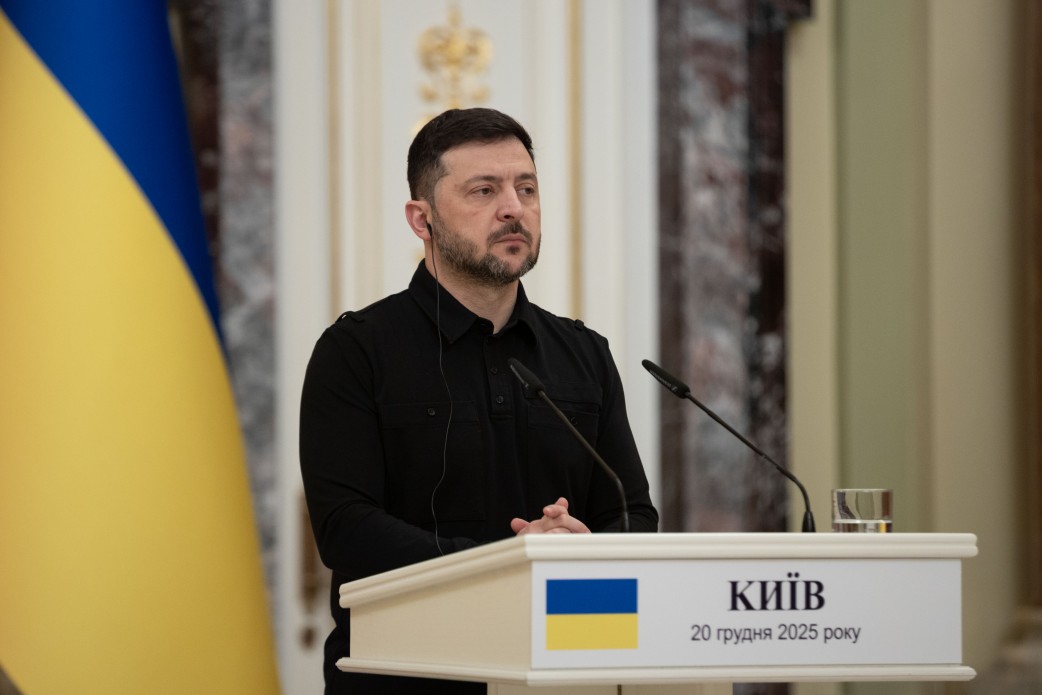
The Office of the President reports that despite statements by Russian officials about an alleged derailment of the talks, Ukraine and the United States continue to maintain daily communication. President Volodymyr Zelenskyy said in the Office of the President’s chat that work has not stopped and that the parties “are discussing our next steps.”
“First of all, I want to tell you that despite various accusations from the Russians about the derailment of our negotiations with the Americans, we are working every day”
— Volodymyr Zelenskyy, President of Ukraine
Details of the contacts
According to the president, several phone calls took place on December 30: in particular, Secretary of the National Security and Defense Council Rustem Umerov spoke with U.S. special envoy Steve Witkoff. This points to a working-level interaction — an exchange of positions and the development of the next practical steps, not just political declarations.
Why the fake about the attack appeared
The Kremlin tied to the topic statements about an alleged attack on Putin’s residence in the Novgorod region. Russian Foreign Minister Sergey Lavrov reported this version on December 29; former U.S. President Donald Trump, according to reports, reacted by saying that “this is not good.” The Ukrainian Foreign Intelligence Service (FIS) and representatives of the Office of the President view these reports as part of an information operation aimed at undermining the agreements reached after recent contacts between the Ukrainian president and the U.S. leader in Florida.
“This is not good”
— Donald Trump, former U.S. president (comment on the statements about the attack)
Analysis: what this means for the negotiation process
The spread of fake reports amid intensive diplomacy is a classic pressure tactic. The Kremlin’s aim here is clear: to sow doubt, reduce trust between partners, and divert attention from concrete agreements. At the same time, the fact of regular calls and exchanges between teams indicates that the negotiations are practical in nature and not limited to statements for the press.
Conclusion
A fake is an attempt to influence the process, but not proof that it has stopped. The next test for the negotiations is whether political agreements can be turned into documented steps: contracts, supply routes, security guarantees. This is exactly what Ukrainian officials and their partners should focus on.



