Tuesday, May 26, 2026
Today's Edition

EveryNews

Stories that matter, signal over noise

Politics

Zelensky: the US has not set concrete deadlines for peace

The President said that the United States did not set clear deadlines for concluding a peace agreement; Washington allegedly sought to reach an understanding by Christmas. He also outlined the key provisions of the proposed plan.

Oleg Bazylewicz

By Oleg Bazylewicz

December 11, 2025 · 1 min read
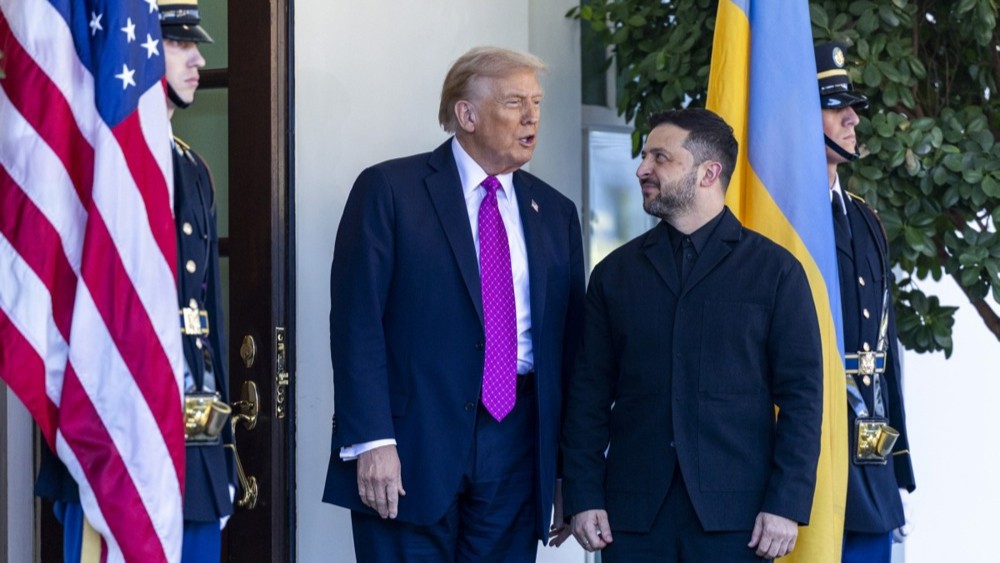
Zelensky: the US has not set concrete deadlines for peace

President Volodymyr Zelensky said that the US did not set strict dates for signing a peace agreement in the war with Russia. He emphasized that the American side expresses a desire to conclude the talks as soon as possible, but there were no specific ultimatum deadlines.

The US wants to finish sooner

– Volodymyr Zelensky

Timelines from the US

According to Zelensky, in the United States they sought clarity on the progress of the talks by Christmas. He added that for Ukraine the final result of the agreement is more important than deadlines.

Of course, one would want it sooner

– Volodymyr Zelensky

On December 9 it became known that US President Donald Trump was counting on concluding an agreement by Christmas.

Key points of the plan

  • In the current version of the peace plan, the size of the Armed Forces of Ukraine is listed as 800,000 personnel — close to the actual number of servicemembers.
  • The American side allegedly proposes that the Ukrainian Armed Forces withdraw from the Ukrainian Donbas and that the Russian army not enter it; instead, the creation of a "free economic zone" or a "demilitarized zone" is being considered.
  • After negotiations with Russia, the US insists that a full ceasefire be observed only after the signing of a framework peace agreement.


Related

Latest

Business

EU Against Google: Why the Latest Fine Could Change More Than Previous Ones

# European Regulators Target Google Again — This Time Over Digital Markets Act Violations. What's Behind the Accusations and Why It Matters Beyond the Corporation European regulators have renewed their scrutiny of Google, this time focusing on alleged violations of the Digital Markets Act. The charges underscore Brussels' increasingly aggressive stance on big tech monopolies and what officials say are anticompetitive practices. The accusations center on how Google leverages its dominance across multiple digital services — from search to advertising to mobile platforms — to disadvantage competitors. Regulators claim the company is using its market power in ways that stifle innovation and limit consumer choice. The case carries significance far beyond Google itself. It signals how the EU is attempting to enforce its landmark Digital Markets Act, legislation designed to curb the gatekeeping power of tech giants. A potential penalty could set precedent for how other large technology companies face similar scrutiny. For consumers and smaller tech firms, the outcome could reshape the digital landscape by creating more room for competition. For Google, fines and operational restrictions could fundamentally alter its business model in Europe, the world's most stringent regulatory market. The case also reflects a broader geopolitical divide, with the EU pursuing a regulatory approach that contrasts sharply with the lighter-touch oversight favored in the United States.

May 26, 2026

