Zelensky imposes sanctions on 66 individuals and 62 companies — a blow to crypto chains and missile suppliers
After a massive attack on the energy system, the president signed two decrees intended to cut off revenue streams and supply channels for the Russian war machine. We examine exactly what was restricted and why it matters for Ukraine’s security.

By Tetiana Suchkova-Ladik
February 8, 2026 · 3 min read
Briefly: what was done
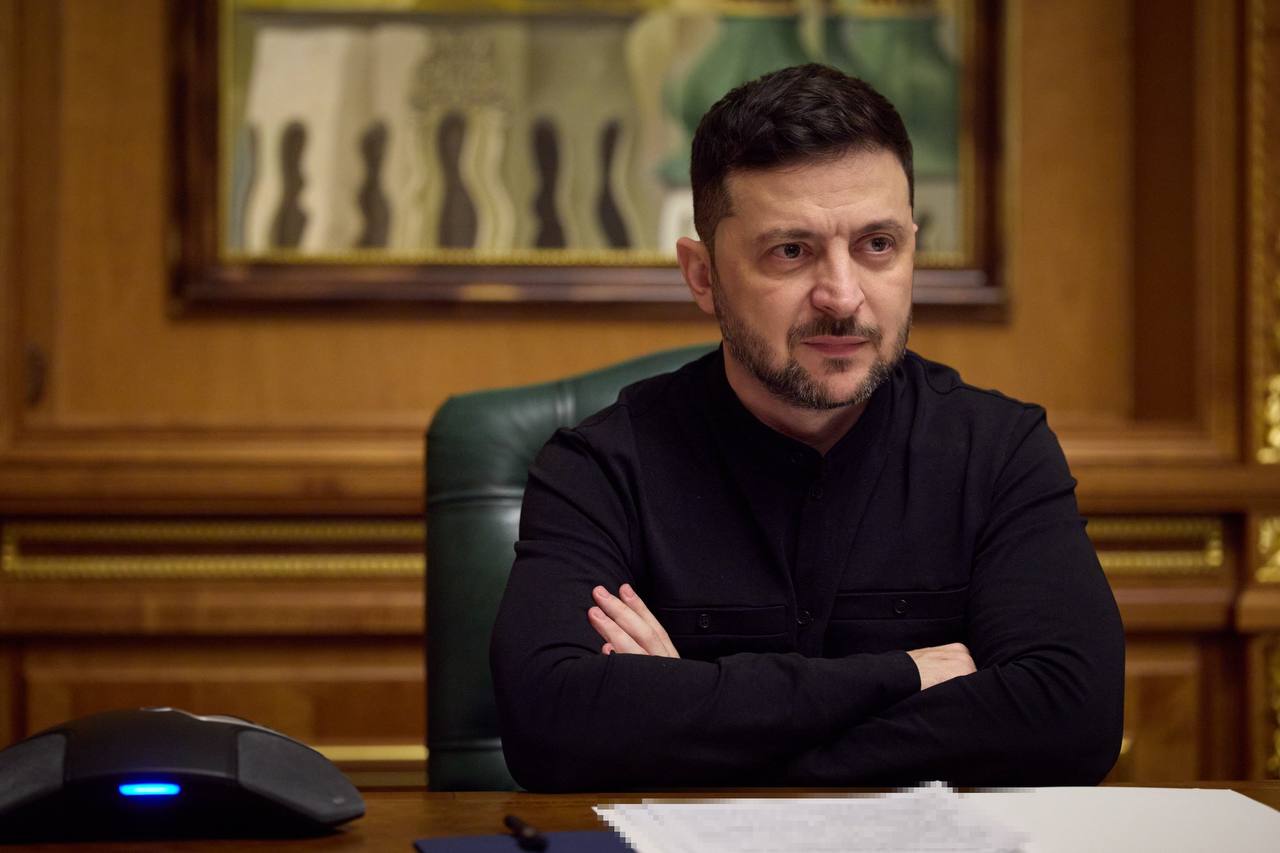
On 8 February President Volodymyr Zelenskyy signed two decrees implementing decisions of the National Security and Defense Council. According to the Office of the President, the restrictions affected 66 individuals and 62 legal entities. These measures are aimed at disrupting supply chains and financial channels that support the Russian military-industrial complex and sanction-evasion mechanisms.
What’s in each decree
Decree No. 102/2026 focuses on enterprises and individuals supplying components for missiles and drones: the list includes 24 individuals and 27 companies. Among them are firms from Hong Kong, a branch of a Russian bank in Shanghai, and a number of Chinese enterprises through which critical components were routed.
Decree No. 103/2026 targets financial infrastructure and those who facilitate sanction evasion: 42 individuals and 35 legal entities. In addition to Russian citizens, the list includes actors from Kyrgyzstan, the UAE, Georgia and Panama.
Target: the crypto ecosystem and mining
Among the sanctioned are the cryptocurrency network ecosystem A7 and related settlement operators, crypto exchangers and cryptocurrency holders. According to the Office of the President, supplies of components for missile production were paid for through this network.
"The cryptocurrency network ecosystem A7 has been sanctioned, through which, in particular, payments were made for supplies of components for the production of Russian missiles."
— Office of the President of Ukraine
Context: the attack and the response
The decision followed a massive overnight attack on 7 February, when Russia used more than 400 drones and nearly 40 cruise missiles, striking substations and thermal power plants in western regions. As the prime minister reported, damaged facilities included substations, overhead power lines, as well as the Burshtyn and Dobrotvir thermal power plants.
"Substations and overhead lines were hit, as well as the Burshtyn and Dobrotvir thermal power plants."
— Denys Shmyhal, Prime Minister of Ukraine
Why this can work
The logic of such sanctions is simple and rational: cutting off critical components and financial flows slows ammunition production and raises the cost of finding workarounds. Working simultaneously on the financial and technological fronts amplifies the effect: even if individual links survive, the overall cost and risk of logistics for the aggressor increase.
The Ukrainian initiative is also being coordinated with partners: part of these measures is expected to be included in the EU’s 20th sanctions package, which, according to the Office of the President, is being prepared for adoption at the end of February. This means increased international pressure and better enforcement mechanisms.
What’s next
The effectiveness of the sanctions will depend on two factors: rapid implementation (freezing accounts, blocking transactions, shutting down access) and international coordination — especially with jurisdictions through which evasion channels run. Analysts at Ukrainian and Western centers note that combined actions on the financial and technological levels are among the most effective tools of pressure in the context of protracted aggression.
Conclusion
These decrees are not a one-off act of retribution, but an element of a strategy: to limit the enemy’s resources, complicate its logistics and force it to pay more to wage war. The key now is to turn political statements into sustained international cooperation and technical transaction controls. Whether this will significantly reduce the pace of missile and UAV production depends on the speed and effectiveness of sanction enforcement, and on the response of partners.



