Zelensky: Dialogue with Putin must not divide Europe — the U.S. needs to be at the table
Macron's proposal to resume direct talks with the Kremlin puts the EU to a choice: a coordinated strategy or the risk of unilateral concessions. The president insists on coordination and U.S. participation.

By Tetiana Suchkova-Ladik
February 14, 2026 · 2 min read
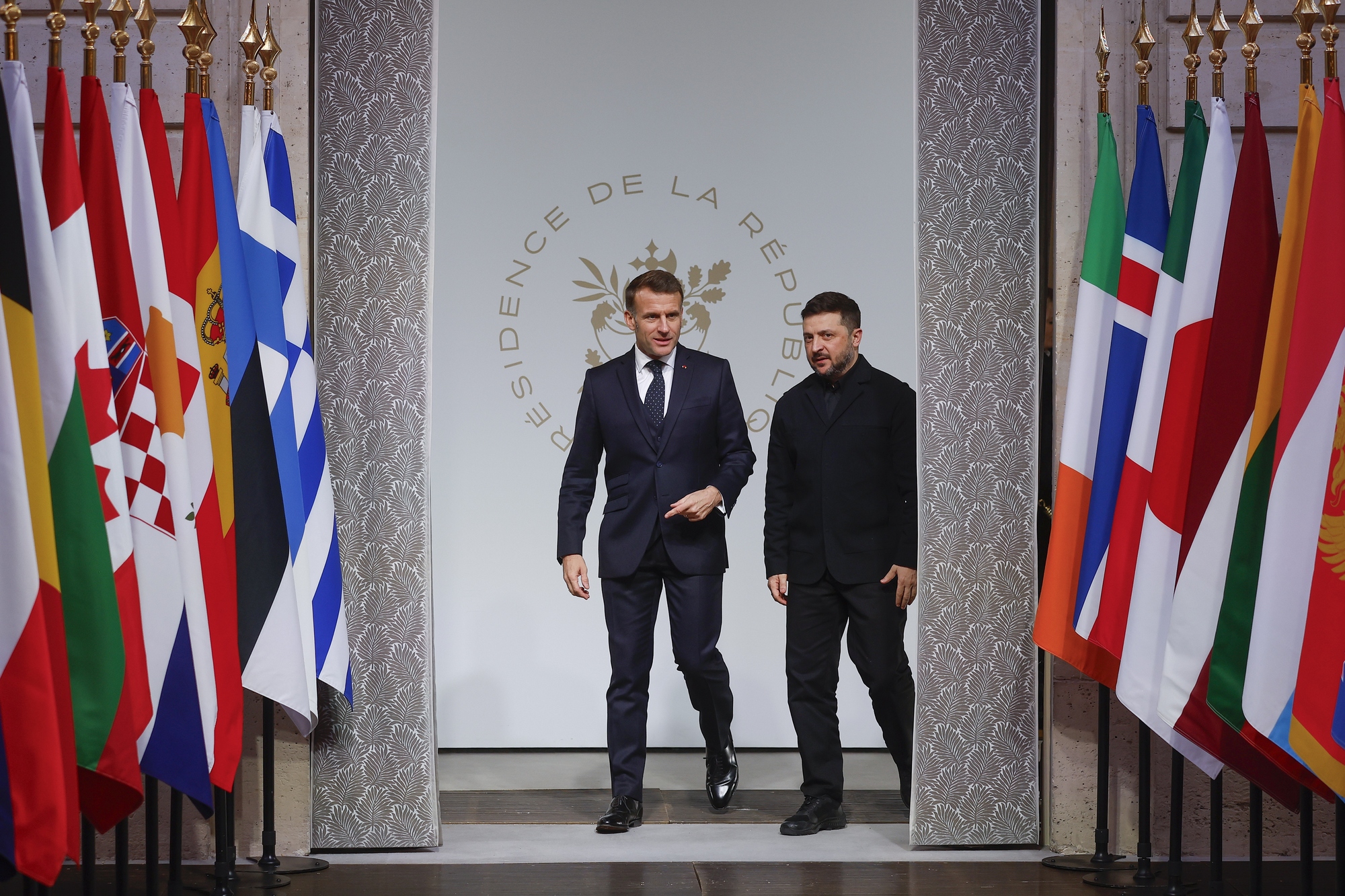
In high diplomacy, coordination matters more than loud statements
At a briefing in Munich, Volodymyr Zelensky urged Europe to decide on the format of dialogue with Russia: the restoration of contacts proposed by the French president must not become an instrument for dividing the continent. This message is worth attention — because it is not only about the reputations of leaders, but about what guarantees will remain for Ukraine in the event of new negotiations.
What exactly the president said
"I think Putin will play games with one, with another, then with a third, with a fourth, to divide Europe and give each some little treat, and simply to give them the feeling that they have a decisive role"
— Volodymyr Zelensky, President of Ukraine
"He told me about it. He spoke with other leaders. I'm not sure I can share with you exactly whom he spoke with. Emmanuel spoke very frankly with me about what they discussed, what the results were"
— Volodymyr Zelensky, President of Ukraine
Timeline of key steps
19 December 2025 — Emmanuel Macron said that Europeans will have to find a way to restore dialogue with Russia and that it is useful to talk to Putin again.
21 December 2025 — Zelensky confirmed that Macron had discussed with him the possibility of direct dialogue in the event that the United States cannot restrain the occupiers; the president emphasized that he will fight for American participation in the peace process.
4 February 2026 — reports emerged of a visit by a French diplomat to Russia to hold talks with Russian officials.
Why this matters — a brief analysis
Russia systematically employs the tactic of "private arrangements" and bilateral offers to pull countries out of the unified front of sanctions and support for Ukraine. If negotiations are held individually, there is a risk that, under pressure from economic or energy interests, certain capitals will make concessions that reduce Ukraine's ability to restore its territorial integrity.
U.S. participation in the negotiation format functions as an anchor: it raises the strategic and political cost of any retreats from the principles that protect Ukraine. EU experts and analysts point out that without clear coordination between the EU, the U.S., and Ukraine the space for Russian "games" grows significantly.
Consequences for Ukraine and Europe
If the EU decides to act coherently and demand U.S. involvement in the process, this will increase the chances of conducting a conditional and controlled dialogue, where key issues — sanctions, security, and guarantees — are discussed collegially. If countries go their separate ways, Russia will have the opportunity to bargain with each individually, which will weaken Ukraine's positions and reduce pressure on the Kremlin.
Conclusion
Zelensky poses a simple question: is Europe ready to coordinate steps so that dialogue with the Kremlin does not become an instrument of division? The answer will determine not only diplomatic logistics, but also the real security guarantees for Ukraine. The question now rests with the leaders — will statements be transformed into a coordinated strategy.



