Zelensky named Azerbaijan as a possible venue for negotiations — but with a condition
# President Ready for Diplomacy, But the Key Word Is 'If': What Stands Behind This Signal and Why Baku's Choice Is No Accident The President has signaled readiness for diplomatic negotiations, yet the conditional nature of this statement carries significant weight. Behind this carefully worded message lies a complex set of preconditions that must be met before dialogue can proceed. The selection of Baku as the venue for this diplomatic signal is far from coincidental. Azerbaijan's capital holds strategic importance in regional politics and carries symbolic meaning for all parties involved in the ongoing conflict. The choice underscores the international dimension of the negotiations and demonstrates willingness to engage with neutral ground facilitation. The emphasis on the conditional "if" suggests that any diplomatic process must be built on specific foundations. These conditions likely encompass security guarantees, recognition of legitimate interests, and adherence to international law principles. The President's position reflects a hardline approach tempered with diplomatic openness—ready to negotiate, but only within clearly defined parameters. This nuanced messaging demonstrates political sophistication, signaling strength to domestic audiences while keeping diplomatic channels theoretically open to the international community. The careful wording leaves room for maneuver while establishing non-negotiable principles that must underpin any future talks.

By Tetiana Suchkova-Ladik
April 25, 2026 · 1 min read
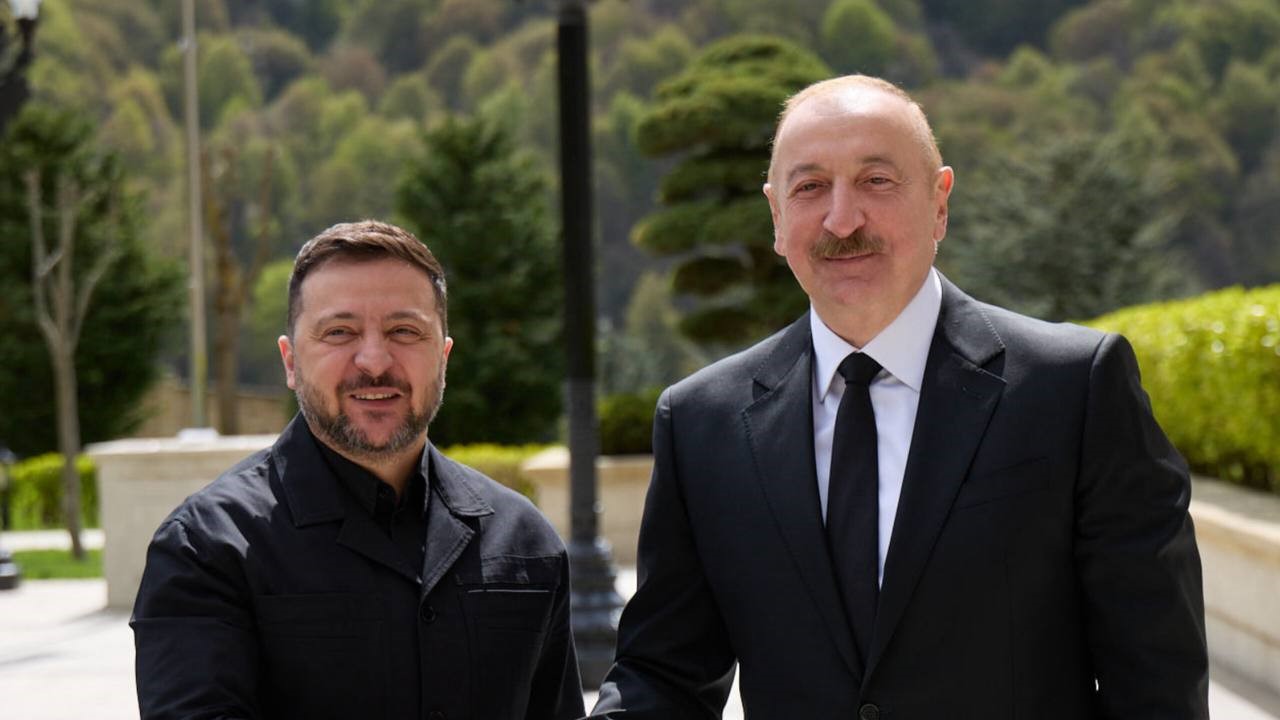
Volodymyr Zelenskyy stated that Ukraine is ready to conduct peace negotiations with Russia on the territory of Azerbaijan — provided that Moscow is genuinely committed to diplomacy rather than imitating it. The president made this statement during a public appearance without specifying concrete dates or format.
The choice of Baku as a potential venue is not spontaneous. Azerbaijan maintains working relations with both Kyiv and Moscow, has not joined sanctions, but has also not recognized the "referendums" on occupied territories. This makes it one of the few neutral spaces where both sides can technically sit at the negotiating table without reputational losses at the outset.
At the same time, the statement itself contains a fundamental asymmetry: Kyiv formulates its readiness but shifts responsibility for initiating the process to Moscow. This is a diplomatic position that allows maintaining international support — "we are open" — without any real commitment to sit at the table on Russian terms.
Russia has not publicly responded to this statement. The Kremlin traditionally sets preconditions — recognition of occupied territories, abandonment of the NATO course — which Kyiv rejects as capitulation rather than negotiations.
Context is important: Zelenskyy's statement coincided with another round of pressure from some Western partners regarding a "diplomatic window." Demonstrating openness to negotiations — even conditional ones — is a response to this pressure without substantive concessions.
The main question now is not the geography of the meeting, but its substance: does either side have a mandate for negotiations that do not amount to fixing the current front line as a new border — and if so, who will publicly confirm this first?



