Zelensky on Belarus and the EU: What It Means for Ukraine's Security and Economy
The President, in a wide-ranging interview with "Dzerkalo," outlined his vision of Belarus’s role in Europe, the conditions for peaceful coexistence, and Kyiv’s concrete steps on security and sanctions — we examine the implications for Ukraine.

By Tetiana Suchkova-Ladik
February 23, 2026 · 2 min read
Context and main idea
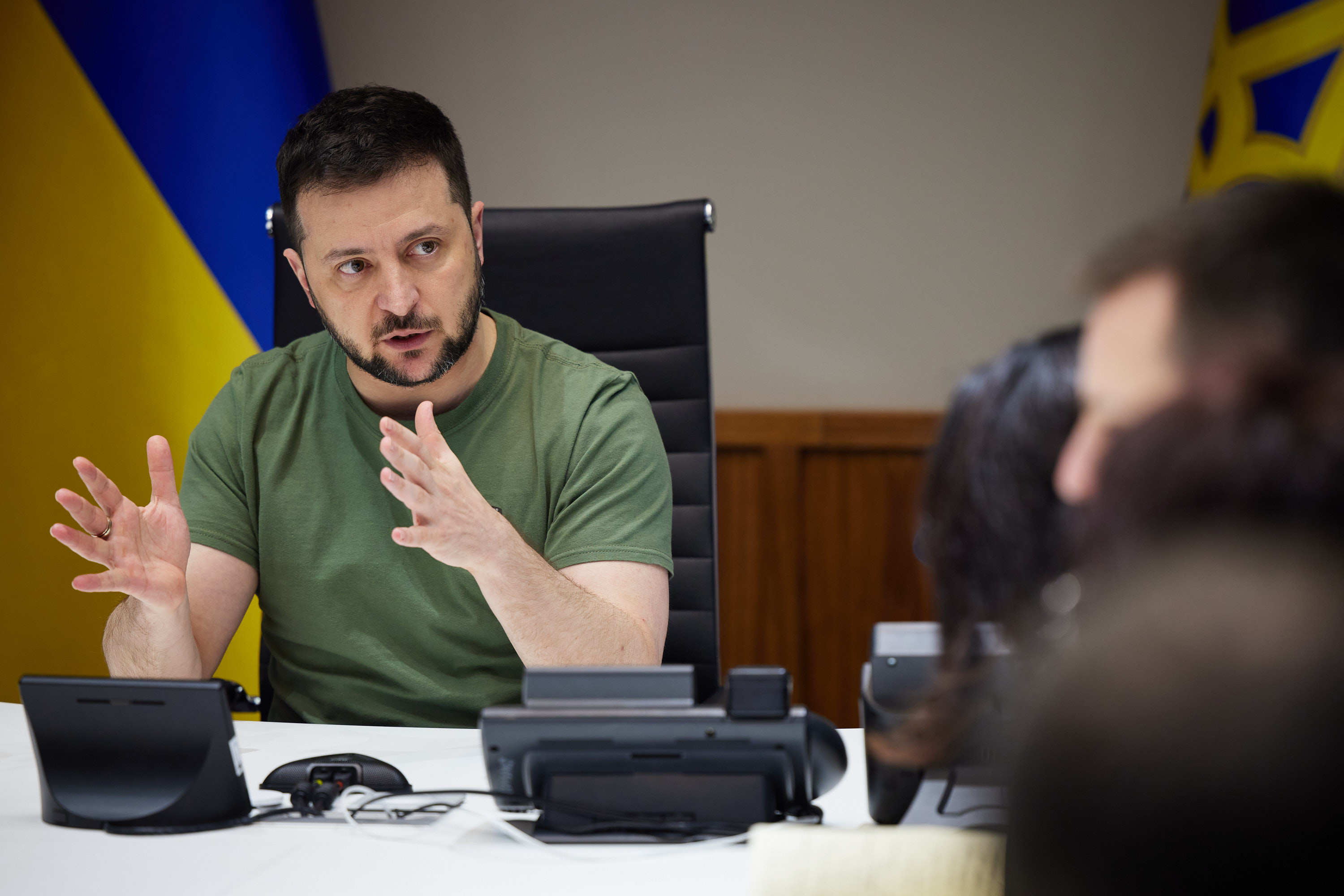
In an interview with the Belarusian independent media outlet «Dzerkalo», President Volodymyr Zelensky said he sees Belarus’s future in the European Union and seeks peaceful relations between the countries. This is a position that combines a political perspective (European integration) with pragmatic security conditions for Ukraine.
Why this matters for Ukrainians
Belarus joining the EU would mean more than economic changes — it would reshape the region’s geopolitical map, reduce the risk of Belarusian territory being used against Ukraine, and strengthen Belarusian statehood. That is why Kyiv’s stance is not emotional but practical: border security, control over relay stations for strike systems, and legal mechanisms of accountability.
What Zelensky said — key messages
"I would very much like the war to end and for something to change in the relations between our countries. After all, the Belarusian people did not start a war against Ukraine. I think that this is the wisest choice or status for Belarusians to remain in."
— Volodymyr Zelensky, President of Ukraine
He emphasized that membership in the EU is a Belarusian choice and that the propaganda operating in the country for years sends one-sided signals about economic risks. Zelensky stressed that Ukraine is ready to respect Belarus’s independence provided it has free leadership that respects citizens’ rights and the independence of our state.
Specific statements on security and accountability
The president hinted at operational responses — referring to disabling 3–4 'Shahed' relay stations in Belarus. He also questioned the impunity of certain sites: in Zelensky’s view, NATO should consider «Oreshnik» a legitimate target in case of escalation.
Kyiv also plans to expand sanctions against the Lukashenko regime — in particular, targeting his sons and close associates. According to the president, this should be accompanied by presenting evidence of Belarus’s involvement in aggression to convince partners of the need for such steps.
What’s next — possible consequences
First, Zelensky’s position is aimed at creating a political framework for partners’ future actions: from increased sanctions pressure to coordination of intelligence. Second, if the West receives convincing proof of Belarus’s participation in military actions against Ukraine, it could accelerate the expansion of the "blacklist" for the regime’s inner circle and change approaches to defense planning in the region.
Brief conclusion
The statement combines a long-term ambition (Belarus’s European integration) with short-term security measures. For a Ukrainian reader this means: on one hand — a chance to stabilize the region through a neighbor’s European orientation; on the other — a need for strengthened cooperation with partners to turn theses into concrete defensive tools.
The key question now is whether Europe will support the political and legal steps that would allow these words to be transformed into real changes in security and accountability. And how quickly Kyiv and its allies can convince the international community of the need for concrete action?



