Zelensky Proposes New Defense Block: What It Means for Countries Outside the EU
# Ukraine's President Proposes Alternative European Security Architecture Amid NATO Uncertainty Ukraine's President has proposed an alternative security architecture for Europe against the backdrop of genuine concerns about potential U.S. withdrawal from NATO. The question remains whether this represents a contingency plan or merely a negotiating position.

By Tetiana Suchkova-Ladik
April 9, 2026 · 2 min read
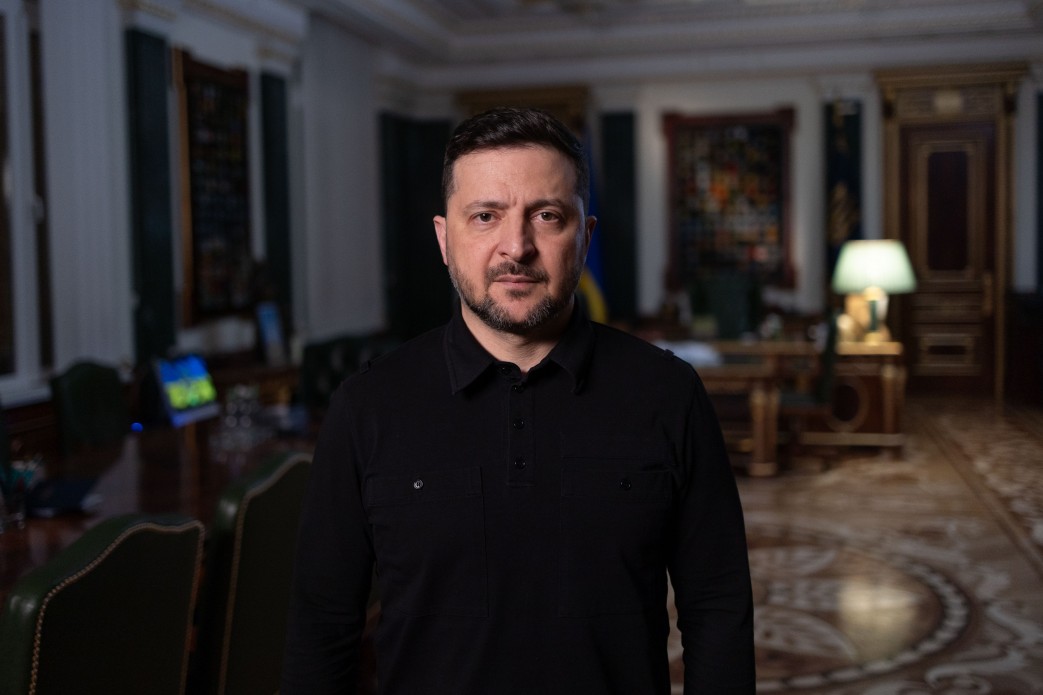
Against the backdrop of Donald Trump's statements about a possible US withdrawal from NATO, Volodymyr Zelensky has put forward an idea that would have seemed marginal just a few years ago: the creation of a new defense alliance in Europe, open to states outside the European Union.
This is not the first attempt to rethink the security architecture on the continent, but for the first time it sounds not like an academic discussion, but as a response to concrete pressure from Washington.
What exactly has been proposed
According to Zelensky, the new structure should encompass states that either do not belong to the EU or are in a suspended state regarding NATO membership. This primarily concerns Ukraine, Georgia, and Moldova — countries that formally aspire to Euro-Atlantic integration but remain de facto in a gray zone of security guarantees.
The idea appeals to simple logic: if existing structures cannot or will not provide real guarantees, a parallel system is needed. Not instead of NATO — alongside it.
The real conflict of the idea
The problem is not in intentions, but in mechanics. NATO is built on Article 5 — collective defense with a clear obligation. Any new alliance immediately faces a question: who and what guarantees mutual defense? Signing a declaration is easy. French or British troops under Kharkiv — that's another story.
It is telling that the most concrete steps in this direction are already being taken not by a new bloc, but through bilateral security agreements. Great Britain, France, and Germany have signed agreements with Ukraine that contain commitments to support — but without an automatic mechanism for military intervention.
That is, the architecture is already being built — in fragments, without a unified name and without joint command.
Why this matters now
Trump returned to the White House with clear rhetoric: the US is reconsidering its obligations to allies who are "underpaying". For Europe, this is not just diplomatic pressure — it is a signal that relying on the American umbrella in the form it has existed since 1949 can no longer be taken for granted.
In this context, Zelensky's proposal is not so much a ready-made plan as an articulation of a problem that European capitals would prefer to continue postponing.
A skeptical view
The idea of a new bloc has an obvious weakness: the most powerful states, whose participation would make it real — France, Great Britain, Poland — are already in NATO. Their motivation to build a parallel structure is limited. And the countries that need guarantees the most have the least to offer in return.
Moreover, any new structure requires years of institutionalization — headquarters, command chains, joint exercises, compatibility procedures. War does not wait for bureaucracy.
A question that remains open
If by the end of 2025 no major European state supports the idea of a new defense bloc with concrete obligations, would this mean that Europe has chosen the path of targeted bilateral agreements instead of a systemic response to the collapse of the old security architecture?



