Pashchynsky Cancels Irpin Water Supply and Sewerage Tariff Decisions: What Lies Behind This Order
# The Mayor of Irpin Orders Cancellation of All Municipal Enterprise Decisions on Water Rate Changes. Why This Happened and What It Means for Residents — RazomUA Investigates

By Oleg Bazylewicz
April 9, 2026 · 2 min read
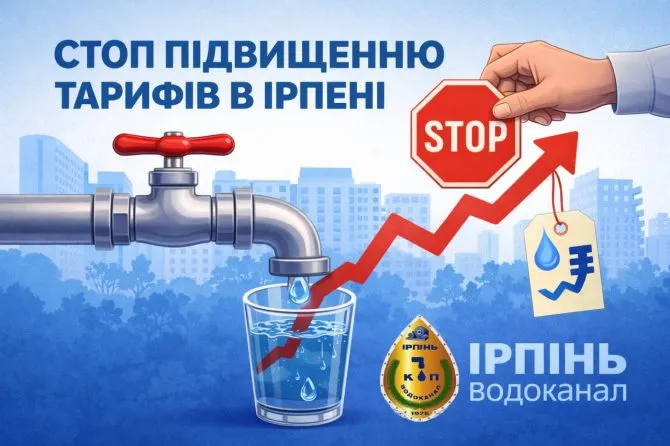
Aleksandr Pashchynskyi, mayor of Irpin, issued an order to cancel all decisions by Irpin Water and Sewerage Company regarding changes to water supply and sewerage tariffs. There is minimal official explanation for the reasons — which in itself raises questions.
What Happened
Irpin Water and Sewerage Company is a municipal enterprise subordinate to the city council. This means any decision to review tariffs should formally be coordinated with city authorities or at least not contradict their position. The fact that the city mayor felt compelled to issue a separate order to cancel already-adopted decisions by the enterprise suggests either internal communication between the mayor's office and the utility broke down, or decisions about tariffs were made bypassing standard approval procedures.
What This Means for Residents
Water tariffs are not abstract matters. In the context of postwar reconstruction, Irpin is undergoing active development, the number of subscribers is growing, and water infrastructure requires modernization. Tariff increases in this context are inevitable. However, if the procedure for setting them is non-transparent or bypasses public discussion, residents receive bills without understanding why they're paying more.
Canceling the decisions is not a refusal to raise tariffs altogether. Rather, it is likely a signal that the procedure will be restarted — this time following formal steps: public hearings, cost justification, and council voting.
Broader Context
Irpin is not an exception. Throughout Ukraine, municipal utilities find themselves caught between rising operational costs (energy, equipment, wages) and the political reluctance of local councils to raise tariffs before elections or due to lack of transparent mechanisms for justification. The result is either silent increases without proper procedure, or chronic underfunding of utilities, leading to emergencies.
In the case of Irpin Water and Sewerage Company, the first scenario apparently took place — and was stopped only after the fact.
If Pashchynskyi is genuinely committed to restarting the procedure with all steps properly followed, residents will see this at upcoming city council sessions. If there are no sessions on this issue and new tariffs appear quietly instead, the question will remain open: the cancellation of old decisions will prove not to be a protection of community interests, but merely a shifting of responsibility.