FP-9: Ukrainian ballistics with range to Moscow — characteristics exist, tests ahead
Fire Point is developing the FP-9 ballistic missile with a range of 855 kilometers and a payload of 800 kilograms. Flight tests are scheduled for summer 2026 — earlier than previously expected.

By Tetiana Suchkova-Ladik
June 10, 2026 · 3 min read
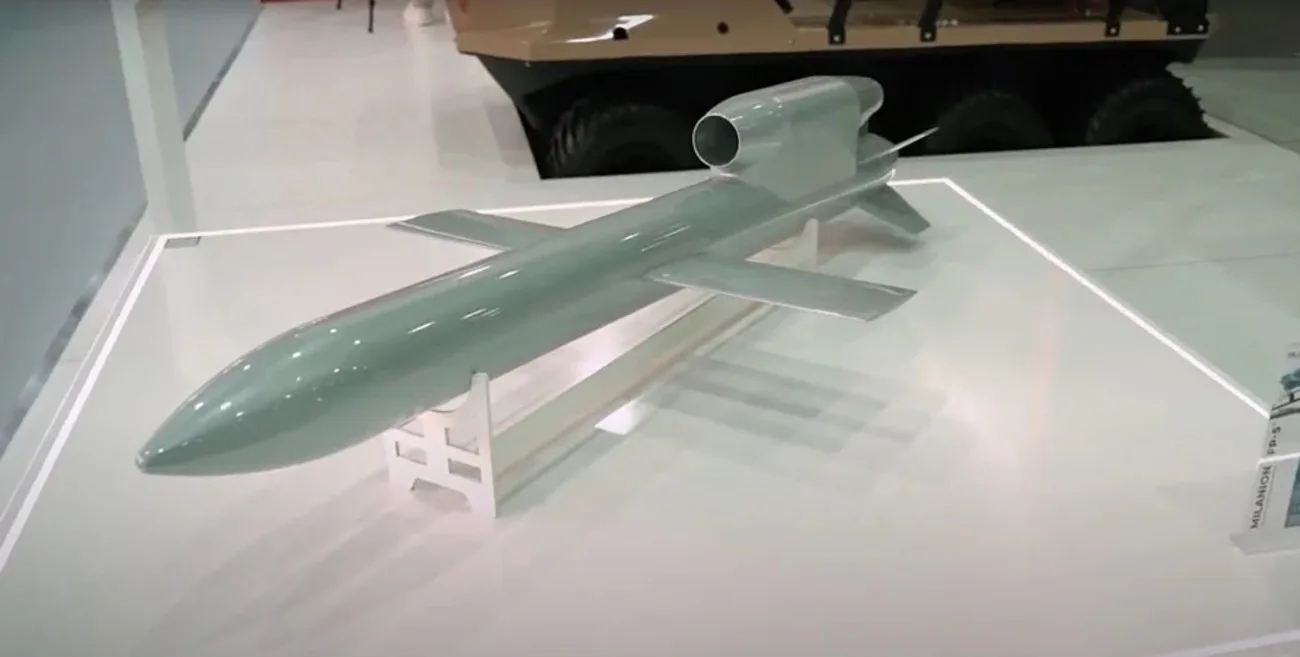
While Zelenskyy speaks about strikes on Russian territory, Ukrainian private companies are already showing prototypes. Fire Point — a developer of strike drones known for destroying A-50 aircraft — has presented sketch characteristics of the FP-9 ballistic missile. Anton Zemlyaniy, a senior analyst at the Ukrainian Security and Cooperation Center (USCC), called it potentially the most serious domestic ballistic development to date in an interview with UNN.
What is this missile
According to declared specifications, FP-9 is a short-range ballistic missile 12.5 meters long, capable of carrying a warhead weighing 800 kg to a distance of up to 855 km. The maximum trajectory altitude is approximately 70 km, with accuracy within 20 meters. For comparison: the Russian Iskander-M carries a 480-kilogram warhead to 500 km, and the American ATACMS Block 1A carries 227 kg to 300 km.
Fire Point's chief designer Denys Shtilerman is betting not only on range but also on the speed of target engagement.
«FP-9 will easily hit targets in Moscow because it has very high approach velocity. For example, Iskander currently has about 800 meters per second, but ours will be over a thousand».
Denys Shtilerman, chief designer at Fire Point, NV
A speed exceeding 1000 m/s is the lower threshold that significantly complicates interception by modern air defense systems. Iskander at such speeds is already difficult to shoot down with Patriot-type systems; FP-9 claims a higher bar.
Timeline: what is real and what are plans
The first public information about FP-9 appeared in autumn 2025. In February 2026, footage of the first field launches appeared on the internet. Flight tests of the full-scale missile are planned for early summer 2026. According to UAWire, in parallel, a smaller missile by the same developer — FP-7 (range ~400 km, warhead 150 kg) — is also undergoing test cycles.
The Sapsan missile (Hrim-2), overseen by the state defense sector, completed tests in 2025 and is claimed to be ready for serial production — but its range is limited to 400–500 km. FP-9 with a range of 855 km fills a different niche — striking targets in the deep rear, including the Moscow agglomeration.
Why ballistics are not replaced by drones
USCC analyst Zemlyaniy separately examined a question that regularly arises in discussions: does the massive use of FPV and strike drones make ballistic missiles redundant. The answer is no, for specific reasons:
- Response speed. A ballistic missile covers 855 km in minutes — a kamikaze drone of the same range flies for hours, giving time for evacuation and raising interceptors.
- Strike mass. An 800-kilogram warhead destroys protected objects — command posts, ammunition depots, fortified communication hubs — where a drone with 5–10 kg of explosives physically cannot cause necessary damage.
- Psychological and operational effect. The threat of a ballistic strike on a specific location forces the enemy to keep significant air defense resources tied to the capital.
Vulnerability of Russian air defense: real but not absolute
Moscow is protected by a layered system — S-400, S-350 Polina, and Pantsir complexes. At the same time, intercepting one Iskander costs over 6 million dollars, as Shtilerman himself noted. With massed application — even ten missiles — the system faces not only technical but also economic depletion of ammunition. FP-9's speed, higher than Iskander's, further narrows the reaction window for air defense operators.
There are no confirmations from ISW or the Armed Forces of Ukraine regarding the combat use of FP-9 — and there cannot be at this stage: the missile has not yet completed the full flight testing cycle. All characteristics are declared by the manufacturer and not independently verified.
If flight tests in summer 2026 confirm the declared range and accuracy — the question will not be whether these missiles appear in the military, but how many can be produced monthly given the available capacity of the Ukrainian defense industry.