10 houses demolished, 76 damaged: Korostenko counts losses after kamikaze drone strike
A strike on April 3rd destroyed nearly an entire street in a city that is one of the key railway hubs on the route from Kyiv to the West. One person killed, seven wounded — among them three children.

By Tetiana Suchkova-Ladik
April 7, 2026 · 2 min read
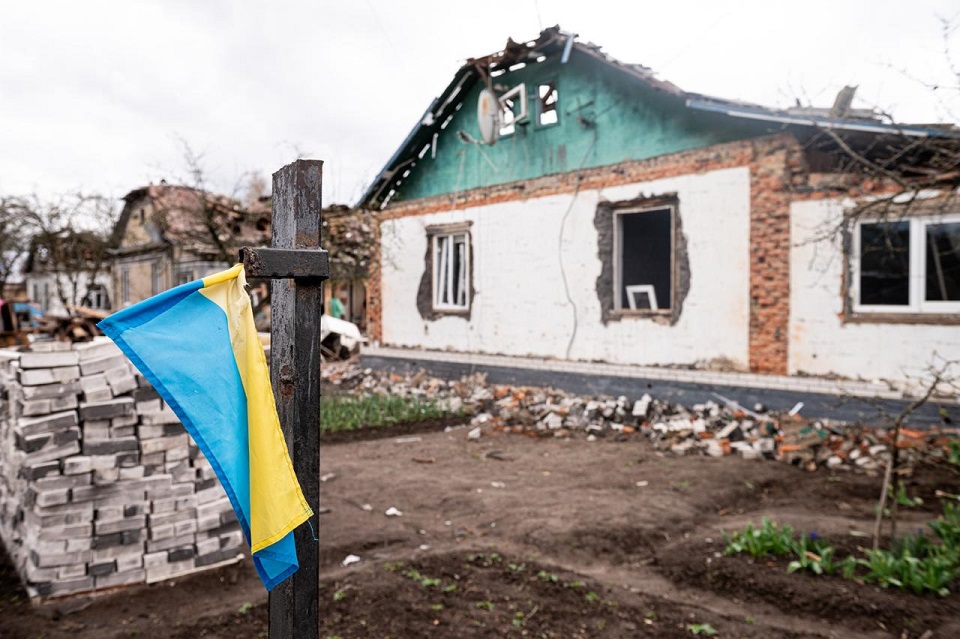
A week after the strike, Korosten is still clearing the rubble. 10 residential buildings have been declared beyond repair, and another 76 have suffered varying degrees of damage — according to data released by the Ministry of Community and Territorial Development following a preliminary survey.
On April 3, Russia launched a combined missile and drone strike on residential areas of Korosten in Zhytomyr region. According to the Zhytomyr Regional Military Administration, a 70-year-old woman was killed. Seven people were hospitalized — including three children. Five victims were rescued from under the rubble by rescuers.
"We're left with nothing — no home, no yard, no life. My husband is disabled, completely blind, has had two strokes. And what? We're left on the street"
Resident of the destroyed street, according to local media "Korostenmedia"
What was destroyed
The strike essentially leveled an entire street in the private sector. Deputy Mayor Natalia Chyzhevska, during an inspection, noted that most buildings on it fall into the destroyed rather than damaged category. Among those affected is a house belonging to her own mother.
First Deputy Head of the Zhytomyr Regional Military Administration Natalia Ostapchenko reported that parallel to the State Emergency Service, a damage assessment commission is already working on site — so residents can receive compensation later.
Why Korosten is not a random target
Korosten is a major railway hub of the Southwestern Railway: almost all trains from Western Ukraine to Kyiv pass through it. The station connects routes to Zhytomyr, Ovruch, Novovolynsk, and Kovel. In December 2025, a freight train derailment caused by a Russian drone strike was recorded near the station.
The strike on residential areas rather than industrial facilities aligns with Russia's tactics documented by ISW: combining night mass attacks with daytime strikes on civilians to maximize destruction and pressure on the population.
- Scale of the April 3 attack: one of the largest combined strikes since the beginning of the year — ballistic missiles, cruise missiles, and hundreds of kamikaze drones were used simultaneously across several regions.
- Targets destroyed: The Ukrainian Air Force reported destroying 541 targets out of 549.
- Korosten separately: train traffic on the Kyiv-Korosten route was halted, then later resumed.
If Russia repeats targeted strikes on the railway infrastructure of the hub — rather than just on the residential areas surrounding it — the issue of evacuation and supply logistics for the entire northwest of the country will become significantly more acute.



