"127 pilots and 29 'civilian' vessels: Ukraine names executors of missile strikes and Russia's shadow logistics"
The National Security and Defense Council (NSDC) has compiled two registers: commanders who have fired over 5,200 missiles at cities, and merchant vessels that transport weapons under civilian flags. Most of the ships are already under Western sanctions—the question is whether this will stop them in ports.

By Tetiana Suchkova-Ladik
May 23, 2026 · 2 min read
On May 23, Zelensky signed decrees No. 426/2026 and No. 427/2026 — two sanctions packages that for the first time clearly distinguish between those who carried out the strikes and the logistics chain that supported them.
Who is on the first list
127 individuals — exclusively commanders. According to the Office of the President, restrictions have been imposed on leaders of long-range aviation units of the Russian Aerospace Forces, who deployed over 4,100 cruise missiles — X-101, X-55, X-555, X-22, X-32, and Kinzhal aeroballistic missiles. Separately — commanders of rocket and artillery units of the ground forces, responsible for over 1,100 attacks with Iskander missiles of both types.
The President's Office sanctions justification documents specific strikes:
- Okhmatdyt children's hospital in Kyiv — July 8, 2024;
- multi-story building in Ternopil — November 19, 2025, 38 killed, including eight children;
- Hroza village in Kharkiv region — October 2023;
- Mariupol — March 2022, FAB-1500 and FAB-3000 bombs.
Sanctions include asset freezing and entry bans. This instrument does not automatically trigger criminal prosecution outside Ukraine.
What is in the second package
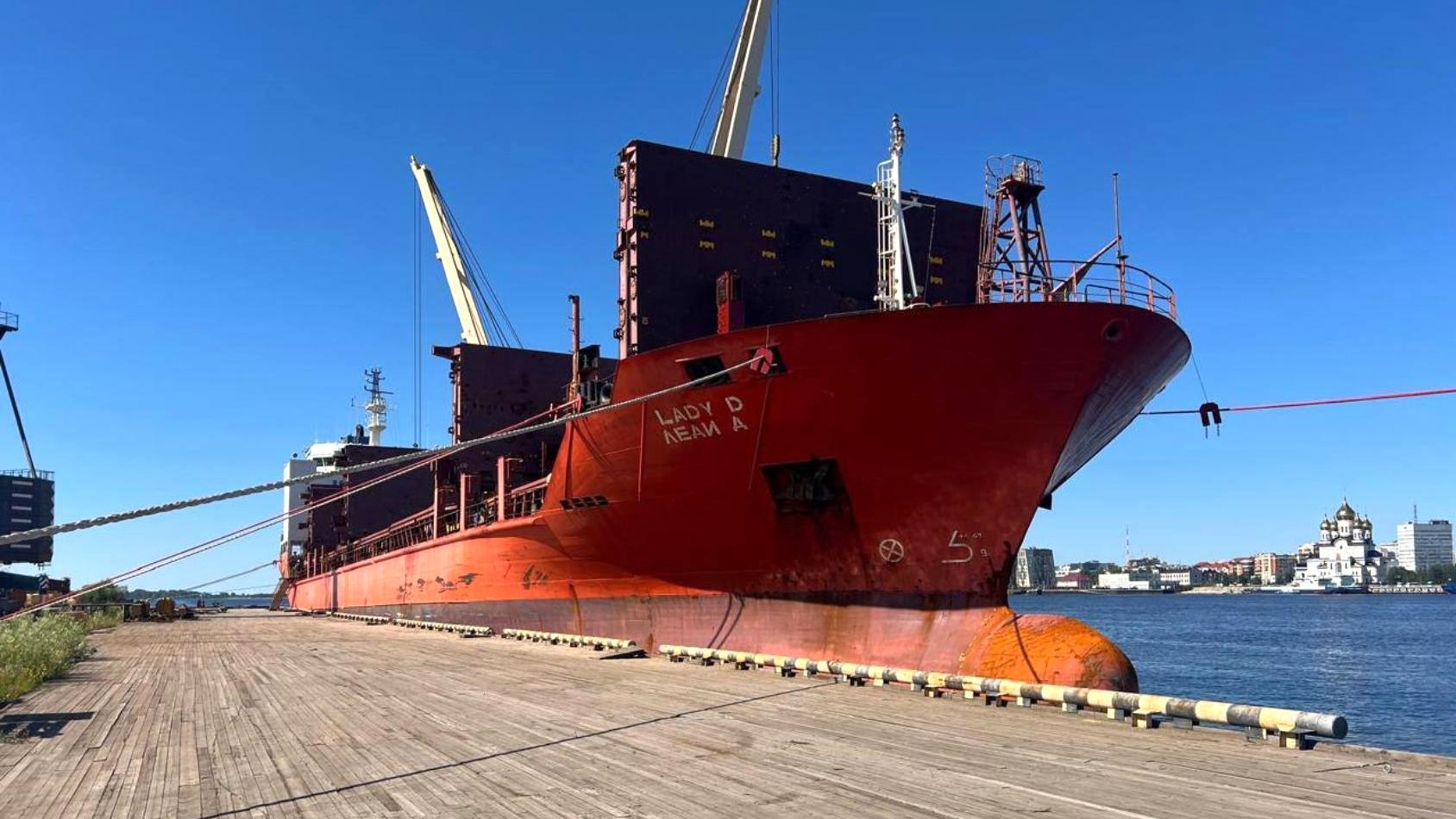
29 civilian cargo vessels. According to Ukrainian Pravda, they are used for regular transportation of weapons, ammunition, military equipment, and personnel of the Russian Defense Ministry — not oil, but direct military cargo. This distinguishes this list from previous sanctions against the tanker fleet.
"Today's package highlights the weapons supply channels for the Russian army, let's see which ports will accept these ships now"
Volodymyr Zelensky, from his May 23 address
According to Ukrainian Pravda, most of the 29 vessels are already under sanctions by the United States, EU, and Great Britain. As for the rest, Kyiv announced work with partners on "synchronization."
The problem left unresolved in the decree
A sanctions list and actually stopping a ship are different things. According to Liga.net, Ukraine is separately developing a mechanism to open criminal cases against shadow vessels, which would allow partners to fully arrest ships, not just add them to registries. This mechanism is absent from the May 23 decrees.
Russia's shadow fleet numbers approximately 1,400 vessels — 29 blocked ships represent less than 2% of the total volume. Meanwhile, these specific ships carry not oil but weapons: if even one major port denies them entry after the new list, the supply scheme would change substantially.
If ports in Turkey, the UAE, or India, which these 29 vessels regularly visit, do not respond to the new sanctions list — will it remain a pressure instrument, or will it become documentation for future tribunals?



