180 square meters of fire on the move: Cherkasy – Znam'yanka electric train caught fire during motion
40 passengers were evacuated in an open field near Kosary — and this is no longer an isolated incident: in 2024, there were 22 fires at Ukrainian Railways facilities and rolling stock.

By Tetiana Suchkova-Ladik
May 12, 2026 · 2 min read
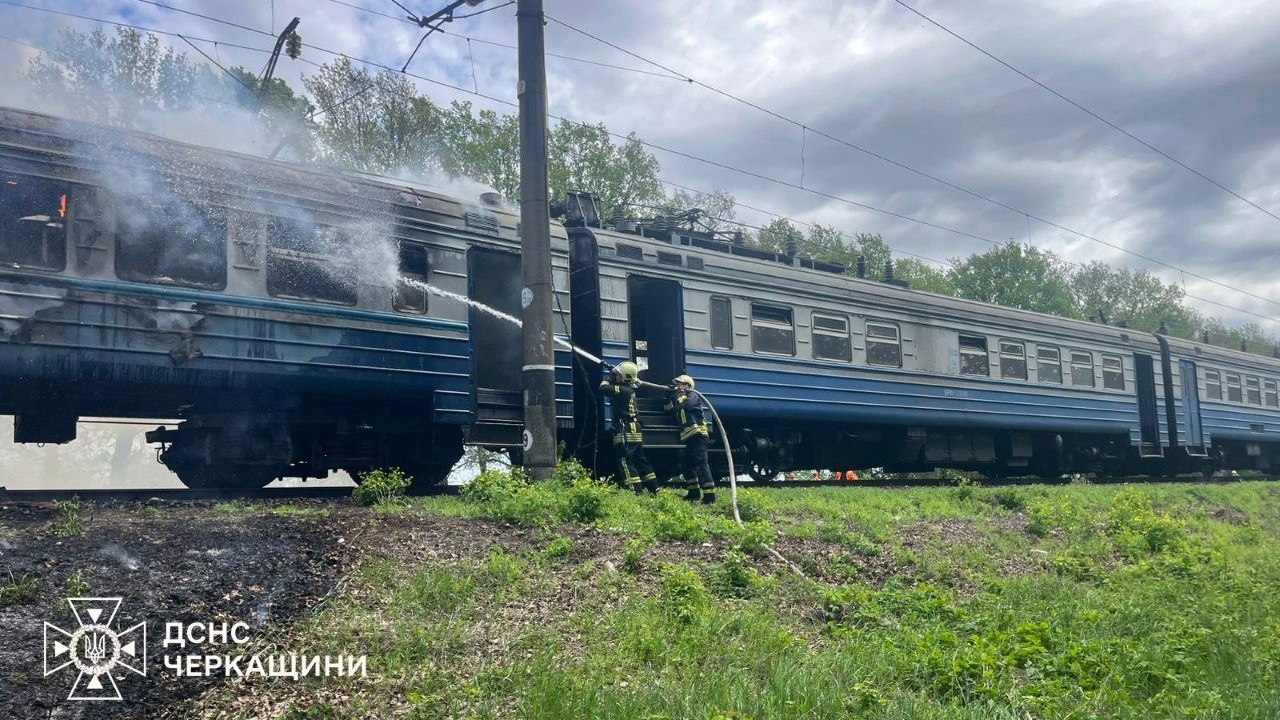
On May 12, an electric train on the Cherkasy – Znamianka route caught fire while moving near the village of Kosari in Cherkasy District. The fire covered an area of 180 square meters — essentially several cars. 40 passengers were evacuated before the rescue workers arrived.
What Happened
The head of the Cherkasy Regional Military Administration, Ihor Taburets, was the first to report the incident. According to the DSNS (State Emergency Service), the fire in the electric train cars was extinguished without spreading further. There were no casualties.
"Passengers were sent from Kosari station on a backup train with a delay of one and a half hours. The route remained unchanged."
Ukrzaliznytsia
In other words, logistics were restored — but without any explanation of the cause of the fire.
Not the First Time
The Cherkasy incident fits into a broader pattern. According to the Center for Transport Strategies, there were 22 fires on Ukrzaliznytsia facilities and rolling stock in 2024 — and these are only the ones extinguished by the company's own units. The causes of fires on electric trains are usually attributed to the worn condition of rolling stock: most suburban electric trains in Ukraine are Soviet-era ER2 trains and their modifications that are 30–50 years old.
According to analysis by Chas.News, the worst technical condition of electric trains was recorded on the South-Western Railway — the Cherkasy route falls within its service area.
What Remains Off Camera
Ukrzaliznytsia confirmed the delay and deployment of a backup train — standard crisis communication. However, neither the company nor the DSNS publicly stated the cause of the fire: technical malfunction, electrical issue, or something else.
This is fundamentally important: if the cause is a systemic malfunction of a specific series of rolling stock, silence means that other identical electric trains continue to operate.
If Ukrzaliznytsia identifies the technical cause of the fire, it will become clear whether this is an isolated incident or grounds for an unscheduled inspection of the entire fleet on the Cherkasy route.



