225,000 Jobs by 2035: How Germany is Losing Its Own Automotive Revolution
Manufacturers and suppliers have already cut 100,000 employees since 2019 — and this is just the beginning. According to an updated VDA forecast, the industry will lose another 125,000 jobs, and the reason is not only electric vehicles.

By Tetiana Suchkova-Ladik
May 13, 2026 · 2 min read
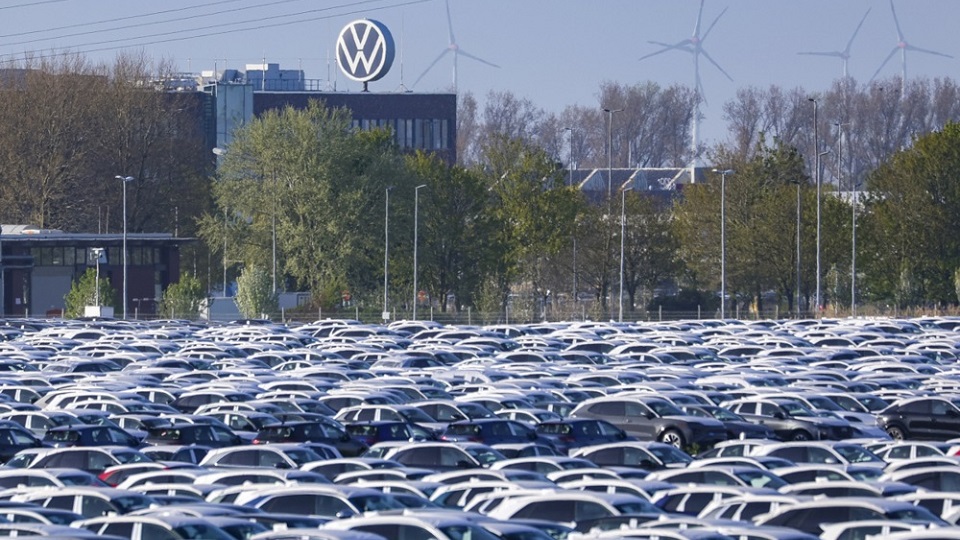
When Ford closed its plant in Saarlouis in November 2025, 4,500 people lost their jobs. This is not a statistic — it is a city that was built around a single enterprise for decades. There are more such cities in Germany.
Numbers that have not improved
225,000 jobs — that is how many will disappear in the German automotive industry by 2035, according to an updated forecast by the Association of the German Automotive Industry (VDA). A year ago, the association cited the figure of 190,000. The difference of 35,000 is not a clarification, it is a signal that the crisis is developing faster than analysts had modeled.
"Unfortunately, we must assume that 225,000 jobs will be lost by 2035"
— Hildegard Müller, President of VDA
According to her, approximately 100,000 jobs have already disappeared between 2019 and 2025. That is roughly half of the projected losses have already occurred.
Suppliers — first in line
The greatest pressure is not on automakers, but on their suppliers. Bosch announced cuts of 13,000 positions in its mobility division — in addition to 9,000 announced earlier. ZF Friedrichshafen is cutting 7,600 jobs in its electrified transmissions division — backing away from its own electrification plans. Since 2023, suppliers as a whole have lost 55,000 jobs.
The logic is simple: an internal combustion engine has hundreds of parts that need to be manufactured. An electric motor has dozens. Fewer parts — fewer factories, fewer people.
Three pressures simultaneously
- Chinese competition. BYD, XPeng, Omoda, GAC — Chinese electric vehicle manufacturers offer a wide range of models at prices that German brands cannot yet compete with.
- American tariffs. According to VDA, in 2024 Germany exported approximately 450,000 vehicles to the United States. Tariff uncertainty makes this flow unstable.
- EU regulatory pressure. Fines for non-compliance with CO₂ standards could reach 15 billion euros for the industry — forcing an accelerated transition to electric vehicles despite weak demand.
Where to look for the cause — in the market or in Berlin?
Economist in foreign trade Martin Brüml believes the problem has a clear political dimension. According to him, the decision to ban internal combustion engines by 2035 is a mistake — since approximately half of what Germany exports are vehicles with such engines. At the same time, Brüml warns against excessive regulatory idealism in EU trade policy: establishing own standards as a condition for trade ultimately narrows the circle of partners.
Volkswagen, in turn, recorded a decline in operating profit of more than 50% in 2025 and announced cuts of 50,000 jobs by the end of the decade. Audi is eliminating 7,500 positions, Continental — 7,150 worldwide.
What comes next
In total — taking into account already cut and planned positions among manufacturers and suppliers — it is hundreds of thousands of people who must either retrain or find work in other sectors. For individual regions where the automotive industry is a city-forming sector, this is a structural change with no quick reversal.
If the EU softens or reviews CO₂ standards for 2035 — and pressure to do so is already mounting — will the industry manage to preserve at least some jobs in internal combustion engine manufacturing without losing momentum in the electric vehicle segment, where China is already several steps ahead?



