24 hectares under Medvedchuk's dacha returned to the state — a test of control over forest lands
The state has become the owner of 24 hectares on the banks of the Stuhna River following a court ruling. Why this matters for the rule of law and the governance of state land.

By Tetiana Suchkova-Ladik
February 9, 2026 · 2 min read
Quick facts
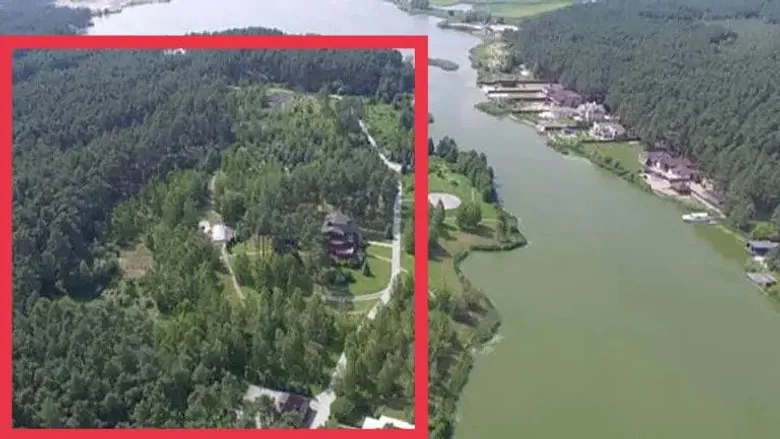
At the end of January 2026, ownership of 24 hectares of land near the Stuhna River in Obukhiv Raion was officially registered in the name of the state. The Office of the Prosecutor General reported this — the decision was the logical consequence of a court verdict that took effect in April 2025.
“Ownership of the land plot was registered in the name of the state on January 26, 2026,”
— Office of the Prosecutor General
Background
In 2004, a plot of state forest land was removed from state ownership and transferred into private ownership while Viktor Medvedchuk was heading the Presidential Administration. This was done in violation of land and forestry legislation: decisions by local administrations effectively exceeded their authority and bypassed required procedures, among which was the mandatory resolution of the Cabinet of Ministers to change the land’s designated purpose.
The procedural violation itself became the basis for a lawsuit: in 2024 the plot was reclaimed to state ownership through the courts, and the finalization of the process — registration of ownership in favor of the state — took place on January 26, 2026.
What is on this land
On the over 24-hectare site there is a three-story wooden house built by the firm “Honka,” a helipad, a berth for a yacht, a swimming pool and a guest house. In 2023 the state enterprise Olympic Training and Sports Complex “Koncha-Zaspa” became the manager of the plot.
Why this matters
The return of the plot is not just one episode among a list of high-profile precedents. It is a test of two key things for society: how the system for restoring state ownership functions and how effectively lands of the forest fund are controlled. If the state can reclaim what was transferred in violation of the rules, that is a positive signal about institutional effectiveness.
Analysts note that cases in which forest fund lands have their designated purpose changed without the Cabinet’s involvement create precedents for abuse. The court victory in this specific case may serve as an example for further checks and reviews of similar decisions.
What’s next
The practical next step is to determine the future use of the plot by the state-managed enterprise: whether the sports and recreation facilities will remain, or whether a public or environmental audit will be initiated. Increased attention should also be expected toward the mechanisms for transferring forest fund lands and toward cadastre reform, which would reduce room for such schemes.
The return of this plot is a signal not only about a single story but about a systemic approach to recovering state resources and restoring trust in the rules. The ball is now in the institutions’ court: will court decisions and registrations turn into a steady practice of oversight over state land?



