"31 billion cubic meters underground: US wants to turn Ukraine into a gas buffer for Europe"
# Senior US Energy Department Advisor Andy Repp Calls Ukrainian Underground Storage a "Swing Bridge" for Central and Western Europe's Gas Supply Senior advisor to the US Department of Energy Andy Repp has described Ukrainian underground storage facilities as a "swing bridge" — a connecting link in gas supply to Central and Western Europe. Behind this term lies a specific architecture: American LNG through Polish terminals and into Ukrainian underground storage.

By Tetiana Suchkova-Ladik
April 24, 2026 · 3 min read
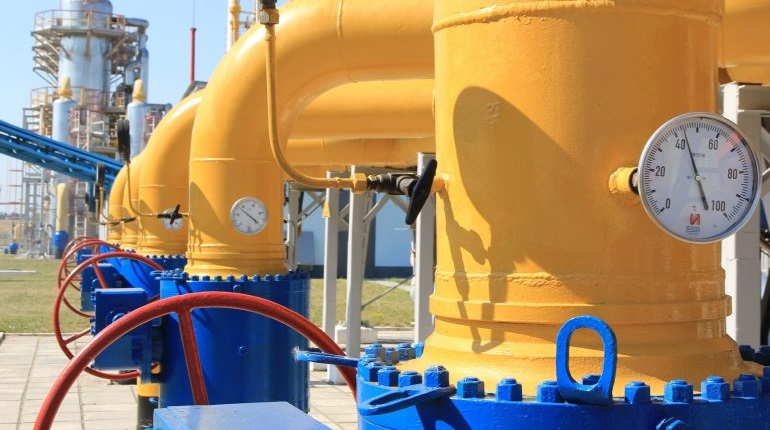
When Andy Repp, senior advisor to the U.S. Secretary of Energy, used the phrase swing bridge at a media briefing regarding Ukraine, he was describing not a metaphor but infrastructure logic. Ukraine has 31.95 billion cubic meters of active underground gas storage capacity—more than any other European country and the third largest in the world after the United States and Russia.
How it is supposed to work
The scheme being promoted in Washington does not require building a new terminal on the Ukrainian coast—at least not in the initial phase. American liquefied natural gas (LNG) arrives in Poland—including at the terminal in Świnoujście—is regasified and delivered by pipeline to Ukrainian underground storage facilities in the western part of the country. In summer—injection, in winter—withdrawal and distribution to Central and Western European countries.
This model already partially works. According to Ukraine's gas transmission system operator, the storage facilities currently hold approximately 10 billion cubic meters of gas from clients in 21 countries, including the United States, Great Britain, and France. The capacity is about 90% full.
"Potentially, Ukraine could receive 6-8 billion cubic meters of LNG from the United States annually through Polish terminals for further transportation to European countries"
Otto Waterlander, operational director of Naftogaz
Waterlander, who has 30 years of experience in the oil and gas industry and began his career at Royal Dutch Shell, clarifies the fundamental advantage of this scheme: it does not require additional infrastructure investments—unlike building a new LNG terminal. Ukrainian storage facilities are already connected to Europe's gas transportation network.
Why this benefits Washington
According to Repp, the response to the question about building an LNG terminal directly in Ukraine was cautious: the advisor did not rule out such a scenario but emphasized the role of existing storage infrastructure. The American side is interested in Ukraine as a sales market: the United States is the world's largest exporter of liquefied gas and plans to double sales volumes by the end of the decade.
Kyiv, for its part, has already concluded a second agreement to purchase American LNG. As the Foreign Ministry reports, Foreign Minister Andriy Sybiha earlier proposed to partners a concept of using Ukrainian storage facilities for American gas as a tool to reduce the EU's energy dependence on Russia. All pipeline supplies of Russian gas through Ukraine stopped at the beginning of 2025.
What has not been publicly calculated
The key question that has not been raised in any official statement: who insures the infrastructure and on what terms during active combat operations? Most storage facilities are located in the western part of the country—relatively far from the front line—but massive strikes on energy infrastructure in the fall of 2025 forced Naftogaz to revise production forecasts downward by 30%. Commercial clients from 21 countries are already storing gas in Ukraine, which means there is no market signal yet about excessive risk.
- Storage capacity: 31.95 billion m³ of active gas—the largest in Europe
- Foreign clients: ~10 billion m³ from customers in 21 countries already
- Route: USA → LNG terminal in Poland → regasification → Ukrainian underground storage → Central and Western Europe
- Alternative: Ukraine's own terminal on the Black Sea—an option, but with a different timeline and capital requirements
If Washington and Brussels formalize an agreement on using Ukrainian storage facilities as a buffer until the next heating season—this will transform Ukraine from a transit country into an operator of Europe's gas reserve. However, if the mechanism for insuring war risks for foreign gas in Ukrainian underground storage remains unresolved, the commercial scale of the scheme will be limited by the ceiling of trust rather than the ceiling of storage capacity.



