$500 Million for a Flooded Village: What Lies Behind the Water Resort Project in Bakota
Developer "Superposition" announced a large-scale resort on the Dniester Reservoir — but behind the impressive half-billion-dollar figure, so far there is only land, ambitions, and experience from one unfinished Carpathian project.

By Tetiana Suchkova-Ladik
April 27, 2026 · 2 min read
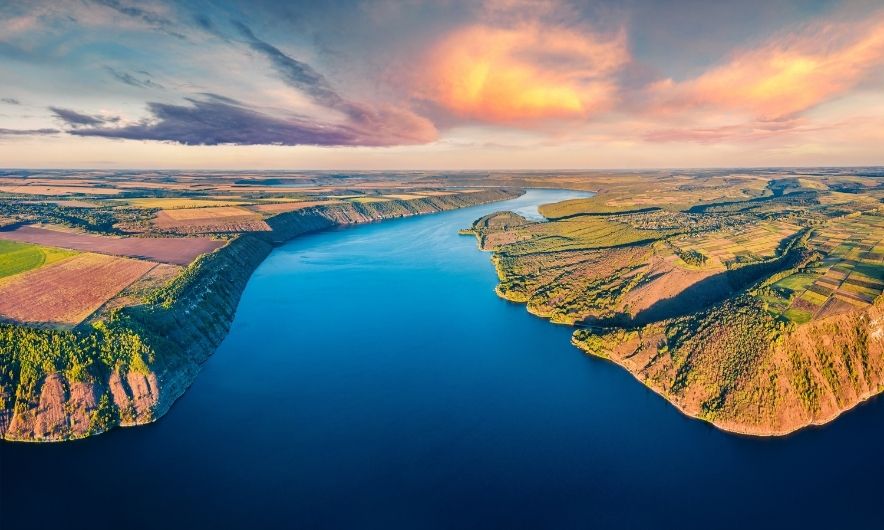
Bakota — a place that formally does not exist. The village was flooded in 1981 during the construction of the Dniester Hydroelectric Power Station. Today, only a rock monastery and the reputation of one of Ukraine's most picturesque natural landscapes remain above water. It was here that the development company "Superposition" came with a project worth $500 million.
What is planned to be built
Co-founder of "Superposition" Yuriy Hladkiy described the future object to Liga.net as Ukraine's first large-scale water hub — spanning 40 hectares with yacht clubs, apart-hotels, infrastructure for navigation and fishing. Construction is scheduled to begin in autumn 2026. The aim is to compete with Bukovel, but on water.
The project involves an investment component: some facilities will be built with external investors' money, not just the developer's own capital. Specific funding mechanisms and partners have not been publicly disclosed.
Who is behind this — and what they have done before
"Superposition" was founded by former banker Andrii Stetsevych and marketer and CEO of Grape agency Yuriy Hladkiy. The company is already implementing a similar project — KRYLA Karpaty by EDEM, an autonomous alpine village 9–11 km from Bukovel on the Chornohirsky Ridge, designed for 100 houses with a total budget exceeding $50 million. Among KRYLA investors are entrepreneur Andrii Semaniv and Growness Group founder Ostap Pavliuk. The team estimates the project's payback period at 10–12 years with margins of 10–12%.
"Kryla Karpaty" seeks to create an alternative where residents receive quality and aesthetic recreation and have various scenarios".
— Andrii Stetsevych, "Mistotvorci" podcast
The Carpathian project is not yet completed — and it is the only implemented reference for the team before announcing an object ten times more expensive.
Where the real issue lies
Bakota is located within the Podilski Tovtry National Nature Park — a nature conservation zone with strict restrictions on construction and economic activities. A 40-hectare project in such a zone requires either a change in the park's boundaries or a special permit regime. There is no public data yet on whether this has been coordinated with the Ministry of Environmental Protection or local authorities.
- $500 million — stated cost, funding mechanism not disclosed
- 40 hectares — area, part of which is in a nature conservation zone
- Autumn 2026 — planned start of construction
- KRYLA Karpaty — the team's only implemented project, still in progress
Tourist demand for Bakota is genuine and growing: the location has become one of the most popular domestic tourism destinations, SUP boards, yachts and catamarans are already rented here, and a new official "From Horaivka to Bakota" route recently appeared. So the market exists — the question is whether the regulatory environment will allow it to scale up.
The project will become a real step, not another beautiful render, if the team publicly shows two documents: approval from environmental protection authorities and confirmed commitments of first-round investors — before construction starts in 2026.



