535 hryvnias of state investment per job: why new parks are a test for the system, not a victory
# Cabinet adds two new industrial parks to registry in Khmelnytsky and Odesa regions The Cabinet of Ministers has added two new industrial parks to the registry — one in Khmelnytsky region and one in Odesa region. Together they promise 650 jobs and over 535 million hryvnias in investments, but the real bill will not be presented at registration, but when the first factory halts its assembly line.

By Tetiana Suchkova-Ladik
May 7, 2026 · 2 min read
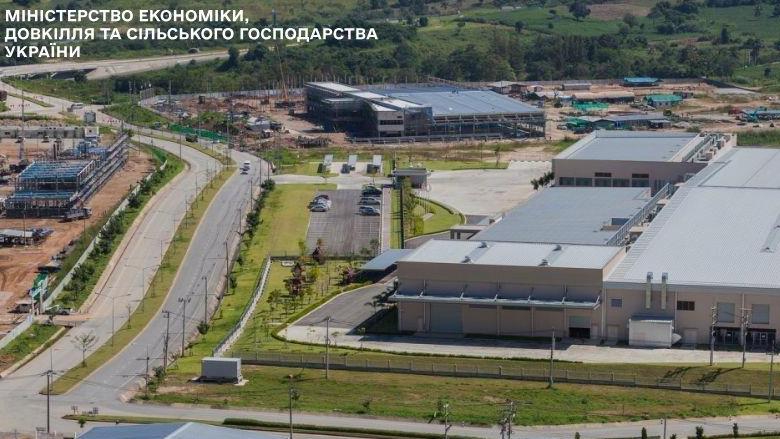
The Cabinet of Ministers has added two new facilities to the Industrial Parks Register: "Mezhybizh Invest Park" in Khmelnytsky region and "BIOINDUSTRIPARK" in Odesa region. The Ministry of Economy expects them to create 650 jobs and attract over 535 million hryvnias in combined investments — with partial involvement of private capital.
What and Where
"Mezhybizh Invest Park" occupies 13 hectares in Mezhybizh municipal community of Khmelnytsky district. The declared investment volume is approximately 350 million hryvnias. "BIOINDUSTRIPARK" with an area of 11.5 hectares is located in Zelenohirska community of Podilsky district in Odesa region; the initiator plans to invest approximately 185 million hryvnias plus funds from future participants.
Both parks are focused on processing and agro-industrial sectors — areas where the West is actively seeking alternatives to Asian supply chains.
Context: Registry Growing Faster Than Factories
Ukraine currently has 114 registered industrial parks across the country. However, by the end of 2025, only 37 industrial enterprises had been built or were under construction in industrial parks. In other words, actual production has been launched in fewer than one in three registered parks.
The state is trying to close this gap through direct financing. The co-financing scheme provides 50% from the state (up to 150 million hryvnias) and 50% from own funds; for de-occupied territories, the proportion changes to 80/20. During 2025, Ukraine directed 697.77 million hryvnias in state funds to 22 infrastructure facilities in 13 industrial parks.
"Every hryvnia of state co-financing for industrial park infrastructure allows attracting several times larger private investments and creating new jobs, strengthening the economy during wartime."
— Deputy Minister of Economy
The thesis is correct in theory. In practice, it is tested when a private investor sees registration not as a signal to enter, but as an administrative formality.
Why Khmelnytsky and Odesa Regions — Not a Random Choice
Khmelnytsky region is one of the areas to which enterprises relocated from the east in 2022–2023. Demand for production infrastructure here is real, not on paper. Odesa region is a transportation hub with access to ports, which is critical for agricultural processing and exports. "BIOINDUSTRIPARK" in its name already signals a biotechnology or agro-industrial profile — precisely the area where Ukraine has a raw material base but still lags in value-added production.
What Remains Off-Screen
- The mechanism for monitoring compliance with investment commitments is not detailed in public materials from the Ministry of Economy — neither the timelines nor sanctions for failure to achieve the declared investment amount.
- "Private financing and participant funds" for "BIOINDUSTRIPARK" remain hypothetical for now: participants have not yet been attracted.
- Security zone and logistics — 11.5 hectares in Podilsky district of Odesa region means not the most straightforward access to port infrastructure.
If by the end of 2026 the share of parks with actual production does not exceed 40%, new registrations will look like a way to report activity rather than a tool for attracting capital.



