63.7 million hryvnias and empty grain elevators: ex-minister suspected of a fictitious sale of corn
The Office of the Prosecutor General’s investigation has uncovered a scheme of sham grain deliveries — the case is not just about money but about trust in the agricultural market. We explain how the scam worked and what consequences it has for the sector.

By Tetiana Suchkova-Ladik
March 28, 2026 · 2 min read
What happened
At the beginning of 2026, officials at one agricultural enterprise in the Kyiv region organized a scheme involving the sham sale of corn. According to the investigation, the initiator of the scheme was a former MP and former Minister of Agro‑Industrial Development of Ukraine; the scheme also involved the company’s director and technical manager.
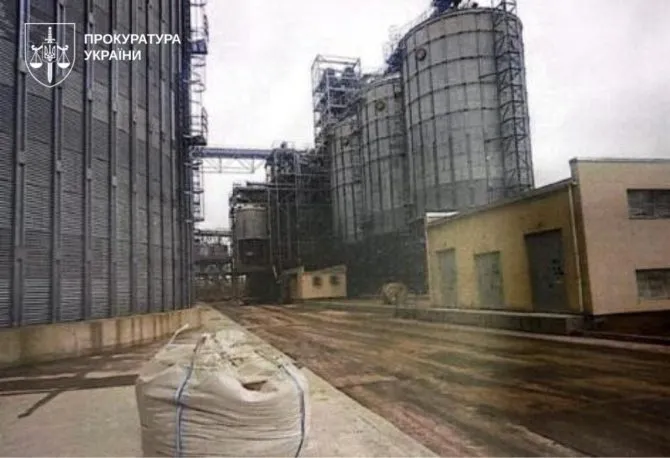
The suspects concluded an agreement to supply 7,000 tonnes of grain from the 2025 harvest and handed the buyer forged warehouse receipts and acceptance‑transfer acts. The documents indicated that the product was stored at a grain elevator in the Kyiv region, while checks established that at the time the papers were issued the grain was not present at the facility.
“In addition, the selling enterprise issued warehouse documents for more than 130,000 tonnes of product, which is more than twice the actual technical capacity of their elevator (60,000 tonnes). An expert examination confirmed losses to the victim in the amount of UAH 63.7 million.”
— Office of the Prosecutor General
How the scheme worked
The scheme combined document substitution and instruments that create an appearance of legitimacy: fake warehouse receipts, acceptance‑transfer acts, and inflated volumes on paper relative to the elevator’s real capacity. This practice allows funds to be siphoned off and “deliveries” to be recorded without any physical transfer of goods.
Law enforcement conducted 26 searches in Kyiv and the region, seizing financial documents, electronic media and vehicles. An inspection of the elevator confirmed the absence of the declared grain.
Why it matters
Such schemes are paid for not only by the buyer or the supplier — the market pays. Financial losses of UAH 63.7 million undermine trust in contractual relations in the agricultural sector, make access to credit and insurance more difficult, and increase risks for honest farmers and traders. In the context of wartime and post‑war recovery in Ukraine, transparency and control over the circulation of food are critically important.
Law enforcement actions and prospects
Three participants in the scheme have been charged with fraud on an especially large scale. Decisions on pretrial measures are being made; the pretrial investigation is ongoing. Investigative steps — seizure of documents and equipment, expert examinations — aim to fully reconstruct the scheme and prove the chain of decision‑making.
The case should be seen not only as a criminal proceeding but also as a signal to the market: the state and businesses must strengthen controls over warehouse accounting and the registration of commodity stocks so that such manipulations do not become a source of systemic risk.
The next step is court rulings that will show how effective the current system for combating economic crime in the agricultural sector is and whether it will be possible to restore buyers’ and partners’ trust. Will these materials provide grounds for changes to the rules governing grain circulation and the oversight of elevators?



