7,000 "Mined" Hectares of State Land to Go to Auction — If Sappers Clear Them First
The Cabinet of Ministers allowed Ukrsoibbank to use the state mine clearance compensation program. For the state land lessor, this means savings of hundreds of millions — for farmers, potential access to new plots in front-line regions.

By Tetiana Suchkova-Ladik
April 14, 2026 · 3 min read
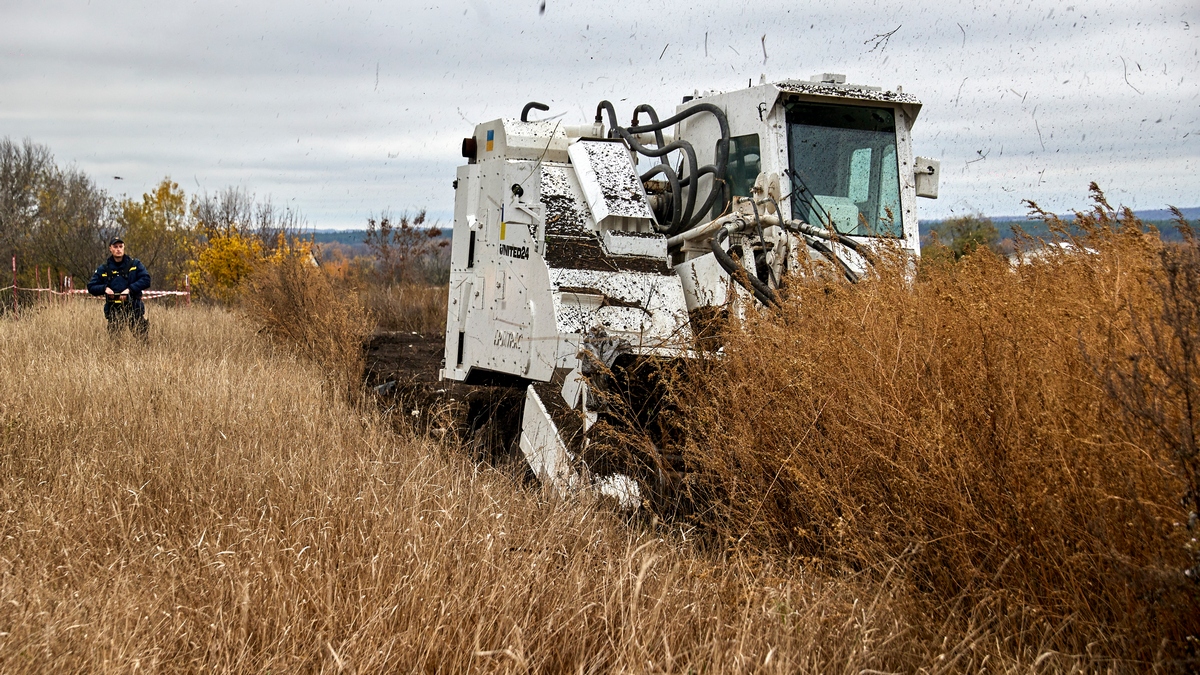
The Cabinet of Ministers included LLC "State Land Bank" in the compensation program for the costs of humanitarian demining of agricultural lands, reported the State Property Fund. The decision concerns 7,000 hectares of state land in Kharkiv, Kherson, and Chernihiv regions — land that currently cannot be offered at online auctions due to mine contamination.
Why Now
The State Land Bank is the operator of state agricultural lands that are subleased through Prozorro.Prodazhi. According to the company's general director Yaroslav Yaroslavsky, almost half of the 7,900 hectares of potentially contaminated plots owned by the bank are located in a 20-kilometer zone from the line of demarcation — mainly in Kharkiv, Kherson, and Chernihiv regions. Prior to this Cabinet decision, the state structure did not have access to the program, which had only operated for private agricultural producers and individuals.
The Cabinet approved the amendment to the program on March 25, 2026: the right to compensation was granted to business entities 100% of whose shares are owned by the state and which use state-owned land. The State Land Bank falls under this criterion.
What "Compensation" Means in Practice
Under the current program conditions, the state covers 100% of demining costs for plots that are only planned for cleanup. The Center for Humanitarian Demining announces an auction to select an operator, determines the winner, and reserves funds until work completion.
"Half a year ago, the figure of 1,000 demined hectares sounded too ambitious. Today, it's already a result. These are fields that are being sown with wheat and other agricultural crops right now"
Center for Humanitarian Demining, March 2025
The average cost of clearing one hectare as of 2025 is approximately 62,000 hryvnias, according to the Ministry of Economy. For 7,000 hectares, this means potential expenses of approximately 434 million hryvnias, which now fall on the state program rather than the State Land Bank's own balance sheet.
Overall Program Scale
During 2025, within the state program, 144 auctions were held for clearing approximately 28,500 hectares — three times more than in 2024. The estimated cost of these works approaches 2 billion hryvnias. Kharkiv region remains the leader: over 6,000 hectares of agricultural land were demined there in the past year, although over 40,000 hectares of the region are considered potentially dangerous.
- Kharkiv region: the most demined hectares in 2025, active combat operations complicate work closer to 20 km from the front line
- Kherson region: deoccupied lands — partially surveyed, sapper logistics remains a problem
- Chernihiv region: less active zone, but contamination following Russian military withdrawal in 2022 has been recorded on hundreds of plots
Where the Logic of the Decision Stops
The program compensates expenses after demining is completed and work is confirmed. However, humanitarian demining is only permitted 20 km away from the line of contact — plots closer to the line are subject only to "operational" cleanup for defensive purposes. This means that a significant portion of the 7,000 hectares will remain beyond the reach of civilian sappers until the front line changes or corresponding regulations are amended.
If the line of demarcation in Kharkiv region stabilizes and moves further from its current positions, part of these lands will become available for humanitarian demining within one to two seasons — and then the State Land Bank's auctions in front-line regions will cease to be hypothetical.



