AMF invests over $10 million in Lviv-region plant — 800 jobs and a boost for "InPark Boryslav"
Money Loves Silence: Dnipro-based AMF has completed the construction phase of a new furniture factory in InPark Boryslav. Why this matters for the region and Ukraine’s economy — briefly and to the point.

By Tetiana Suchkova-Ladik
March 5, 2026 · 2 min read
In brief
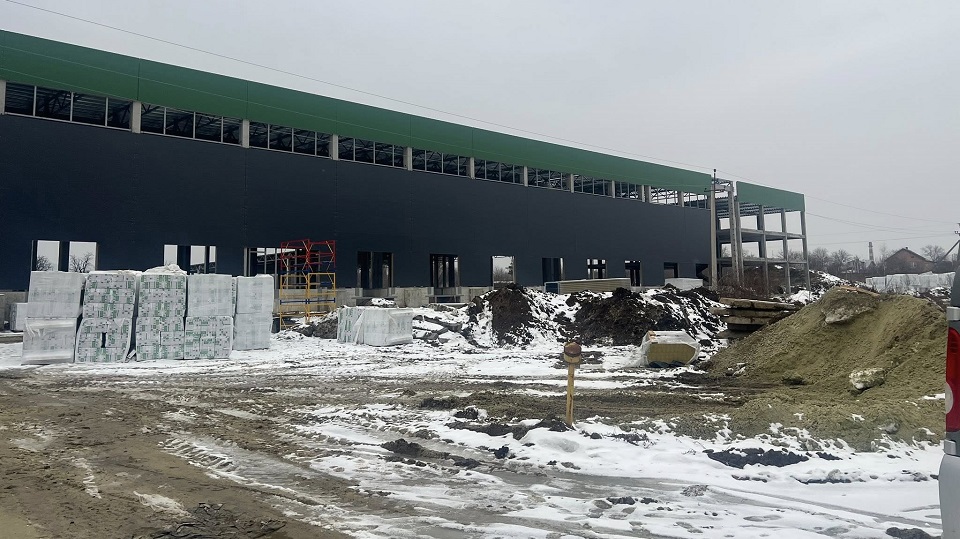
Construction of a factory for furniture company AMF is nearing completion in the industrial park "InPark Boryslav" in the Lviv region. Investments in this facility amount to more than $10 million. After full start-up the enterprise could provide jobs for about 800 workers, and the total area of the complex will reach 24,000 sq. m. Completion of the first phase is scheduled for summer 2026.
What exactly is being built
The first phase is a building of 10,000 sq. m; currently sandwich panels and roofing structures are being installed on the site. The height of the production premises will be 6 meters, and the storage areas 12 meters. Engineering networks have already been brought to the site; floor pouring and window installation are underway.
"This project is an example of investment confidence and job creation for the Boryslav‑Drohobych agglomeration."
— Dmytro Kysylevskyi, Member of Parliament, Deputy Chair of the Verkhovna Rada's Economic Committee
Infrastructure, incentives and expansion
The industrial park covers 20 hectares and has medium-pressure gas, centralized water supply and sewage, and a power substation with a capacity of 5 MW. Boryslav city council granted a land tax relief for 10 years: in the first three years the rate will be 0.25%, then a gradual increase to 2.1%. In 2026 another production-and-warehouse complex of 12,000 sq. m is planned on the site for small and medium businesses; the managing company offers premises from $420 per sq. m.
"One hectare of an industrial park can generate $7–10 million in annual turnover."
— Ministry of Economy of Ukraine
Impact on the region and the economy
The project strengthens local employment and logistics: workers are planned to be transported from settlements of the Boryslav‑Drohobych agglomeration (about 110,000 people). For the country, this is another example of large-scale investment in manufacturing during the war: industrial parks are already becoming one of the markers of investor confidence — as of February 2026, 113 industrial parks have been registered in Ukraine.
Timelines and key risks
Completion of construction of the first phase is expected in summer 2026. Converting the investment into stable production will depend on demand for furniture products, availability of qualified labor, and resilience of logistics chains. The existing infrastructure and tax incentives reduce some risks, but the final outcome will be determined by export opportunities and domestic demand.
Conclusion
This factory is not just a new building and machinery. It is an investment that tests a model of industrial recovery for the region: jobs, a multiplier effect for small and medium businesses, and potential for growth in export revenues. Now it is up to partners and the market — whether these investments turn into a sustained production cycle depends on demand, logistics, and continuation of incentive policies.



