Avtomagistral‑Pivden Wins Tender for Access Roads to Rava‑Ruska — Strengthening Logistics at the EU Border
A Ukrainian contractor offered the lowest price for the contract to construct 270 truck parking spaces near the border checkpoint. This is not just road repair — it is an investment in border throughput and trade with Europe.

By Tetiana Suchkova-Ladik
February 26, 2026 · 2 min read
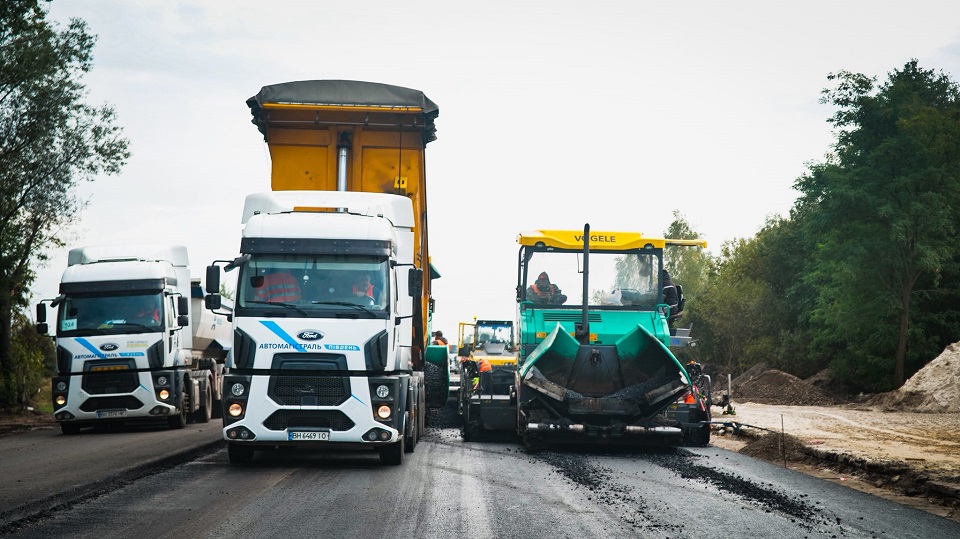
Local contractor victory where logistics flows are decided
LLC «Avtomagistral‑Pivden» officially won the tender for the capital repair of a section of the M‑09 highway from Lviv to Rava‑Ruska — according to data on the public procurement portal Prozorro, and the Recovery Agency confirmed the contract signing. The project foresees the creation of modern and safe areas for temporary vehicle stops near the checkpoint.
"The contract has been signed"
— Recovery Agency
Contract details
The works concern the installation of 270 parking spaces for freight transport at km 183+260 (right) and at km 189+500 (right) in Lviv region. The expected cost of the works exceeded 495 million UAH, but Avtomagistral‑Pivden committed to complete them for 459.33 million UAH. Turkish Onur Construction International (proposal — 475.19 million UAH) and Azerbaijani AzVirt MMC also participated in the bidding.
The modernization of the approaches to the Rava‑Ruska checkpoint is one of two projects in the region under the CEF (Connecting Europe Facility) programme. The project is financed by the European Bank for Reconstruction and Development; the official implementation period is two years, but the contractor says it intends to finish the works earlier.
Why it matters
This is not just asphalt repair. The segment of the M‑09 closest to the border forms the main corridor for freight movement between Western Ukraine and Poland. The presence of 270 reinforced parking spots eases pressure on the checkpoint itself, reduces queues and truck downtime, makes logistics more predictable — and therefore, while it may be costlier for some counterparties, represents a smaller burden for the Ukrainian economy.
The victory of a Ukrainian company over foreign competitors demonstrates two important trends: Ukrainian contractors are competitive on price and execution, and international finance (EBRD, CEF) continues to invest in transport infrastructure that is critical during the war and for the recovery of trade.
Market context
Read alongside the recent win by AzVirt in the M‑10 Lviv–Krakovets tender, where the Azerbaijani company agreed to carry out the works for 431.99 million UAH against an expected cost of over 511 million UAH. The market shows both price competition and a willingness of foreign companies to operate in Ukraine — while also confirming that local firms retain strong positions.
What's next
Now the key is oversight of execution: whether the deadline and quality will hold, and whether the claims about accelerated works will materialize. For residents of the region and businesses, declarations matter less than results — shorter queues, more reliable supplies, and additional jobs. At the state and partner level, it is important to monitor how CEF/EBRD investments translate into real changes at the border.
In sum: the tender is a small but important victory for Ukraine's infrastructure sector, strengthening logistical chains during the crisis and preparing the ground for more efficient trade with the EU.



