Bell Textron enters Ukraine not as a supplier, but as a resident: what stands behind the LLC registration
An American helicopter manufacturer has registered a legal entity in Kyiv with a charter capital of 2.16 million hryvnias — marking just the first step toward assembling combat vehicles directly in Ukraine.

By Tetiana Suchkova-Ladik
April 18, 2026 · 2 min read
Defense companies typically sign memoranda and disappear in the gaps between exhibitions. Bell Textron decided to do things differently: it registered LLC "Bell Textron Ukraine" in Kyiv at the end of January 2025 with a charter capital of 2.16 million hryvnia — before most negotiations were finalized with official documents.
From Memorandum to Legal Entity
The sequence of events unfolded gradually. In July 2024, at the Farnborough air show, Bell officially proposed the combat-modified Bell 407M to Ukraine. By July 2025, plans to invest in the domestic industry became known. Then at the AUSA exhibition in October 2025, Ukraine's Ministry of Economy and Bell Textron signed a memorandum on industrial cooperation in aviation technologies — it provides for opening a Bell office and creating a final assembly and testing center for helicopters.
On October 20, 2025, in Washington, Bell, Ukraine's Ministry of Economy, and UkraineInvest signed several letters of intent — specifically regarding possible supplies and local assembly.
What Bell Is Offering
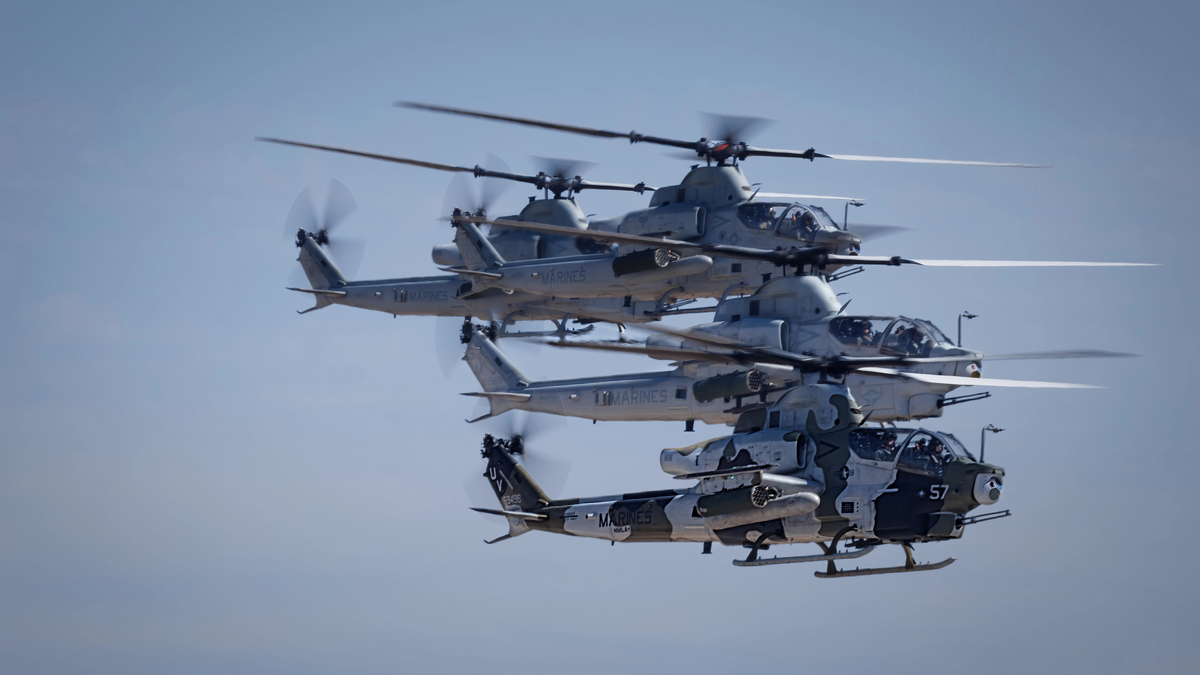
The central negotiation platforms are the attack AH-1Z Viper and multipurpose UH-1Y Venom, both in service with the U.S. Marine Corps. Their key advantage in a logistics context: the H-1 platforms have 85% unified components, which radically simplifies maintenance and repair — particularly critical in active combat conditions.
"We are confident that the H-1 can play a key role in strengthening Ukraine's defense capabilities."
— Bell Textron representative Schlessinger, Bell press release, October 20, 2025
According to aerospaceglobalnews, in parallel, Bell and Washington are working out a Foreign Military Sale mechanism — a government interstate sale that is the only legal channel for transferring such equipment. The lack of an approved FMS agreement remains the main bottleneck at present: letters of intent do not legally obligate any of the parties.
Why Ukraine Needs Its Own Plant, Not Just Supplies
Zelensky announced the formation of new helicopter groups to intercept drones. Military commanders, as The Defense Post reports, emphasize: helicopters provide the speed of response and flexibility that ground air defense systems cannot deliver. Local assembly in this context is not just a matter of industrial pride, but also reducing a vulnerable logistics chain: a machine assembled on site does not cross the border during repairs.
Bell representative Phil Fax told LIGA.net that Ukraine is a market with "great potential for partnership." The permanent location of the LLC "Bell Textron Ukraine" office has not yet been determined — the company, according to its own statement, is still selecting a location.
Where the Real Pause Is
Between the registration of a legal entity and the first assembled helicopter lies several bureaucratic gaps: FMS approval by the U.S. Congress, construction or adaptation of production facilities, staff training, certification. None of the signed documents yet contains either timelines or supply volumes.
If the FMS agreement receives Congressional approval by the end of 2026, the assembly center in Ukraine becomes realistic by 2028. If not, the LLC with a charter capital of 2 million hryvnia remains a legal shell with good intentions.



