British Steel Returns to State Ownership: How £700,000 in Daily Losses Forced London to Act
Starmer's government is preparing full nationalization of British Steel for the first time in 38 years. Over a year of operational management, taxpayers have already spent £377 million, and the meter keeps running.

By Tetiana Suchkova-Ladik
May 11, 2026 · 3 min read
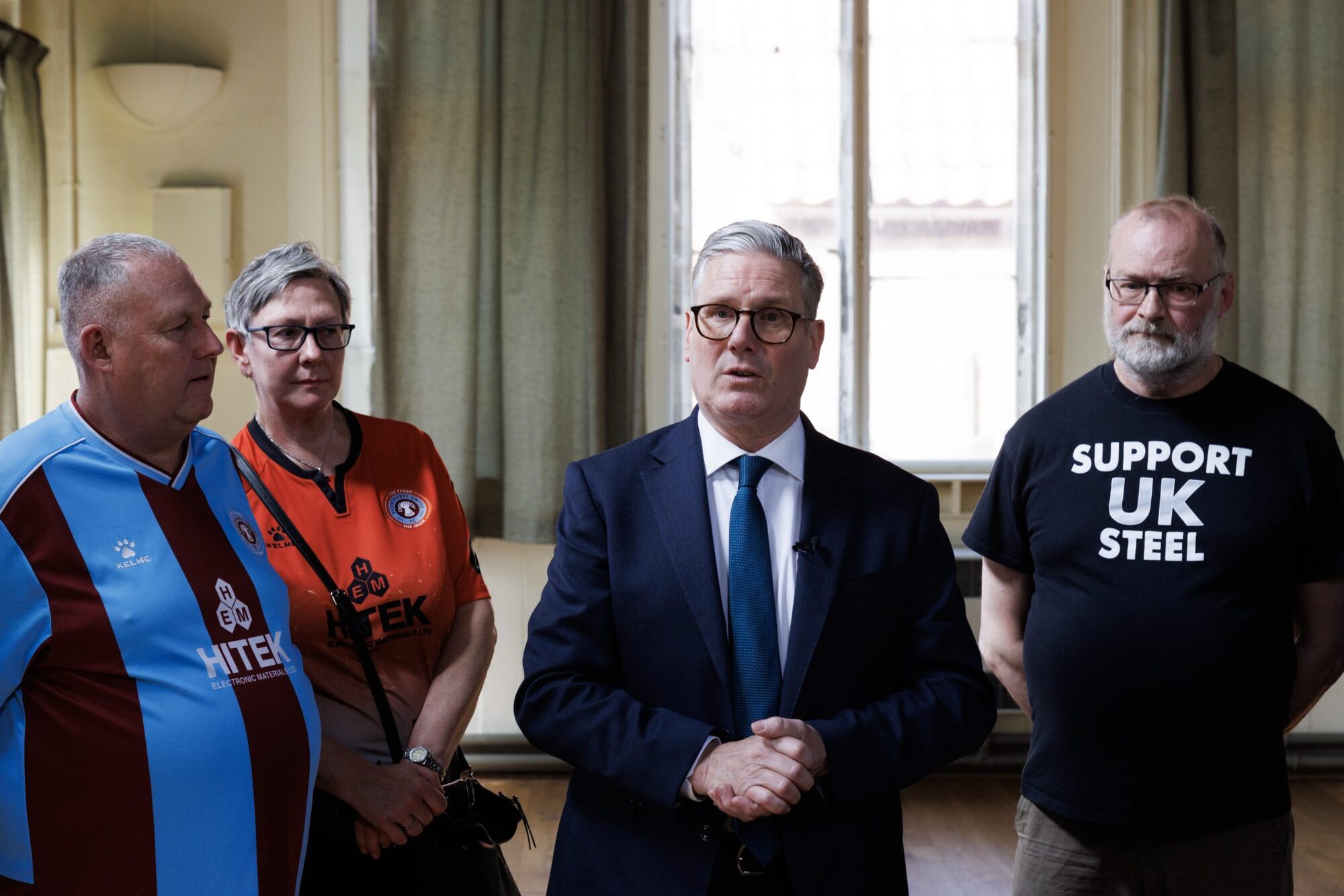
Every day, the plant in Scunthorpe was losing £700,000. Chinese Jingye, which bought British Steel out of bankruptcy in 2020 for, according to industry sources, between £50 and £60 million, eventually refused to order iron ore pellets — the raw material without which blast furnaces stop forever. This very step in April 2025 forced Prime Minister Keir Starmer's government to summon an emergency parliament on Easter Saturday.
One law in one day
On April 12, 2025, parliament passed the Steel Industry (Special Measures) Act 2025 — from introduction to royal assent in a single day. The law gave the Secretary of State for Business the power to directly manage steelmaking facilities facing closure. The government immediately took control of British Steel's operational activities: raw material procurement, wage payments, and maintenance of the country's last two blast furnaces.
Blast furnaces — unlike electric arc furnaces that recycle scrap — produce "primary steel" from iron ore. Shutting them down without irreversible consequences is extremely difficult. Had Scunthorpe shut down, Britain would have become the only G7 nation without its own primary steel production.
"Steel is a limiting sovereign capability. Strong nations in such a world must produce steel."
Prime Minister Keir Starmer, May 2026
A growing bill
According to the National Audit Office (NAO), supporting British Steel cost taxpayers £377 million by the end of January 2026. Another £15 million went to ancillary costs. As of March 2026, the total amount of working capital invested by the government reached £419 million — and could exceed £1.5 billion by 2028, if the situation does not change.
Meanwhile, negotiations on a commercial sale continued. The government offered Jingye around £100 million — the Chinese side demanded over £1 billion. No deal was reached. On May 11, 2026, Starmer announced legislation that would give the government the option of full nationalization — subject to passing a public interest test.
What an economist says
David Bailey, Professor of Industrial Strategy at Birmingham Business School, alongside Paul Forrest, warns that operational intervention solved the immediate crisis but not the underlying problem. According to their analysis for UK in a Changing Europe, the government should consider a "conservatorship" model — temporary state management with a clear strategy for transformation to electric arc production — rather than outright nationalization without an exit plan.
"Nationalization is not an end goal. It must be the beginning of a clear and credible long-term plan."
Keir Starmer, May 2026
The industry association UK Steel supported the decision, noting that if an electric arc furnace at Tata Steel in Port Talbot operates alongside Scunthorpe, domestic demand for metal scrap could reach 7 million tons per year — opening a new market for recyclers.
3,500 jobs and unanswered questions
The Scunthorpe plant directly employs 3,500 people; tens of thousands more work in adjacent supply chains. Closure in 2025 threatened the loss of 2,000 to 2,700 jobs at the main site alone.
A transition to electric arc furnaces, should it happen, would mean significantly fewer workers — this technology is more automated. Whether the government explained to Scunthorpe how many jobs would be preserved after "transformation" — so far, no.
If parliament passes new legislation and the public interest test is passed, British Steel will become state-owned for the first time since 1988. But the real question is not the nationalization itself, but whether it will be followed by a concrete plan for transition to green production — with timelines, funding, and employment guarantees. Without it, the £419 million will become merely a down payment on a much larger bill.



