House for $85,000 or escape from darkness: why Kyiv suburbs are getting more expensive faster than the capital
The median price of private houses in Kyiv region rose by 15% over the year — twice more than in Kyiv itself. Behind these figures lies not investment frenzy, but the forced logic of people who survived a winter of shelling and utilities collapse.

By Tetiana Suchkova-Ladik
April 9, 2026 · 2 min read
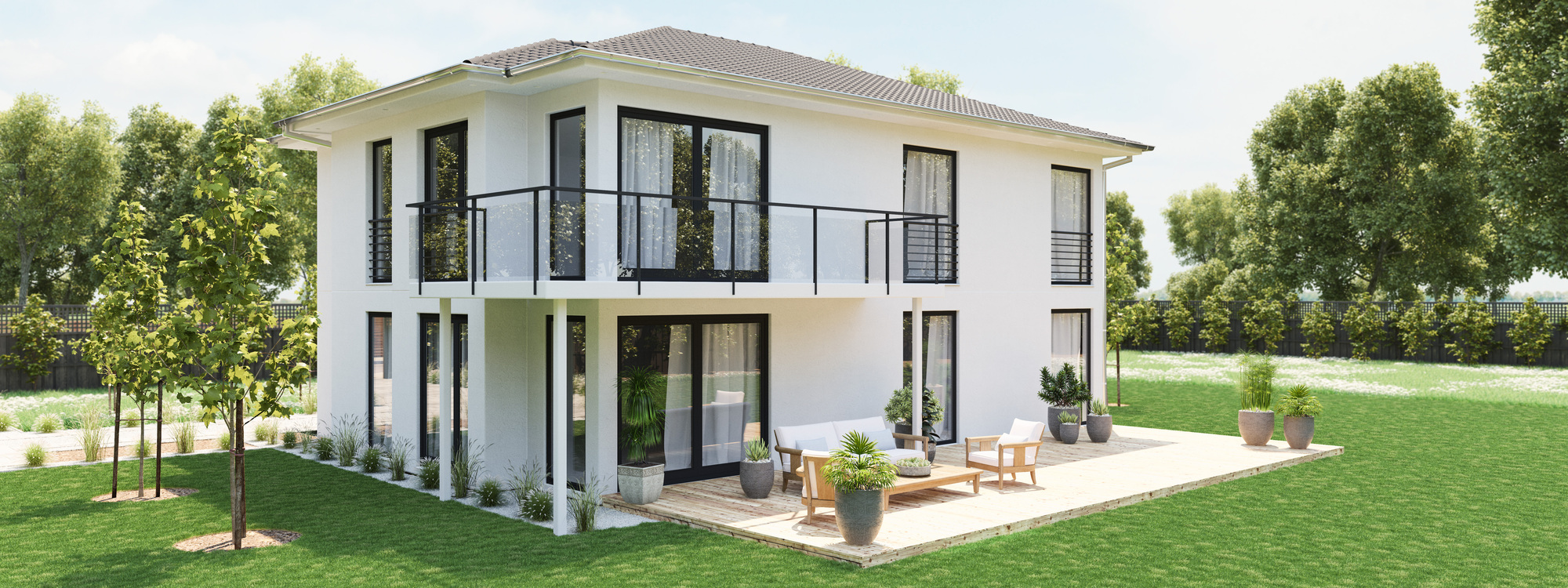
April 2026. The median price of a private house in Kyiv Region is $115 thousand with an average area of 120 square meters. A year ago it was $100 thousand. Growth — 15%. For comparison: apartments on the primary market in the suburbs became more expensive by 14%, while in Kyiv itself — only by 4%. Such data is provided by the real estate portal LUN.
This is not just a market correction. This is a map of where people decided to move after two difficult winters.
Where is the most expensive and where is the cheapest
The price range by district ranges from $35 thousand in Bilotserkvskyi to $270 thousand in Obukhivskyi. But most districts, according to LUN analysts, stay in a similar corridor around $100 thousand: Vyshhorodskyi — $125 thousand, Buchanskyy and Fastivskyi — $115 thousand each, Boryspilskyi — $106 thousand, Brovarskyi — $85 thousand.
«Bilotserkvskyi district is very strongly dropping in prices, while other districts are in approximately the same category. It is the only district that does not have direct access to Kyiv».
LUN analysts
The logic is simple: direct access to the capital is the main price-determining factor. Not the forest, not the plot, not the year of construction.
Why now and not two years ago
Demand for suburban housing began to accelerate after a difficult winter with massive shelling and disruptions to the capital's utilities infrastructure. A private house is autonomy: a generator, your own well, fewer neighbors in the basement during alerts. In spring 2026, sales picked up — the season came on top of already formed demand.
The cottage town market confirms this: according to Zagorodna.com, in the first quarter of 2026, 30 new projects appeared in Ukraine — as many as a year ago. Despite shelling, lack of financing and rising construction costs, the pace has not fallen.
What this means for those counting money
- In the suburbs, a square meter gained 4,500 hrn per year — twice more than in Kyiv (2,100 hrn).
- The median house in Kyiv Region is still twice cheaper than in the capital ($115 thousand versus $215 thousand).
- The primary market of the suburbs — 36,800 hrn/sq. m, which is a third lower than Kyiv's.
The $100 thousand difference between the city and suburbs for now outweighs the inconveniences of a longer commute and less developed infrastructure. But this gap is narrowing — and narrowing faster than prices are growing in Kyiv.
If the next winter again brings prolonged outages in the capital, demand for suburbs will accelerate — and then the question is not whether houses will become more expensive, but whether supply will be able to keep up with demand in districts with direct access to Kyiv.



