State Reserve Gone Underground: How Officials Turned State Warehouses into Private Rental Business
The National Anti-Corruption Bureau (NABU) and the Specialized Anti-Corruption Prosecutor's Office (SAPO) informed four suspects of charges in a scheme involving state storage facilities being leased to businesses through shell companies — losses amounted to 36 million hryvnias. The scheme began during the full-scale invasion.

By Tetiana Suchkova-Ladik
May 22, 2026 · 2 min read
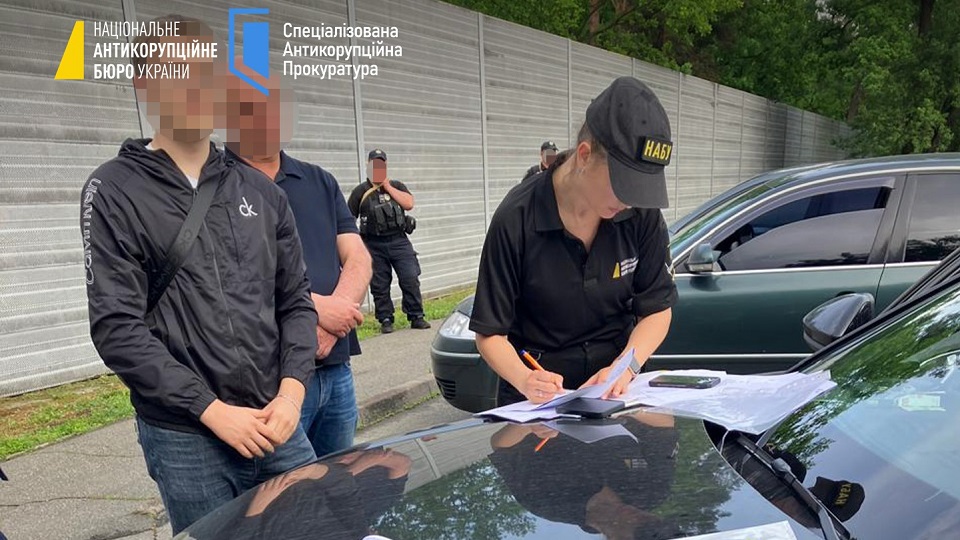
The National Anti-Corruption Bureau and the Specialized Anti-Corruption Prosecutor's Office notified four individuals of suspicion in a case involving embezzlement of funds from a state enterprise under the jurisdiction of the State Agency for Reserve Management of Ukraine. Damages amount to approximately 36 million hryvnias.
How the scheme worked
In autumn 2022, when the State Reserve was supposed to meet the country's strategic needs amid full-scale war, the suspects developed a plan to monetize state warehouses. Starting from January 2023, officials of the state enterprise, under the guise of storage services, transferred significant warehouse areas to controlled private companies. These companies, in turn, leased these areas to actual businesses at market prices.
«These actions resulted in damages of approximately 36 million hryvnias. The scheme participants converted these funds into cash and disposed of them at their own discretion».
Specialized Anti-Corruption Prosecutor's Office
The difference between what the state enterprise officially received and what the actual tenant paid disappeared into the pockets of the scheme participants. The state essentially subsidized private rental business using its own warehouses.
Who are the suspects
- Former head of the State Reserve — the highest-ranking official in the case.
- Ex-deputy director of the state enterprise — direct executor at the enterprise level.
- Scheme organizer — detained while attempting to cross the state border, currently in custody.
- Individual accomplice — participant in the chain of fund embezzlement.
The actions of all four individuals are qualified under Part 5 of Article 191 of the Criminal Code — appropriation of property in particularly large amounts or by an organized group. The sanction provides for imprisonment for a term of seven to twelve years with confiscation of property.
Context: a reform undermined from within
The scheme existed in parallel with the official reform of the system. In November 2023, the government adopted a Strategy for Reforming the State Material Reserve until 2025, and in September 2024, it liquidated the State Reserve itself, creating the State Agency for Reserve Management in its place. The goal of the reform is to transition from a "Soviet" storage model to modern strategic reserves management. However, while the reorganization was underway, some warehouses effectively operated as private rental businesses.
The scheme organizer was stopped at the border — but how much of the 36 million hryvnias can be returned to the state will depend on whether the assets were converted to real estate or taken out of the country before the arrest.