Dniester under threat: Moldova asks EU for help after Russian strike
Army and international experts mobilized — a spill of petroleum products on the Dniester is already affecting the region’s water supply. We examine what happened, who is working on the scene, and why this matters for Ukraine.

By Tetiana Suchkova-Ladik
March 13, 2026 · 2 min read
What happened
On March 10 a video appeared on social networks from the area of the village of Naslavcha — oily patches were visible on the surface of the Dniester. Preliminary assessments indicate the cause was a leak of rocket fuel in the area of the Dniester HPP following a Russian strike on March 7. This is not just a local pollution episode: the river is a key source of water supply for major cities in the region.
Who is already working
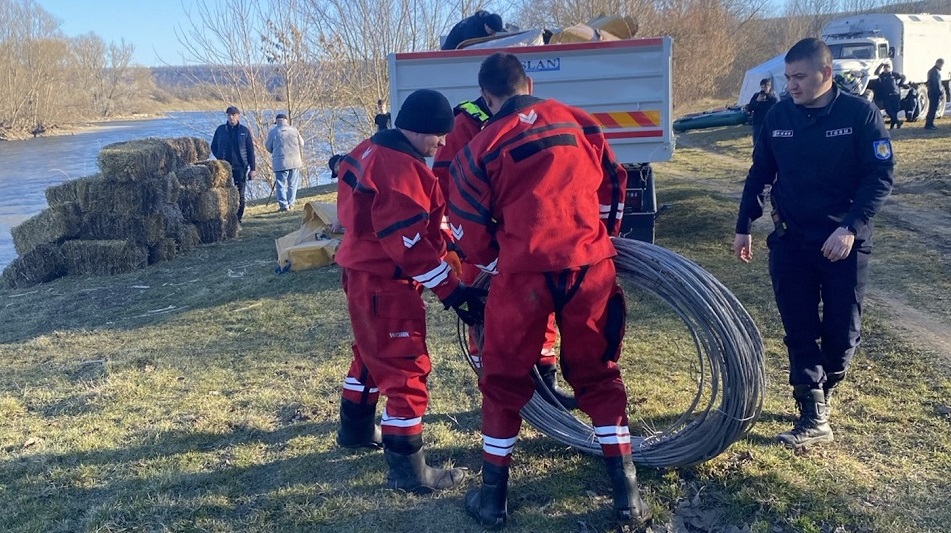
Moldovan Prime Minister Alexandru Muntianu has officially appealed to the European Union to provide equipment and teams of specialists for water purification. At the same time, the Moldovan Ministry of Defense has deployed troops, equipment and gear to assist central and local services in the north of the country.
"We are asking European partners for support to rapidly mobilize teams of specialists and the necessary equipment to work on the Dniester..."
— Alexandru Muntianu, Prime Minister of Moldova
On the Ukrainian stretch of the riverbank our specialists are working; Romanian experts have joined the operation and are installing additional filters. Mobile laboratories take samples every six hours; mechanical filters and simple but effective measures are being used — including bales of straw and oil containment booms to trap petroleum products.
"Some settlements in northern Moldova may be left without water... A yellow level of danger has been declared in the Naslavcha area."
— George Hajder, Minister of Environment of Moldova
Why this matters for Ukraine
The Dniester is a transboundary river; the effects of pollution quickly cross national borders. The risk of spreading technical oils and rocket fuel threatens not only the environment but also the quality of drinking water in cities such as Odesa and Chișinău. An oily film on the surface reduces access to oxygen and light, which is destructive for aquatic ecosystems and fish stocks — this has long-term socio-economic consequences for the region.
What will be done next and what the risks are
The top priorities are rapid installation of boom barriers and the deployment of additional mobile laboratories for monitoring. European technical assistance (skimmers, specialized sorbents, mobile chemical laboratories) will significantly speed up operations. If help is delayed, the risk increases of temporary water supply restrictions in settlements of northern Moldova and of further downstream spread of the contamination.
Context and conclusion
This is an example of how military strikes produce environmental crises with cross-border consequences. Moldova has already engaged its armed forces and is asking the EU — the partners' response will determine the scale of recovery. For Ukraine it is important to maintain coordination with Moldovan and Romanian colleagues: rapid information sharing, getting resources to the site and joint laboratory testing are the main safeguards against the spread of damage.
Briefly: pollution recorded on March 10, linked to the March 7 strike; the military has been mobilized, specialists from Moldova, Ukraine and Romania are working; now the key is prompt technical assistance from the EU and strict monitoring of water quality.



