DP World and Rosatom: joint venture gives Russia access to global port network — what this means for Ukraine
According to RBC, DP World has agreed with Rosatom to create a joint venture based on "Global Logistics." This is not just a business deal — it involves potential access to part of the world’s port infrastructure and new risks for Ukrainian supply chains.

By Tetiana Suchkova-Ladik
March 27, 2026 · 3 min read
What happened
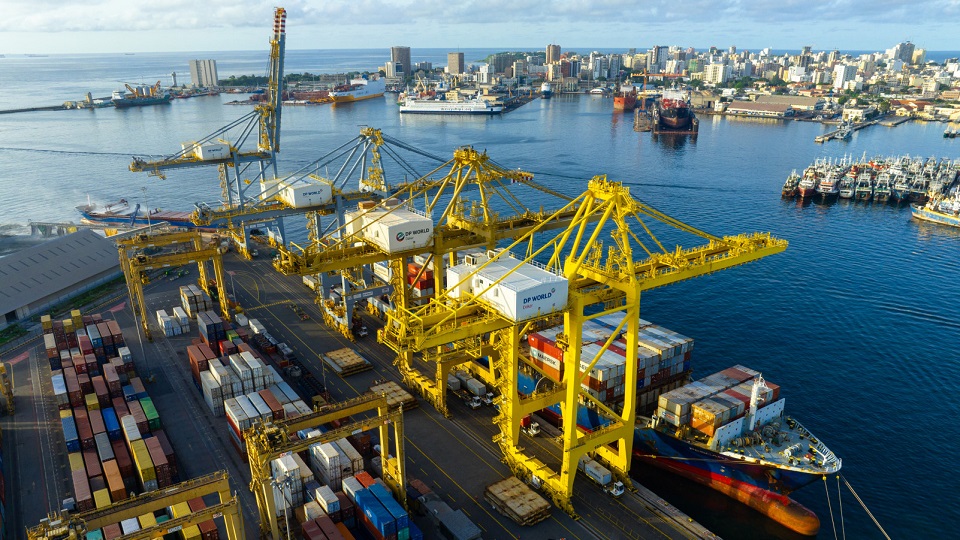
Russian agency RBK reported that global port operator DP World has agreed with the state corporation Rosatom to create a joint venture based on the company “Global Logistics.” Under the terms of the agreement, the Russian side will hold a controlling stake — 51%. Rosatom’s contribution will consist of the assets of PJSC “Far Eastern Shipping Company” (FESCO), in which the state corporation owns about 92.5%, while DP World will make a cash contribution. The amount of the investment has not been disclosed.
"DP World — owner of about 40% of container ports worldwide, and as part of the creation of the joint company Rosatom will gain access to them. DP World will also ensure an increase in the cargo base, in particular for the Northern Sea Route"
— a Rosatom representative (quote, RBK)
DP World operates more than 78 marine terminals in 45 countries and, as noted in reports, handles about 10% of global trade cargo. Separately, the company earlier exited the Ukrainian market: in March 2026 DP World sold its stake in the "Yuzhny" terminal to the Ukrainian operator TIS.
What opportunities Russia gains
Judging by the parties' statements and the scale of DP World’s network, the potential consequences are:
- Access to logistics routes and operator expertise — this allows integration of Russian shipments into a broader global network and the scaling up of cargo flows, including toward the Northern Sea Route.
- Influence over the cargo base — the joint company could use DP World’s contacts to expand its client base and redirect cargo.
- Risks of circumventing restrictions — combining foreign infrastructure with domestic Russian assets creates more complex ownership chains, which complicates sanctions monitoring.
Why this matters for Ukraine
This deal is not an abstract business story. For Ukraine it has a number of practical implications:
- Risk of pressure on transit routes and competition for customers. If a Russian‑foreign JV gains broader access to global ports, cargo flows could shift in favor of routes where Russia has influence.
- Complicating international oversight of supply chains and potential attempts to "mask" the origin of cargo through complex ownership structures.
- Reputational and political risks surrounding DP World: the press has mentioned investment risks for the company after reports about ties between its former head and the Epstein files; some Ukrainian institutions in 2023 designated DP World as a company that strengthened cooperation with Russia during the war, which added political tension.
Analysts and investigations (including LIGA.net in a joint analysis of U.S. court documents) emphasize: combining a large international network with the state assets of an aggressor creates not only economic but also geopolitical vulnerabilities.
What partners and Ukraine should do
This case underscores several practical steps that should be accelerated:
- Transparent checks of ownership and ultimate beneficial owners in logistics chains at the EU level and among supply‑chain partners.
- Strengthening coordination of sanctions and regulatory monitoring — to make it harder to use complex structures to bypass restrictions.
- Diversification of routes and operators — state and private logistics should seek alternatives and reduce the risks of concentration through a single network.
- International diplomacy: partners should turn declarations of support for Ukraine into concrete mechanisms for overseeing critical infrastructure.
Conclusion
This is an example of how business deals turn into an element of great geopolitics. In the short term — the JV decision still requires regulatory approvals; in the medium term — the reaction of international institutions and transparency in ownership of logistics assets are more important. The ball is now in the partners' court: can they ensure that economic ties do not undermine Ukraine’s security and the global resilience of supply chains?



