DRI (a DTEK unit) launches 126-MW solar park in Romania — what it means for Ukraine's energy in the EU
DRI has commissioned Văcărești (126 MW), bringing the company's portfolio in Romania to nearly 300 MW. We explain why the launch matters not only for business but also for Ukraine's investment image in Europe.

By Tetiana Suchkova-Ladik
January 6, 2026 · 2 min read
What happened
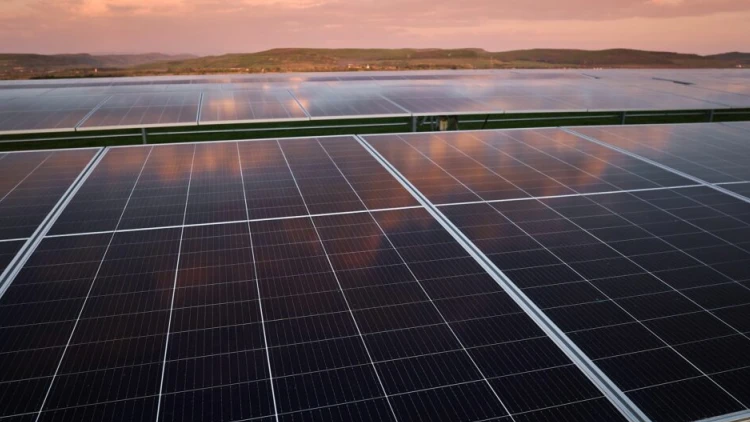
DRI, the European unit of energy holding DTEK, has completed construction and commissioned the Văcărești (Vekeresht) solar park with a capacity of 126 MW. The facility has already begun producing electricity, the company reports.
"The Văcărești (Vekeresht) solar park with a capacity of 126 MW has already begun producing electricity, according to the company's website."
— DRI press service (DTEK)
Key facts
The park is located in Dâmbovița County, 67 km northwest of Bucharest. According to the company's estimates, Văcărești will be able to supply electricity to about 50,000 households and will avoid approximately 48,600 tonnes of CO₂ emissions annually.
Together with existing assets — the Glodeni I and Glodeni II solar parks (a combined 113 MW) and the Ruginoasa wind farm (60 MW) — DRI’s portfolio in Romania has grown to nearly 300 MW over three years.
Financing and contracts
The project received a non-recourse financing package of up to €60 million from UniCredit and Garanti BBVA for construction and operation. Half of the park’s output from January 2027 will be supplied to OMV Petrom under a large PPA signed in December 2024 — a deal local media called one of the largest in Romania by volume of physical solar energy.
Why this matters
First, it’s a market signal: Ukrainian energy players can deliver large-scale projects in the EU and attract international financing even during wartime. Second, large PPAs with locally integrated energy buyers strengthen the commercial viability of projects — which reduces lenders’ risks and accelerates capital inflows.
DRI declares a portfolio of about 1.4 GW at various stages of development across key European markets, including an energy storage project near Kraków (Poland). This creates economies of scale: ready assets, contracts and access to cheaper financing.
Context for Ukraine
Although the project is implemented on Romanian territory, it is an important case for the Ukrainian energy sector. It raises the investment profile of Ukrainian companies, demonstrates their technological and operational capabilities, and builds partnership networks in the EU — all of which serve the long-term reputation of Ukrainian energy.
What’s next
Two things now matter: fulfilling the PPA obligations and operating the park efficiently, which will prove the project’s economics to lenders and investors. If these conditions hold, Văcărești could become a catalyst for new deals and financing in the region.
The question for the next step: will this success turn into a sustained trend of scaling Ukrainian energy assets in Europe, or remain an isolated case of large investment? The answer depends on contract performance and the stability of financial decisions in the coming years.



