Ekholm: the EU's drive for technological 'sovereignty' could lead to costlier networks and a weakened alliance
Ericsson’s CEO at Davos warned that hasty moves toward Europe’s technological self-sufficiency risk driving up prices and alienating Washington — why this matters for the security and economy of Ukraine and the EU.

By Tetiana Suchkova-Ladik
January 20, 2026 · 2 min read
About the statement and the source
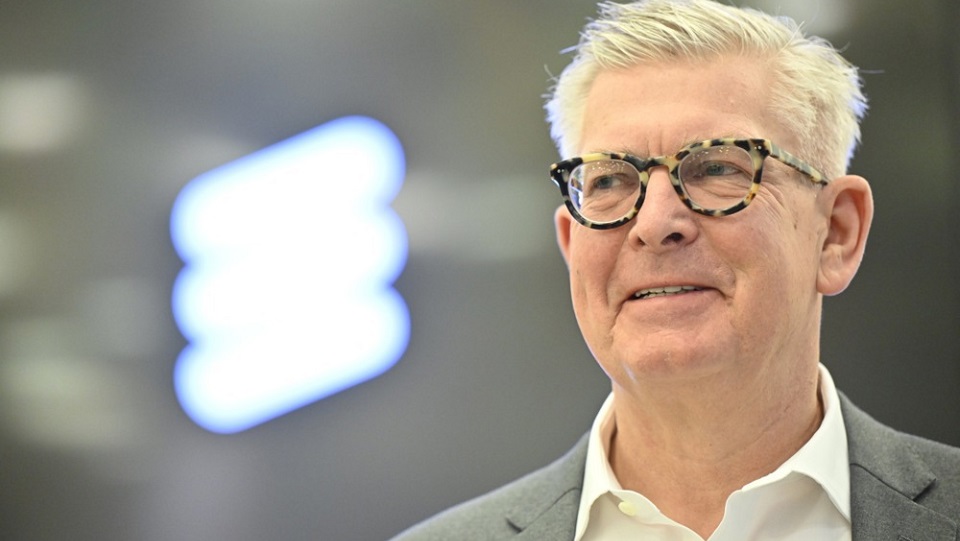
The CEO of Swedish Ericsson, Börje Ekholm, in an interview with Bloomberg at the World Economic Forum in Davos called for caution in the discussion about the EU’s technological sovereignty. He believes that Europe today does not have the full capacity to be technologically self-sufficient, and that hasty decisions may have economic and political consequences.
"All this rhetoric about sovereignty in Europe is dangerous. I do not think Europe today has the capacity to be sovereign"
— Börje Ekholm, CEO of Ericsson
Technical reality: why the EU won’t become self-sufficient in one year
Ekholm refers to market indicators: in recent years Huawei has increased its share in the European telecom equipment segment, even despite restrictions in certain countries. On the other side are Ericsson and Nokia, which traditionally supply Western alternatives. However, replacing an ecosystem, supply chains and standards is not a matter of a few political decisions but years of investment in manufacturing, R&D and scale.
Economic cost and political risk
Replacing imported solutions with "European" ones could raise the cost of deploying 5G networks and critical services due to reduced competition and scale. Ekholm directly warns of the risk of rising prices in the EU and of possible further estrangement of the US — taking into account recent trade tensions mentioned during Davos.
What this means for Ukraine
For Ukraine the questions are not abstract. Reliable and affordable telecom networks are the infrastructural foundation of defense capability, economic recovery and digital transformation. Fragmentation of approaches among allies can complicate compatibility, supply and joint cybersecurity strategies. Thus the pursuit of "self-sufficiency" by partners must be combined with practical guarantees of accessibility and protection for our communications.
Possible scenarios
Analysts point to three scenarios: 1) a pragmatic combination — a mixed supplier model and tougher security standards; 2) an isolationist path — slow and costly growth of a European industry; 3) an escalation of trade tensions between the EU and the US, which would complicate coordination on defense and civilian projects. Ekholm urges finding "a way to work together," emphasizing the importance of transatlantic dialogue.
"We must find a way to work together"
— Börje Ekholm, CEO of Ericsson
Conclusion
Ekholm’s statement is not a rejection of the pursuit of independence, but a reminder about trade-offs: security, efficiency and cost must go hand in hand. For Ukraine the key is that European decisions should not weaken the allied capacity to provide compatible and affordable communication systems. The ball is now in the politicians’ court: can they combine strategic autonomy with practical cooperation that will strengthen both markets and the security of allies?
Source: Bloomberg; additional contexts — market assessments from Ericsson and Nokia, and public EU discussions about risks to networks and suppliers.



