France Releases Tanker Grinch After Million-Euro Fine — Blow to Russia’s "Shadow" Fleet
After three weeks of detention and the payment of a multi-million fine, the tanker carrying Russian oil left French waters. This is not just a court case — it is a signal that evading sanctions in Europe is becoming more costly, and for Ukraine — a concrete action against financing the aggressor.

By Tetiana Suchkova-Ladik
February 17, 2026 · 2 min read
In high diplomacy, it's not loud statements but quiet results that matter
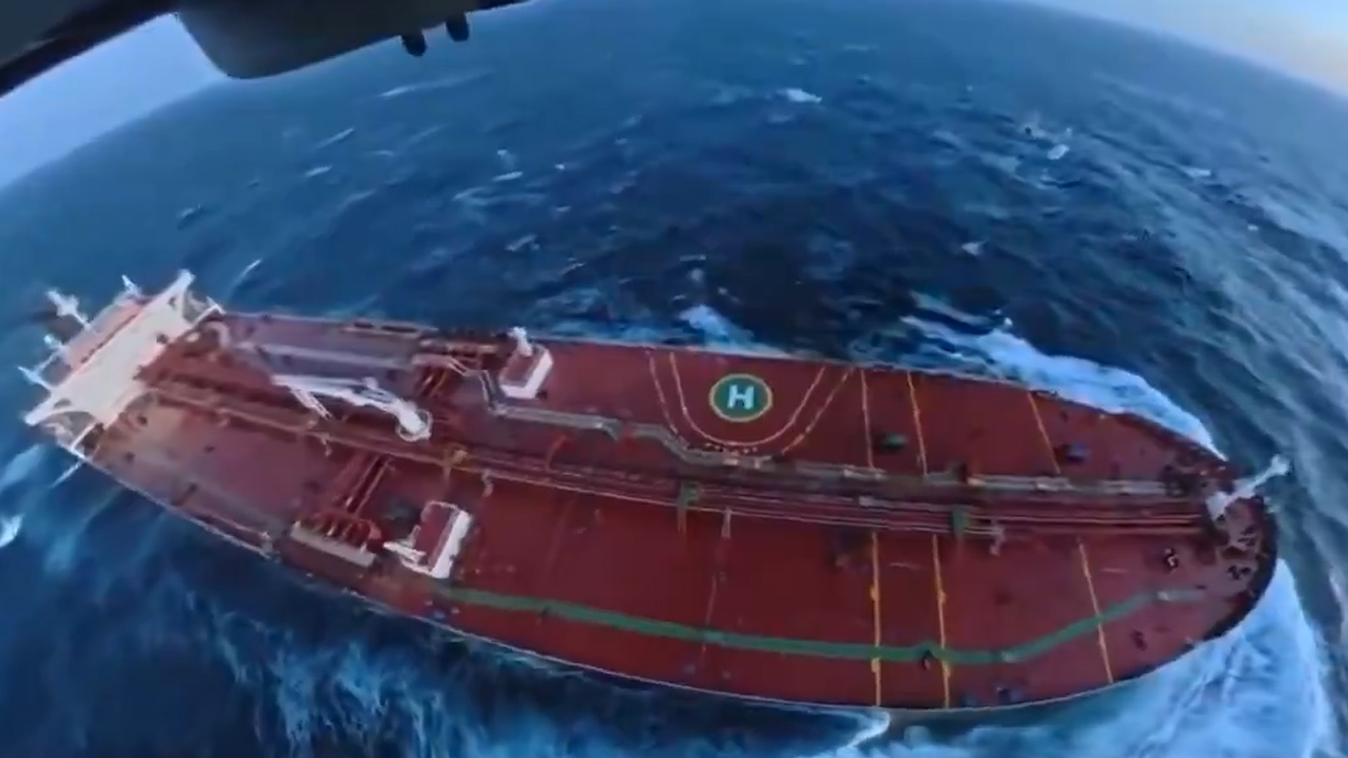
France allowed the tanker Grinch to leave its waters after three weeks of detention and the payment of a multi-million fine, Minister for Europe and Foreign Affairs Jean-Noël Barrot said on Tuesday on the social network X. This decision is a telling example of how legal mechanisms and operational pressure in ports work against sanction-evasion schemes.
What happened
The vessel flying the Comoros flag, which is under sanctions by the EU, the US, the UK, Canada and Ukraine, was detained in the Mediterranean in January and anchored off the port of Marseille. According to French authorities, the tanker departed the Russian port of Murmansk in early January.
“Evading European sanctions comes at a high price. Russia will no longer be able to finance its war with impunity using a 'shadow' fleet off our shores. The oil tanker Grinch will leave French waters after paying several million euros and three weeks of costly berthing in Fos-sur-Mer.”
— Jean-Noël Barrot, Minister for Europe and Foreign Affairs of France
Why this matters for Ukraine
Besides the direct punitive effect on the vessel's owner, the Grinch case reinforces several key trends:
- Economic barrier: increased berthing costs and fines make scheme-based trade less profitable for companies, helping reduce revenue flows that can sustain aggression.
- Deterrent: a clear signal from European jurisdictions about their readiness to enforce sanctions in practice — a cold shower for those who were counting on “loopholes” in ports.
- Partner coordination: this is not an isolated step — Western allies, including US representatives at NATO, have been emphasizing the importance of blocking the “shadow fleet,” underscoring the effectiveness of joint measures.
What next
Predictably, Moscow will continue to look for new ways to circumvent — transferring cargoes to third-party vessels, reflagging, etc. Therefore, the key tasks for Ukraine and its partners are: to strengthen vessel-traffic monitoring, coordinate sanctions lists and mechanisms for their enforcement in ports, and work on financial transparency of supply chains.
No panic, but pragmatism: the Grinch case is not a verdict, but an important precedent. It shows that when legal tools are combined with political will and operational work in ports, evading sanctions becomes more costly. For Ukraine, that means reducing the opponent's resources — small but systematic strikes that add up to a larger effect.
Whether the “shadow fleet” will find new loopholes, and how quickly partners will respond to them, is a question to watch in the coming months.



