General Machines opens a plant in Cherkasy: UAH 100 million investment and UAH 400 million production potential
The second plant will triple production of large agricultural machinery, strengthen exports and reduce dependence on imports — a practical step toward restoring the industrial resilience of the agricultural sector.

By Tetiana Suchkova-Ladik
March 14, 2026 · 2 min read
A launch that shifts the balance in the sector
Zaporizhzhia manufacturer General Machines is opening a second plant in Cherkasy with equipment investments of more than 100 million UAH, industry outlet Traktorist.ua reports, citing the company's press service. This is not merely a capacity expansion — it is a response to a real market shortage of large implements for intensive farming.
Why this is important right now
The first site in Zaporizhzhia was operating almost at full capacity, so bringing additional facilities online gives the company the ability to triple production volumes and introduce a new line of large-scale machines to the market. For the reader, this means more jobs in the region, a wider choice of equipment on the domestic market, and potential downward pressure on import prices.
What will be produced
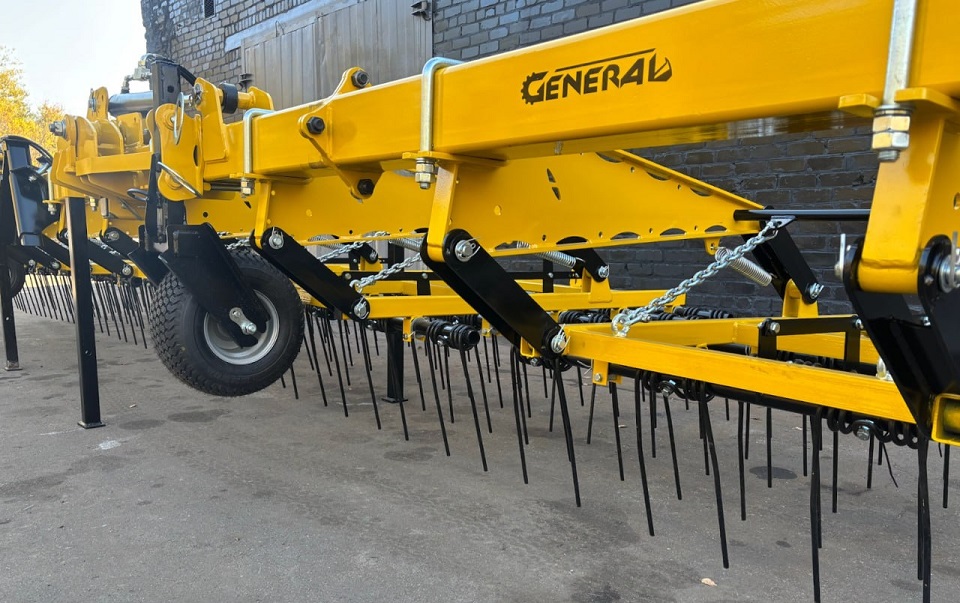
The new plant will specialize in deep subsoilers, cultivators, and heavy disc harrows with working widths up to 20 meters — implements for high‑horsepower tractors. This is a segment traditionally dominated by imports, so localizing production has strategic significance for the agro‑industrial complex.
"Their serial production requires larger production areas and the appropriate lifting capacity of crane equipment. The new plant provides these technical capabilities."
— Vitaliy Dovhyi, CEO of General Machines
Economic effect and state support
Once it reaches planned volumes the enterprise will be able to generate about 400 million UAH in annual output. Around 20% of the company's products are already exported to European countries — launching the second line will remove full‑capacity constraints and create potential to increase exports.
An additional boost comes from the state initiative "Made in Ukraine": since September 2024 a program has been in place to partially compensate 15% of equipment costs (excluding VAT) provided localization is at least 40%. According to estimates, these programs contributed roughly 0.95 percentage points to GDP growth in 2025 — the facts speak in favor of well‑designed production support tools.
What will change for the market and what to expect
The Cherkasy plant launch is an example of how business invests in long‑term specialization: the company chose a long‑term lease model, directing financial resources toward technology and process modernization. If the project meets its projected targets, it will strengthen the presence of Ukrainian machinery in the large‑implement segment and reduce the share of imports in a sector critical to agriculture.
Brief conclusion
This is not a pompous declaration but a converted result — investment in equipment, expansion of production space, and a focus on exports. The open question is how quickly the market and state programs will turn these potentials into sustained contracts and jobs. The real multiplier effect for the regional economy will depend on that.
Source: Traktorist.ua, press service of General Machines; data on the "Made in Ukraine" program and the macroeconomic effect — public reports of government initiatives.



