Blueberry bushes on 20 sq. m as a tool to seize half a hectare: court ordered demolition of LLC "Studio City" facility
The Commercial Court of Kyiv has ordered the demolition of an illegal structure on Yefremova Street and invalidated the registration of a land plot valued at over 20 million hryvnias — another episode in a system that the National Anti-Corruption Bureau is investigating as organized crime.

By Tetiana Suchkova-Ladik
April 23, 2026 · 2 min read
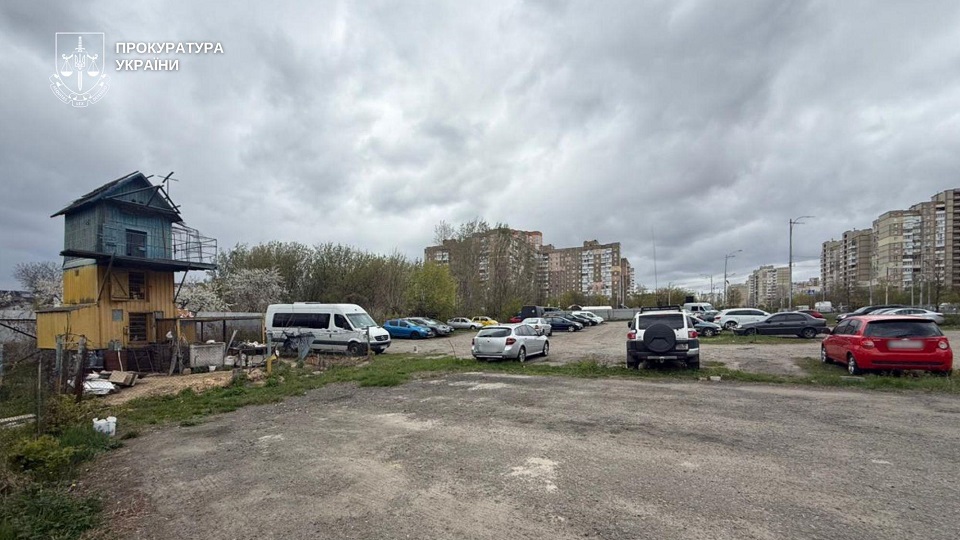
A building measuring 20 square meters. A land plot measuring 5,000 square meters. A difference of 250 times — and therein lies the essence of the scheme that the Kyiv Commercial Court has now ordered to be liquidated.
How the scheme worked
According to the Kyiv City Prosecutor's Office press service, LLC "Studio City" registered ownership of a dovecote at 29V Akademika Yefremova Street in the Sviatoshyn district. The building is self-constructed: no land plot was allocated for construction, and no permit documentation exists.
The mechanism that followed was simple: possessing "real estate," the company initiated the formation and registration of a land plot of 0.5 hectares in the State Land Cadastre. The next step, according to Glavcom, was obtaining the right to lease or own this land for the construction of a multi-apartment residential building with retail and entertainment infrastructure. The value of the plot exceeded 20 million hryvnias.
"The toilet scheme" involves the registration of non-existent or self-constructed real estate, through which ownership rights to the land beneath it are registered.
Timur Tkachenko, Head of KMVA
Not an isolated case, but a system
The term "toilet scheme" did not appear by chance. As Tkachenko explained, individuals registered ownership of small architectural forms — kiosks, toilets, dovecotes — and in this way seized hectares of communal land.
In February 2025, the National Bureau of Investigation released recordings of covert investigative actions as part of Operation "Clean City." According to the Specialized Anti-Corruption Prosecutor's Office and the National Bureau of Investigation, a criminal organization led by former Kyiv City Council deputy Denys Komarnitsky, who was declared wanted, stood behind the scheme. In total, ten people received suspicions, and seven were detained. Organization members, according to the investigation, registered ownership of structures that in many cases never existed on the plots, while the adoption of necessary decisions was ensured by Kyiv City Council deputies and KMVA officials.
The case of LLC "Studio City" is formally a separate proceeding — the prosecutor's office did not confirm a connection to "Clean City." However, the logic of the scheme is identical.
What the court decided
- Ordered LLC "Studio City" to demolish the dovecote at 29V Yefremova Street.
- Cancelled the state registration of the land plot measuring 0.5 hectares in the State Land Cadastre.
- Effectively returned the plot worth over 20 million hryvnias to the communal property of Kyiv's territorial community.
The Commercial Court's decision will take effect after the deadline for appealing expires. LLC "Studio City" has the right to appeal it — and this is precisely where the scheme may continue to exist in the halls of the appellate court.
A telling moment: the court cancelled the registration of the land plot, but there is still no mechanism in Ukrainian legislation that prevents the repeated registration of similar "objects" without on-site physical verification. If the Verkhovna Rada does not close this loophole before the courts sort through the current wave of cases, the next dovecote will appear on the cadastral map before the previous one is demolished.



