Iran Turns International Strait into Toll Road: $2 Million per Passage, Legal Gray Area — and 800 Vessels Waiting
# Translation A two-week ceasefire agreement between the US and Iran marks the first time in modern history that it includes a toll for passage through the Strait of Hormuz — a waterway previously considered international. UNCLOS prohibits this, but neither Iran nor the US has ratified the convention.

By Tetiana Suchkova-Ladik
April 8, 2026 · 3 min read
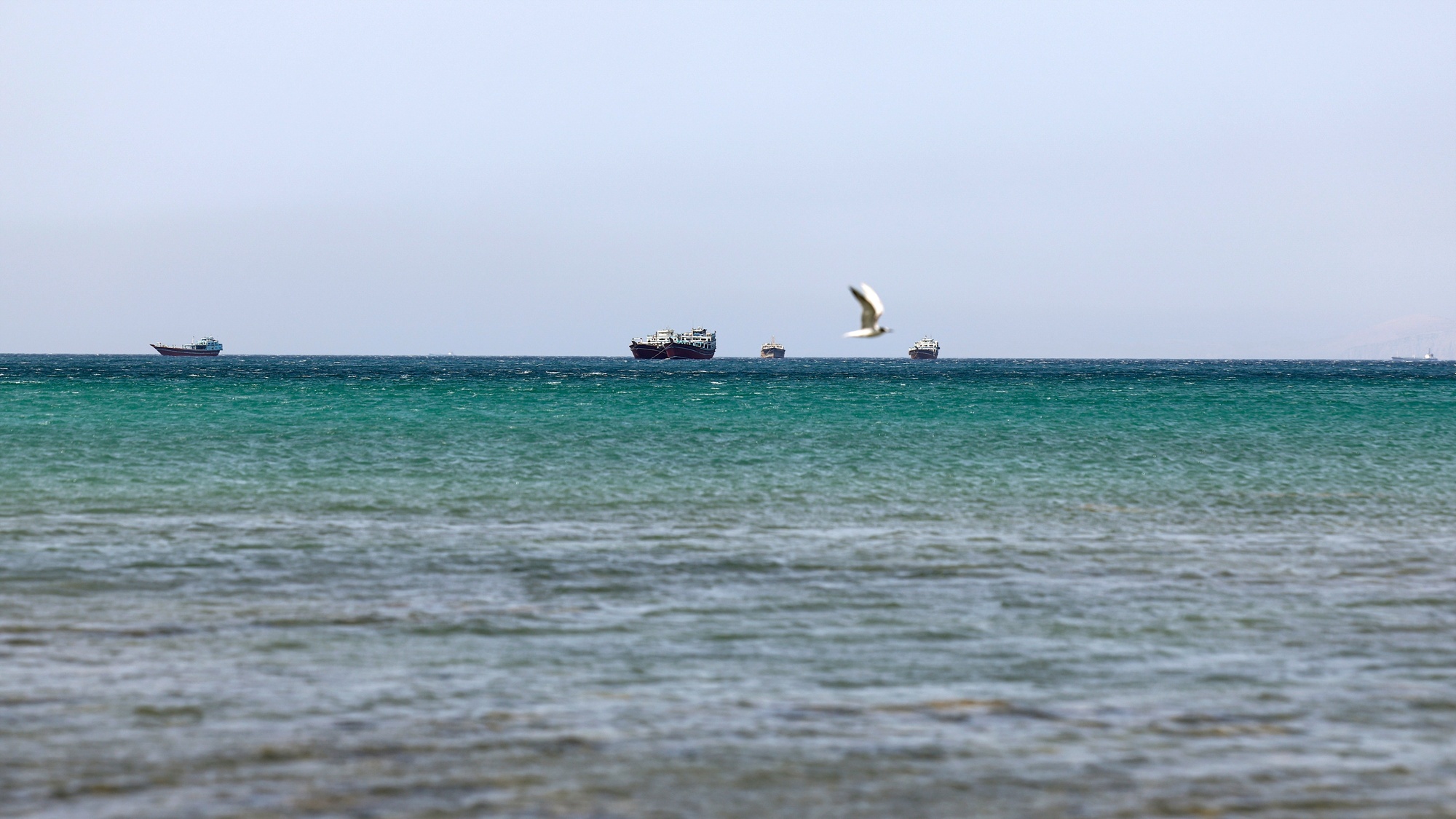
While diplomats speak of a "ceasefire," ship owners around the world are studying the fine print of the agreement: whether they will really have to pay $2 million for the right to pass through the Strait of Hormuz — and to whom exactly.
What happened
After several weeks of a de facto blockade of the strait, Iran agreed to a two-week ceasefire with the United States and Israel. According to an unnamed regional official cited by AP, the terms of the agreement provide that both Iran and Oman will have the right to collect fees from vessels passing through Hormuz. The Iranian portion will go toward the country's reconstruction.
Iran's Foreign Minister Abbas Araghchi confirmed acceptance of the ceasefire, announcing that passage through the strait will take place under the management of Iranian military. According to a report in the New York Times, cited by CBC, the amount in question is $2 million per vessel.
"If attacks cease, we guarantee safe passage"
— Abbas Araghchi, Iran's Foreign Minister, in a statement to the Supreme National Security Council
At the same time, Bloomberg reports that over 800 vessels remain blocked in the Persian Gulf — most of them tankers carrying oil and oil products. They have been waiting to depart for weeks.
Iran was already acting — before official agreements
Even before the ceasefire, the IRGC (Islamic Revolutionary Guard Corps) has de facto been collecting fees from vessels passing through the northern corridor near Larac Island since mid-March, in Chinese yuan, at approximately $2 million per vessel. According to House of Saud, on March 31, the parliamentary committee on national security and foreign policy approved the "Strait of Hormuz Management Plan" and submitted it to the full parliament for review. The president's signature and approval from the Guardian Council are the next steps.
In other words: the official agreement formalized what the security forces had already implemented in practice.
Where the legal boundary lies
The Strait of Hormuz is located in the territorial waters of Iran and Oman, but for decades has been considered an international waterway with a free transit regime. The United Nations Convention on the Law of the Sea (UNCLOS) directly prohibits coastal states from charging fees merely for passage. Only limited charges for specific services are permitted — pilotage, towing, port assistance — and without discrimination based on a vessel's flag.
A critical nuance, noted in the Wikipedia article on the 2026 crisis: neither Iran nor the United States has ratified UNCLOS. This means that formally, neither party is obligated to comply with the convention — although its provisions are considered customary international law.
The GCC (Gulf Cooperation Council) has already called the charges "illegal," but the matter has not reached arbitration proceedings. As noted by britbrief.co.uk, citing representatives of the shipping industry, there is no precedent in modern history for collecting fees for passage through an international strait.
Scale: why this matters beyond the region
In 2025, approximately 20 million barrels of oil and oil products passed through Hormuz daily — roughly 25% of global maritime oil trade, according to The Conversation. By Foreign Policy's calculations, even a modest charge of $500,000 per vessel at normal traffic levels (~2,600 transits per month) would give Iran over $1.5 billion monthly. At a rate of $2 million — three times that amount.
- China and Japan — the largest buyers of Persian oil — have not yet expressed an official position on the charges.
- The UAE stated that the strait "cannot be held hostage by any country."
- The alternative route — around Cape of Good Hope — adds weeks of travel and millions of dollars to each voyage.
What's next
The ceasefire is set for two weeks. Further negotiations on the long-term status of the strait, according to BusinessToday, are scheduled for consultations between the United States and Israel in Islamabad.
The question is not whether ship owners will pay now — most will, because the alternative is more expensive. The question is whether the temporary war levy will become a permanent mechanism after the ceasefire ends — and whether an international body will emerge that can challenge it, given that neither of the two key parties to the conflict has signed the convention.



