Kernel Building 106 MW Solar Farm During War — And It's Not the Project You've Heard About
The EBRD provided $45 million not for abstract "green generation," but for a specific station with an industrial energy storage system. This is Kernel's second major solar project running parallel to the one in Chernivtsi.

By Tetiana Suchkova-Ladik
April 23, 2026 · 2 min read
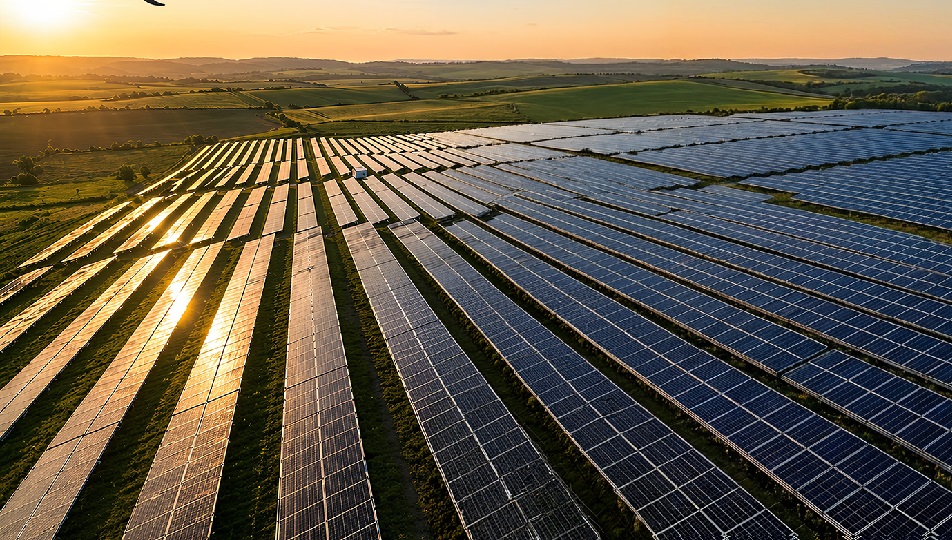
Agroholding Kernel, owned by Andriy Verevskiy, signed a $45 million loan agreement with the EBRD in Brussels during the Ukraine-EU business summit, where the very presence and signature serve as a market signal. However, the details of this project differ significantly from what the company announced earlier.
What exactly is being built — and why BESS is more important than MW
The borrower is a subsidiary structure Energy RTB 2 LLC. According to the EBRD's official Project Summary Document, the funds are intended not for a portfolio of assets, but for a specific facility in southern Ukraine: a 106 MW solar park plus a battery energy storage system (BESS). The total cost is $86 million, with $45 million coming from the EBRD, the rest from Kernel's own capital and negotiations with other international creditors.
The storage system in this project is not a bonus, but a condition for survival. Southern Ukraine is a zone of unstable power supply due to constant attacks on energy infrastructure. A station without BESS under such conditions generates power to the grid when it's convenient for the sun, not for the consumer.
"This structure is designed to address the problem of a shortage of long-term financing for energy projects during wartime and help attract additional private capital"
— EBRD, Project Summary Document
In parallel — another project, and even larger
An important detail that disappears in most publications: as confirmed by Kernel's press service to Latifundist, this agreement does not concern the solar power plant in Chernivtsi region — a facility of up to 250 MW, which the company announced back in October 2025. That is, Kernel is conducting two major solar projects simultaneously, in different regions, with different financial structures.
In addition to the $45 million from the EBRD, the project may receive up to $10 million in parallel co-financing, as well as partial first-loss risk coverage from the European Union through the Ukraine Investment Framework. This means that the EU is taking on part of the default risk — an instrument previously applied mainly in countries with lower credit ratings than wartime Ukraine.
The logic of an agroholding in energy
Kernel is primarily an exporter of sunflower oil and grain. Own power generation for a company of this scale means:
- Hedging tariff risk: industrial tariffs in Ukraine are rising, and this trend will not stop after the war
- ESG signal for buyers: European importers of agricultural products increasingly demand a carbon footprint across the entire supply chain
- Business diversification in conditions where agricultural exports depend on the openness of sea corridors
The EBRD, for its part, receives exactly the type of project that justifies the bank's presence in Ukraine during active combat operations: a private borrower with credit history, a specific asset, a structure with risk distribution among multiple donors.
If the EBRD continues to apply the EU's first-loss risk coverage mechanism to attract private capital to Ukrainian energy — will similar agreements appear in higher-risk sectors, such as the restoration of destroyed networks in front-line regions, where no private investor has yet entered?



