Kernel Bought Ships to Survive, Now Sells Them as Market Returns
Over two years, the agricultural holding completed a full cycle: three vessels in the fleet → one. Rotterdam Pearl V was sold, leaving the tanker Mavka — and the company does not hide that it is ready to get rid of it as well.

By Tetiana Suchkova-Ladik
May 7, 2026 · 2 min read
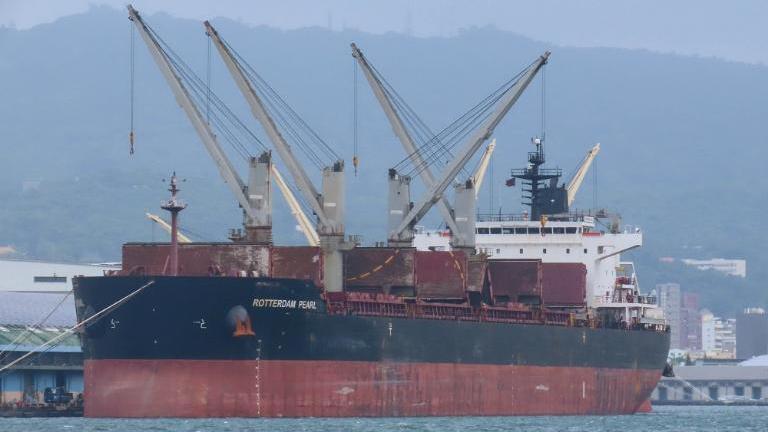
In December 2023, Kernel purchased the bulk carrier Rotterdam Pearl V with a capacity of 55,000 tons for $15.7 million. On May 7, 2025, the agro-holding's press service confirmed its sale. How much was earned — they did not disclose.
Three vessels in two years — and back to zero
The logic of entering the fleet market was straightforward: 2022–2023 was a period of freight deficit, with rates at maximum, and Ukrainian ports under threat. The company acquired the bulk carrier Eneida and the tanker Mavka in 2023 financial year, and Rotterdam Pearl V at the end of that same calendar year. At its peak, Kernel's fleet consisted of three vessels and ensured up to 100,000 tons of grain exports per month.
The first swallow took flight in April 2024: Eneida was sold for $7.4 million — twice less than Rotterdam Pearl V cost. At that time, logistics director Mykola Miroshnychenko explained the logic frankly:
"We entered the investment when freight prices were at their peak. I remember the calculations showing that the vessel would pay for itself in less than a year. And indeed, that's exactly what happened: we quickly recouped our tanker".
Mykola Miroshnychenko, Logistics Director, Kernel, Rail.insider
Now Kernel has only one asset left — the tanker Mavka with a deadweight of 13,500 tons for transporting sunflower oil. The company does not rule out selling it as well if a "good offer" comes along.
What changed in the market
- The grain corridor stabilized deep-water exports through Ukrainian ports.
- The market is saturated with used bulk carriers — freight rates have fallen relative to the 2022–2023 peak.
- Owning a vessel in such an environment is frozen capital, not a competitive advantage.
At the same time, Kernel is not simply a grain exporter. According to the company, in the 2024 financial year, 6.7 million tons of agricultural products were transshipped through its own marine terminals. The terminals are not going anywhere — only the fleet becomes redundant.
Fleet as a trading instrument, not a strategic asset
Back in 2024, the head of the transshipment and fleet department Yuri Kizlevych said that Kernel planned to "constantly be in the fleet buying and selling market" — that is, to buy cheap, make a profit, and sell. This is not a shipping company, but an agro-holding that situationally enters the adjacent market.
Rotterdam Pearl V confirms this model: purchased for $15.7 million at a time when own tonnage paid for itself in a year, sold after stabilization — probably with a profit or at least without significant losses. Eneida, acquired earlier and sold for $7.4 million, is also in the black considering the operational income from the period of use.
If Kernel sells Mavka as well, the agro-holding will completely return to the model of chartered shipping — the one it fled in 2022. The question is not whether the tanker will be sold, but at what freight rate it will become profitable to buy again.



