# State Officials at Ukrgasvydobuvannya Made Profits by Buying Below Market Price and Selling at Double the Cost: How They Exploited Their Own Tenders
The Security Service of Ukraine (SBU), the Bureau of Economic Security (BES), and the Office of the Prosecutor General have announced suspicions against the head of a private company and an official of a state-owned enterprise. A forensic economic examination assessed the damages at 295 million hryvnias.

By Oleg Bazylewicz
April 6, 2026 · 2 min read
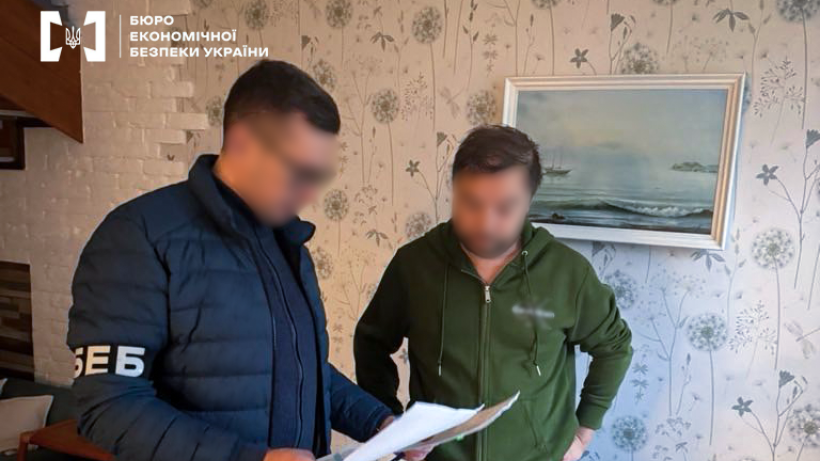
The scheme was arranged simply. Private companies controlled by the suspects purchased chemical additives and other materials for gas extraction from manufacturers and official suppliers at market prices — and then resold them to JSC Ukrgazvydobuvannya at 2–3 times the markup. The difference was distributed among participants.
The exposure of the scheme was jointly reported by the SBU, the Bureau of Economic Security, and the Office of the Prosecutor General. The investigation covered purchases of materials necessary for gas extraction at the state enterprise.
How they circumvented competition
To guarantee winning tenders, the scheme participants deployed a classic mechanism of fictitious competition. Companies under their control submitted coordinated commercial proposals among themselves: some with real prices, others with clearly inflated or non-viable conditions. Formally, ProZorro registered competition among multiple participants; in fact, the winner was predetermined.
«The scheme consisted of misappropriating funds allocated for purchases by the state company. This occurred through artificial overpricing of materials necessary for gas extraction».
— SBU, official statement
Who received suspicion and under which article
Two individuals were notified of suspicion:
- Head of a private company — the organizer of the scheme on the business side;
- An official of JSC Ukrgazvydobuvannya responsible for organizing tenders within the state company.
Both are charged under Article 191 of the Criminal Code — misappropriation, embezzlement of property or acquisition through abuse of official position. This is not an administrative violation: under part five of the same article (committed on an especially large scale or by an organized group), it carries up to 12 years imprisonment with confiscation of property.
The figure and its limits
Losses of 295 million hrn — this is the conclusion of a forensic economic examination, not a court verdict. The difference is fundamental: an examination fixes calculated damages for the investigation, while a court can change this figure in any direction or disagree with the classification altogether. No data on arrests of assets or property of the suspects have appeared in official law enforcement statements yet.
At the same time, the scale of the case fits into a long series of claims against Ukrgazvydobuvannya purchases: previously, the SBU and BEB had already reported a separate scheme worth 5 million hrn in the field of supervision of capital repairs of wells in Poltava region.
If the investigation succeeds in proving in court not only the fact of price overpricing but also intentional coordination between the state company official and private suppliers — this would become a precedent for qualifying an organized group, rather than merely abuse by individual officials.



