Kyivpastrans launches a new wave of modernization: 16 trolleybuses for UAH 306 million — what will change for passengers
Kyiv announced the procurement of 16 low‑floor trolleybuses for UAH 306.34 million — cheaper than the previous tender. We examine why this matters for safety, service intervals and budgetary efficiency.

By Tetiana Suchkova-Ladik
January 5, 2026 · 2 min read
About the purchase
The municipal enterprise Kyivpastrans announced plans to buy 16 new low‑floor trolleybuses with an expected cost of 306.34 million UAH (approximately 19.1 million UAH per unit). The vehicles are to be delivered by December 1, 2026. In a press release the Kyiv City State Administration explains the renewal as an effort to increase transport safety, stabilize the network's operation and reduce headways.
"The renewal of the rolling stock was explained by the need to increase transport safety, ensure stable operation of public transport and reduce headways on routes."
— Press Service of the Kyiv City State Administration
Why the price changed
In September 2025 the city announced a different tender — for 40 trolleybuses for about 1 billion UAH (over 25 million UAH per unit), which was later cancelled due to the need to change technical requirements. The industry publication "Passenger Transport" noted that the starting price of the previous tender was roughly 20–25% higher than the average procurement price for similar trolleybuses in other Ukrainian cities.
"The starting cost of the trolleybuses in the Kyiv tender, taking into account the main requirements, was approximately 20–25% higher than the average in recent years' procurements."
— 'Passenger Transport', industry publication
What passengers and the city will get
These are trolleybuses over 11.9 m long with a total capacity of about 100 people (34 seats). The interior includes spaces for people with reduced mobility, room for wheelchairs and a ramp. The vehicles must have heating and air‑conditioning systems, tinted windows, LED lighting, external and internal displays, door‑open movement interlock, a route announcement system, as well as space for a GPS tracker and equipment for automated fare payment.
These features are not minor details: modern trolleybuses improve operational performance on routes and comfort for people with disabilities, which directly affects the city's mobility during any crisis.
Context and consequences
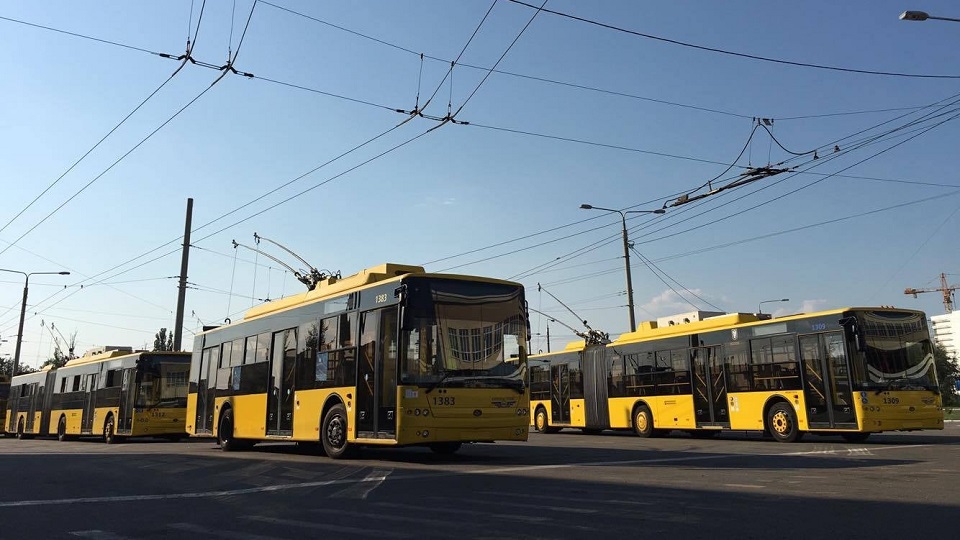
Today about 250 trolleybuses operate on Kyiv routes daily, mostly articulated Bohdan‑T901 (142 units) and Bohdan‑T701 (115 vehicles). Purchasing 16 new units will not transform the fleet, but it is an important step in its modernization: new vehicles represent a tangible improvement in accessibility and network reliability.
The key question is whether the city can maintain a balance between price and equipment requirements, and ensure a transparent and competitive selection of the supplier. An effective procurement today is not only a saving of funds but an investment in the daily safety and comfort of millions of Kyiv residents.
Brief summary: a lower amount for the new contract does not necessarily mean a compromise in quality — but to confirm that, transparency in the tender and control over technical specifications during vehicle acceptance are required.



