Kyiv Raises Parking Rates — But Taxpayers Will Get a Subscription at the Price of Several Full Hours
Starting April 27, parking in the center will cost 40 UAH per hour. Meanwhile, a monthly permit for Kyiv residents who officially pay taxes will cost 1,499 UAH for the entire city. The math favors the subscription, but the verification mechanism is not yet ready.

By Tetiana Suchkova-Ladik
April 24, 2026 · 2 min read
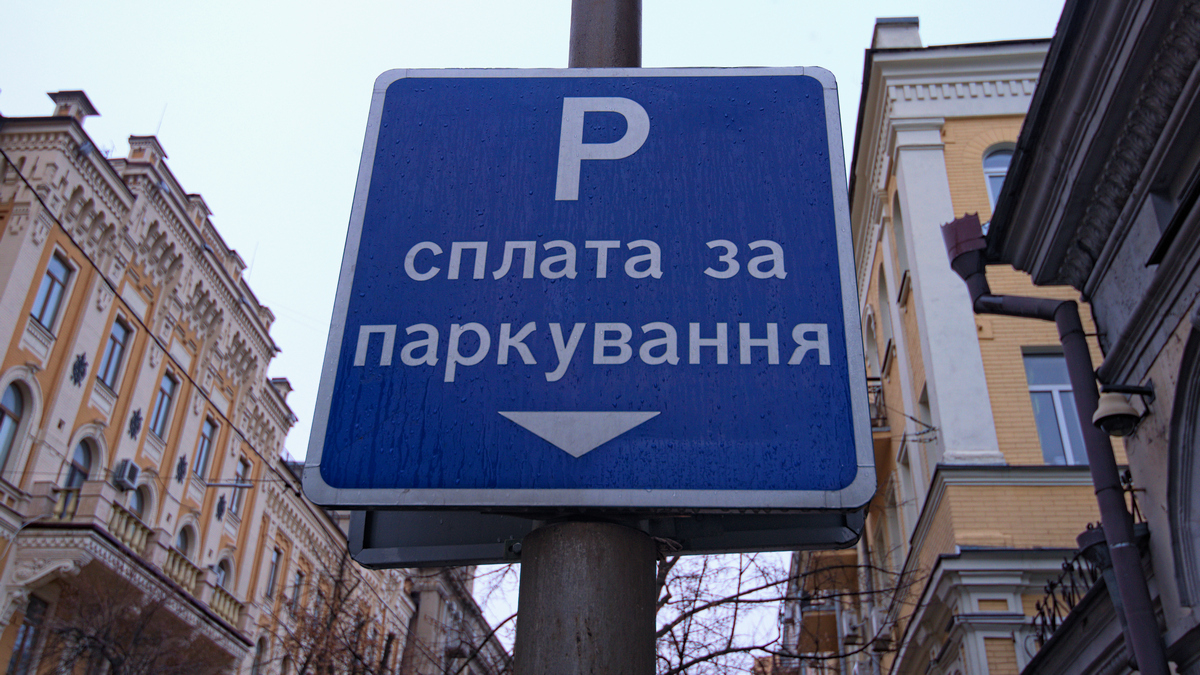
Starting April 27, parking at public lots operated by the municipal enterprise "Kyiv Transpark Service" will become more expensive in Kyiv: +5 UAH for each zone. New rates are 40 UAH/hour in the center (Zone I), 30 UAH/hour in adjacent districts (Zone II), and 10 UAH/hour in residential areas (Zone III). This is the first increase in the last five years.
However, the main innovation lies not in hourly rates, but in monthly passes with discounts that reverse the usual logic of urban parking.
What the pass offers and who benefits
For individuals who officially pay taxes to the Kyiv budget, the city offers monthly passes at preferential prices:
- Zone III — 299 UAH/month
- Zone II — 999 UAH/month
- All Kyiv without restrictions — 1,499 UAH/month
For comparison: under previous rates, a full monthly pass covering all of Kyiv cost approximately 5,700 UAH. This preferential price represents a genuine discount in the range of 75–90%, depending on the zone.
"The city does not aim to make parking a major source of profit"
Kostiantyn Usov, Deputy Head of Kyiv City State Administration for self-government matters
The discount will remain valid at least until the end of 2026. Passes can be obtained through the "Kyiv Digital" application.
Discount exists — verification still in development
Here lies a practical delay. To receive the discount, one must confirm their status as a taxpayer. Paper certificates will not be issued: the city is developing an automatic digital verification mechanism in the "Kyiv Digital" application. However, at the time of the new rates' launch, this mechanism is still under development.
Meanwhile, "Kyiv Transpark Service" is replacing 1,249 information signs throughout the city — for the first time, these are being manufactured not by a private company, but by the municipal enterprise itself.
The enterprise has also refuted information circulating in Telegram channels: "Kyiv Digital" remains the primary payment platform, not another application. In the future, parking meters will also appear that can operate during blackouts and accept bank cards — for those who do not use smartphones.
Winners and losers
The arithmetic is simple: if you park in the center at least 4 days a week for 1–2 hours, the monthly 1,499 UAH pass pays for itself in just a week at the new hourly rates. For others — those who park infrequently or are not official taxpayers of the capital — this is simply a service increase of 14–100% depending on the zone (most noticeable in Zone III, where the rate doubled: from 5 to 10 UAH).
The issue is not about the math of the discount, but about when verification actually launches: if the mechanism confirming taxpayer status does not go live simultaneously with the new rates, Kyiv residents will pay the increased hourly rate for several weeks or months without access to the benefit they were promised.



